When people asked me if I would take my spouse’s name after getting married, I would give an emphatic “NEVER!”
But actually, I’d already changed it.
In Mexico, I had two last names––my dad’s and my mom’s, same as everybody else––but on my U.S. documents I only had my dad’s, so when I moved to Texas, I lost my mom’s name.
I grew up thinking that that was the way it was. In Mexico, I had my full name. In the United States, not quite.
Last year when I shared my immigration story publicly, I decided I wanted to use my full name. It felt important to link myself to the people who raised me and love me and give me strength every single day and to the country that has been my home as long as I can remember. I decided I wanted to reclaim my full name in the United States and made that my resolution for 2017.
Then, the election happened.
Now there are many things that feel much more urgent than dealing with the bureaucracy of changing my name, so I’m not doing it yet. However, I have started using my full name everywhere I can.
So this is just a note to say, if you see an extra word hanging off the end of my name, don’t be confused. It’s just my name, and all of it is mine.
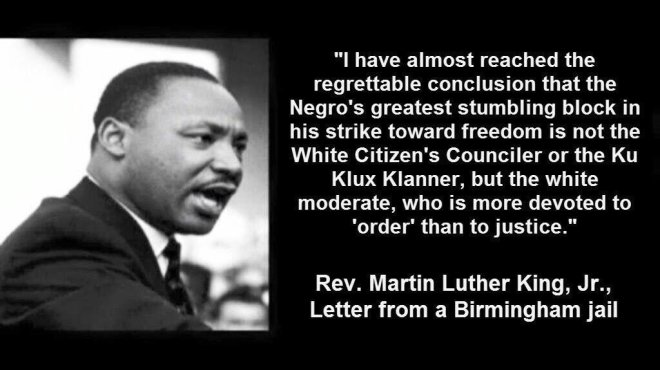
Volunteering at soup kitchens and painting schools is great, but that’s not how Martin Luther King, Jr. changed the world.
The United States declared Dr. Martin Luther King, Jr.’s birthday a federal holiday in 1983. Since then, it has come to be celebrated as a “Day of Service,” which usually translates to volunteering in one’s community doing nice things like painting murals, picking up trash, or donating blood. These are in themselves good things to do, but to associate MLK with volunteering is to misrepresent his life and his legacy. Dr. King was not a volunteer. He was a revolutionary. He did not just “work to make things better in his own community.” He wasn’t a kindly Santa Claus figure who wearily sighed, “Can’t we all just get along?” He did not just “have a dream.” He acted on his convictions, risking––and ultimately, losing––his life to challenge the status quo of injustice. He led marches and strikes and went to jail for breaking unfair laws. And we have every reason to believe that, had he been allowed to live, he would have continued protesting racism, war, and economic exploitation. It’s obviously impossible to expect a country to have a nationally-designated “Day of Revolution,” but what if instead of volunteering, we had a national “Day of Reckoning” on Dr. King’s birthday? What if we read, listened, and reflected on his words and whether we have achieved the future he imagined? (What does it mean, for instance, that some states celebrate segregationist leaders on the same day as Martin Luther King, Jr.?) What if we expected the country to live up to what this leader demanded? And we were expected to take action to fix the ways in which it doesn’t? Some people are doing just that. Three years ago, Black activists called for Americans to #ReclaimMLK––sparking articles, conversations, and protests that connect Dr. King’s vision to the present day. This year #ReclaimMLK is a week-long call to action, with each day focusing on a different theme.
These efforts are led by the Movement for Black Lives, a coalition of more than 50 racial justice and civil and human rights organizations. However we can, wherever we are, I hope we can heed their call to “embrace all parts of King’s legacy.” Learn more and find planned actions here.
*About the title of this post: recently, I have been reflecting on how challenging injustice is not “nice” or “polite” behavior. Activism requires confronting injustice and making “good trouble” and challenging “the way things are.” Dr. King was willing to stand up for his beliefs. He angered and inconvenienced both people in power and people who agreed with him but believed we should “wait for things to get better in due time.” That is what I mean when I say he was not a nice guy. In the face of injustice, I don’t believe any of us should be “nice.”
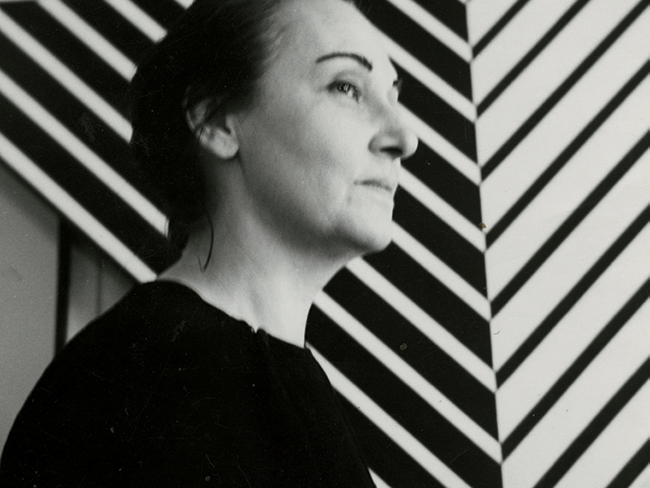
Last spring I did my first translation for a major U.S. museum. I translated an essay by Gerardo Mosquera for the Whitney Musem’s exhibition, Carmen Herrera: Lines of Sight. Incidentally, this is Herrera’s first solo exhibition by a major museum, so I felt even more passionate about getting it right. To prepare, I read everything I could about Carmen Herrera, abstract expressionism, and minimalism in Spanish and English. My initial aim was to familiarize myself with terminology, but even after I got a good sense of the lexicon and determined translations for concepts that were new to me, I kept reading. I was fascinated by the 101-year-old Cuban, American, immigrant artist who received very little recognition before her hundredth birthday but kept painting anyway. I love her. I love everything she symbolizes. Here are some of the coolest things I learned.
Her interviews are incredibly fun to read because she seems to have a witty retort to everything, including art criticism: “‘People see very sexy things — dirty minds! — but to me sex is sex, and triangles are triangles’” (quoted by Deborah Sontag).
Her success began a few years after her husband died, and people around her asked if maybe her husband––who had been a staunch supporter of her work––was helping her from heaven. In a 2009 interview, she refuted that interpretation: “‘Yeah, right, Jesse on a cloud. I worked really hard. Maybe it was me.’”
photo via the Whitney Museum of American Art
Her favorite artist is herself. The Whitney retrospective closes this Monday, but I hope it is the first of many. That may well be the case because, after it closes in New York, the show is headed to Ohio.








 smoothliminal