Can we have relationships across political divides without pretending politics don’t matter?

If you want to make my stomach churn, all you have to say to me is, “Can we agree not to talk about politics?” or “Let’s just agree to disagree!”

Don’t get me wrong. I get why people say this. Nobody wants to have a screaming match at the dinner table, especially if you’re seeing people you love but don’t often get to see, like family members who live thousands of miles away or childhood friends who rarely visit your hometown at the same time you do. And it can feel pointless to talk about something when you don’t think there’s any hope that the person you’re talking to will change their mind. They might have no interest in changing their mind at all.

However, politics isn’t just about opinions. It’s about power. The power to determine who has enough food to eat, clean water to drink, clean air to breathe, a home to live in, access to healthcare and schools and libraries, a job with dignity and the ability to retire when working becomes difficult. Increasingly, I think politics is a choice between realizing that we are all interconnected and that you can’t guarantee safety and dignity for some at the expense of others, or pretending that safety and dignity can be bought. Of course I disagree with the latter view. Evidence of its incongruence is all around us. Think of the wildfires ravaging parts of Los Angeles, including ultra-wealthy neighborhoods, or the floods that have threatened even the fanciest New York City zip codes.

Truly, we are all in it together.

For that reason, I think talking with each other is worthwhile. I believe it’s possible –– and really, really necessary –– to have conversations about politics that are not just pointless arguments or relationship-enders.

What has helped me have better conversations with people with differing political views is to listen (it can be really hard, but I try to listen to other people like I hope they might listen to me) and to ask questions about their opinions and how they came to those conclusions. I also ask questions based on what I’ve observed, and most importantly, when I share my views, I do it in a way that is personal. I use lots of “I” statements about what I’ve experienced or share the stories of people I love. Watching movies and TV shows together can also be helpful because media can help us see other perspectives and develop empathy.

Whenever possible, I try to talk in person, but it can also work to talk on the phone. Texting is OK sometimes, but posting on social media almost never works for me.

There’s really good advice about how to have these kinds of conversations from Celeste Headlee, who wrote a book and did a TED Talk about this very topic.

Here’s a podcast that talks about this in the context of the 2024 election: https://deepcast.fm/episode/friendship-across-the-political-divide

And here’s a blog post that describes and links to her TED Talk: https://ideas.ted.com/how-to-talk-about-politics-constructively/
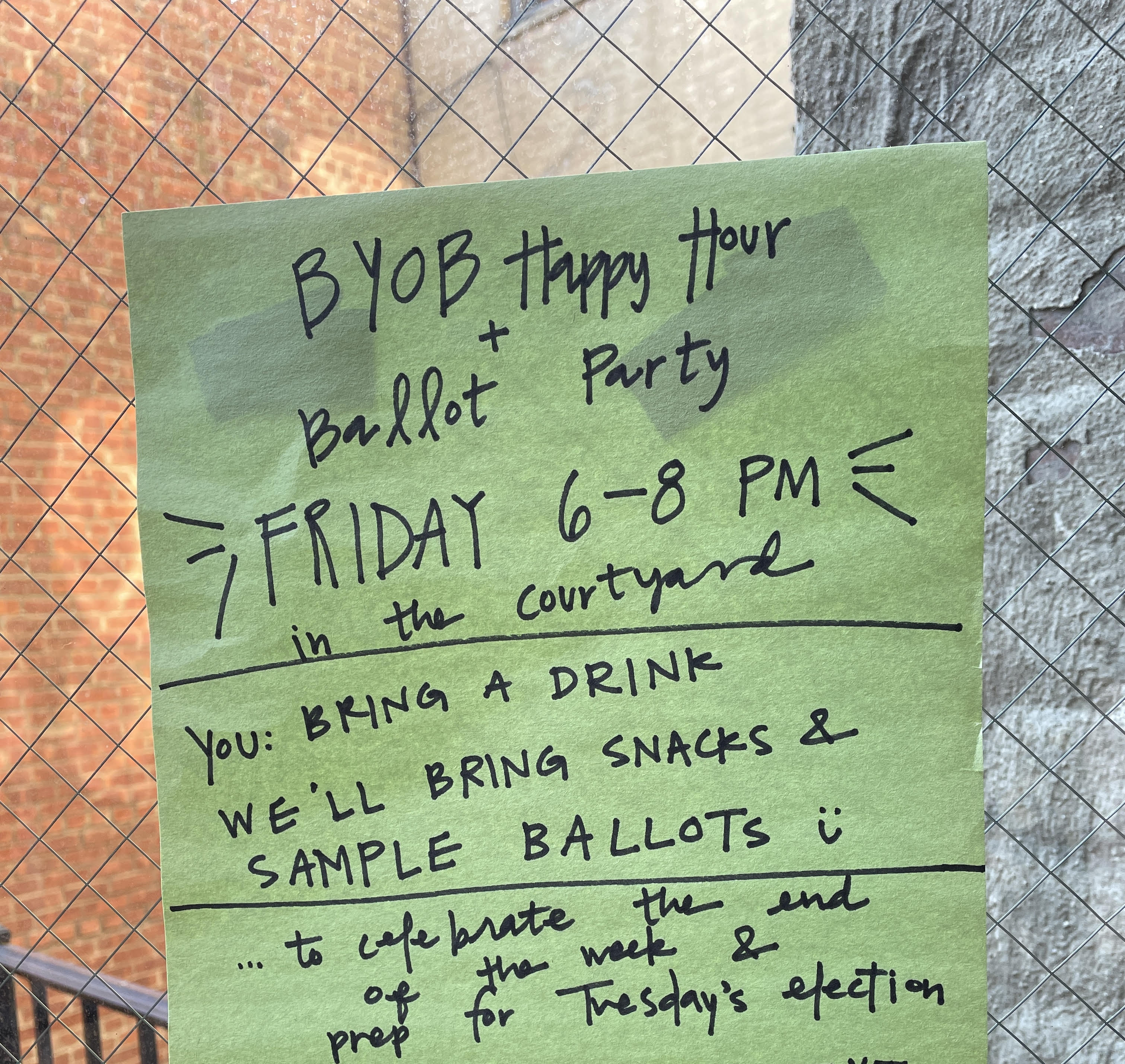
light green construction paper that reads "Ballot Party Friday 6–8 PM in the courtyard to celebrate the end of the week and prep for Tuesday's election"
One way I try to foster political dialogue is to host ballot parties with my neighbors. Here’s a homemade sign I made to advertise a ballot party in our apartment building’s courtyard a few years ago.

I don’t always get it right, but I hope that over time, I get better at having conversations like these. Our lives and our future are too important not to try.
Can we have relationships across political divides without pretending politics don’t matter?

Immigrant Solidarity

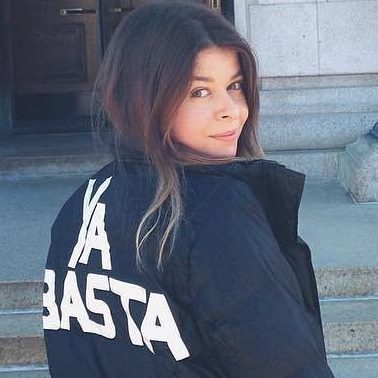
Photo from an Immigrant Rights Protest in Madison, WI, 2017 (the back of my jacket says “Ya Basta,” which means “Enough!”)

Recently I listened to a news story about immigration on This American Life. It examined the vast resources that are being sent to help Ukrainian asylum-seekers who are being welcomed into the United States with open arms. Meanwhile, just a short distance away, people seeking asylum from Mexico, Haiti, and countries in Central America wait for years in squalid, dangerous conditions. They struggle even to have their asylum claims heard and live under the threat of gun violence and kidnapping, with no support from the U.S. or Mexican governments.  

I’ve lived my life on both sides of the U.S.–Mexico border, and I study immigration, so this contrast was not new to me. My whole life I’ve seen how immigrants are treated differently based on the color of their skin and their country of origin.

But this news story was a necessary reminder of why I do the work I do. It reified my commitment to change the systems that value some lives more than others. Most importantly, it reminded me to take actions that help people who are trapped in these systems now, even as I work for structural changes that will make things better in the future.

That’s why I joined the Immigrant Solidarity Committee. We’re a small group of volunteers focused on supporting people who are often ignored by other immigrant-serving organizations, like LGBTQ+, Central American, and Caribbean migrants.

We’re committed to helping individuals from these groups get through the asylum process with dignity and safety.

This year, our fundraiser is focused on raising money to pay for rent and legal fees for the guests we support as they transition from ICE detention to fuller and freer lives in the United States. We cannot do this work without your support, and all of the money raised will go directly to help migrants.

I’m donating, and I hope you will, too!

Love,
Kristy

Immigrant Solidarity

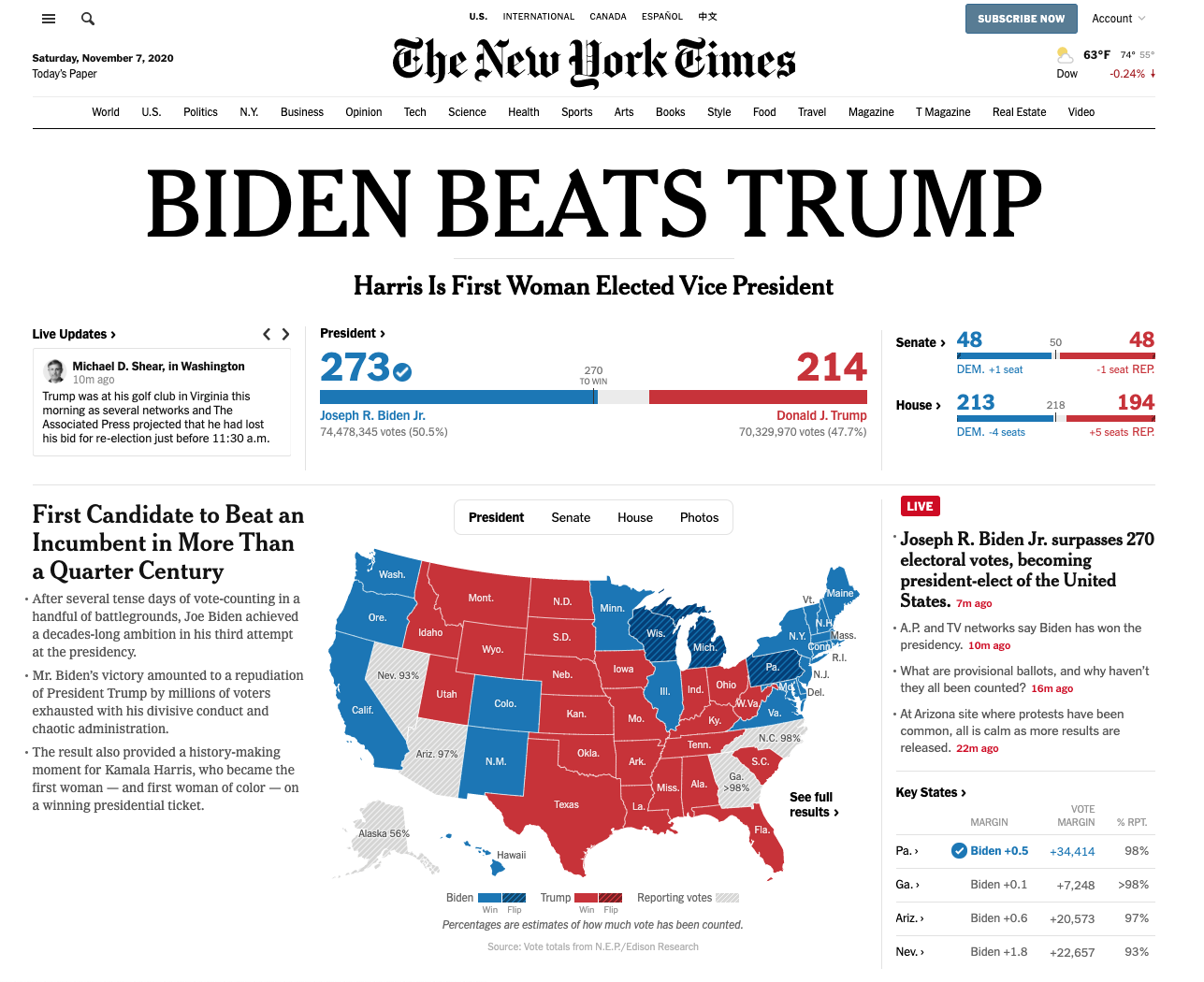
We won this election together

Front page of NYT.com, 7 November 2020

If you started out knocking on doors in Iowa and ended up helping people in your pajamas from the living room… 

If you put a Biden/Harris sign in your front yard even though you were afraid your neighbors would destroy it… 

If it hurt to vote for Biden because you were hoping to elect a more progressive candidate, but you voted in solidarity with the people who are most vulnerable under the Trump regime… 

If you got over your phone anxiety to call voters in a faraway land called Wisconsin…

If you learned to use Zoom, OpenVPB, or ThruTalk to phonebank…

If you volunteered to get out the vote even though our current system won’t even let you vote yourself…

If you started a Facebook community to empower people to organize within their communities, using their skills and their own platforms… 

If you moved to Wisconsin to help organize a ragtag band of volunteers (including a couple who was kind of fanatical about composting) and kept organizing even when the pandemic made everything so, so, so much harder…

If you trusted me to translate election information and help lead phonebanks in Spanish… 

If you dedicated your time to organizing Latinx voters (who are largely overlooked and increasingly targets of disinformation and suppression campaigns)…

 If you learned to say “register to vote,” “absentee ballot,” and “early voting” en español…

If you phoned a friend, texted an ex, or otherwise reached out to voters in swing states… 

If you shared your most personal stories to remind people about what was at stake in this election…

If you found the courage to talk politics with your co-workers, your grandma, or your aunt… 

If you spent your time talking to people who have every reason to distrust the electoral system and convinced them to vote and keep fighting for justice… 

If you called me, texted me, talked to me, listened to me, brought me Mexican candy, sent me care packages, and otherwise kept me going when I felt like I couldn’t…

If you volunteered to be a poll worker or an election observer (or supported other people so they could volunteer)…

If you led countless Zoom calls with confused volunteers and comforted us when we worried this election would be impossible to win… 

If you remembered all the times Trump called us animals, criminals, and rapists and refused to let him get away with it again…

If you voted and organized with hope even when it was hard to feel hopeful…

This message is for you. I love and admire you. I am infinitely grateful for your work. If I asked you to volunteer, I will almost certainly ask you to volunteer again to keep fighting for justice and human rights…

But today I feel more hopeful about those fights than I have in a long, long time. And it’s all thanks to you!

We won this election together.

We won this election together.

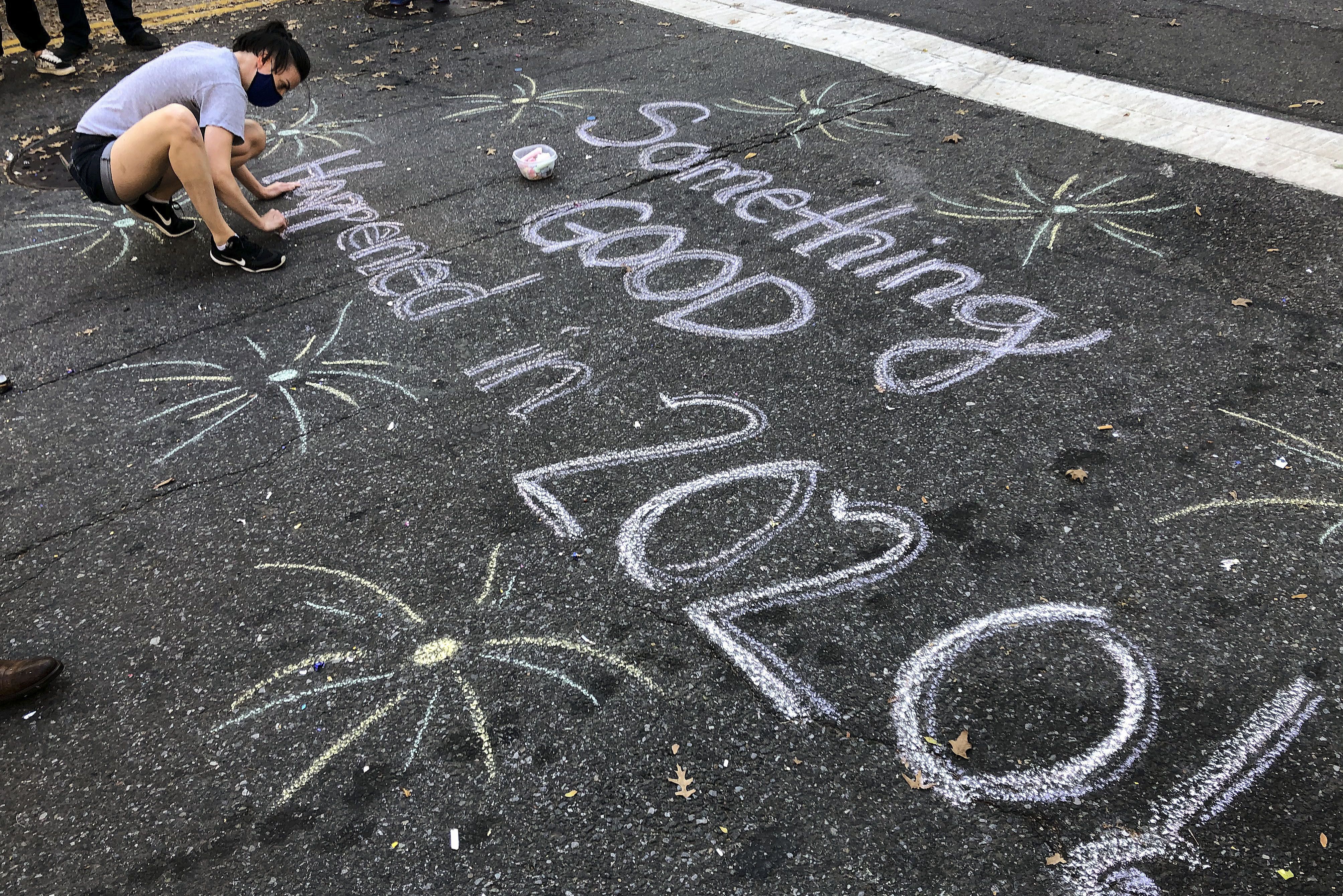
Jolin Polasek draws a sign in chalk on a street in Harlem after former vice president and Democratic presidential candidate Joe Biden was announced as the winner over Pres. Donald Trump to become the 46th president of the United States, Saturday, Nov. 7, 2020, in New York. (AP Photo/Mark Lennihan). Caption text and photo c/o Yahoo News.
We won this election together

Protesting in a Pandemic and Risk Reduction

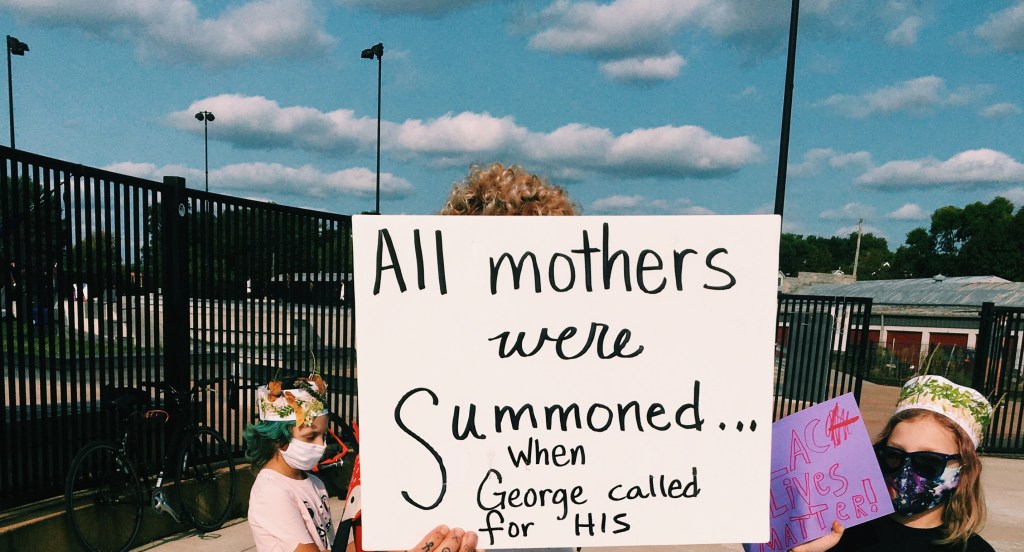
Today I went to the Kids’ March for Black Lives in my neighborhood, which reminded me that I’ve been meaning to share this incredibly useful list of how to protest while reducing risks of getting and spreading COVID-19.

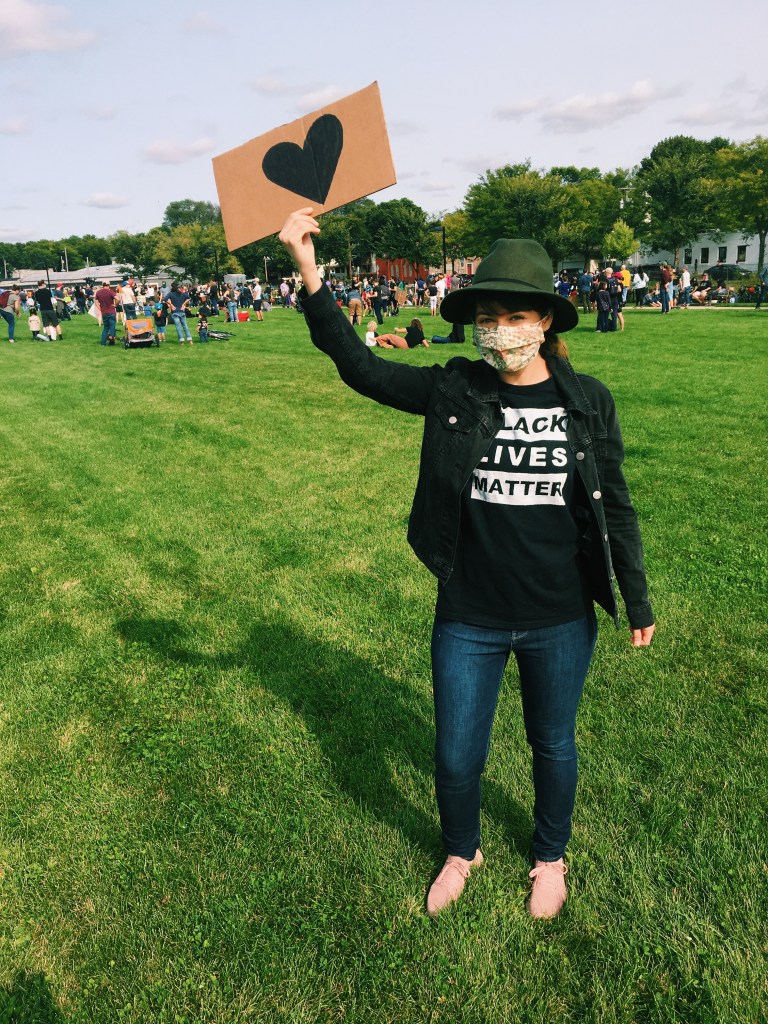
Here I am holding a sign at the march. Instead of writing words, I drew a heart on my sign because I wanted it to be easy to read, even for little kids who might not read words.

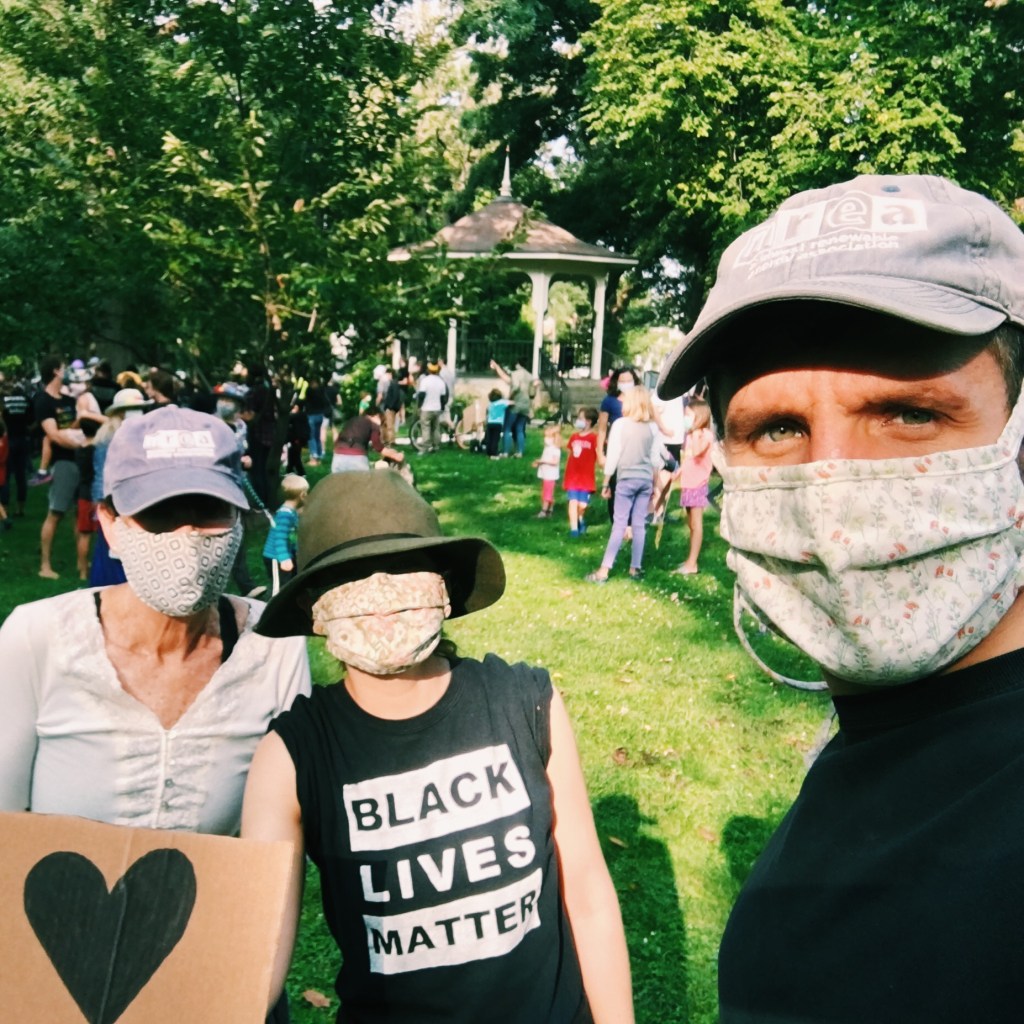
The march today was a powerful experience, made even more beautiful by the fact that I got to march with Devin and his mom, who is not only the mom of a former kid I love very much but also an educator who teaches kids today.

Anne (Devin’s mom), me, and Devin at the end of the Kids’ March for Black Lives


I feel incredibly lucky to have gotten to hear children and anti-racist parents and teachers speak about justice and safety and what it means to be in community and divest from unjust systems in order to invest in what we really need: schools, housing, clean water, health care (just to name a few).

Protesting in a pandemic is complicated, and there are lots of ways to contribute to the Black Lives Matter movement that don’t involve going outside and participating in person, but I’m really glad we were able to go and march in a way that felt safe and responsible given our risk factors and responsibilities to others around us. If you’re thinking of going to a protest, I encourage you to read this list and make a plan to participate with COVID protection in mind. Remember: we keep us safe!


P.S. The list I’m sharing here was made by my friends Alison Kopit (she/her) and Elizabeth Harrison (they/them), two of the most intentional, community-minded people I know and admire!

Protesting in a Pandemic and Risk Reduction

Rest in Power, Erica Garner

erica garner
Photo by Drew Angerer/Getty Images


I met Erica Garner on December 18, 2014. I know because I made a video of her singing “I Can’t Breathe” with fellow protesters on Staten Island that night. The song was inspired by Eric Garner’s last words and written by the Peace Poets (original version here). We sang it on the steps of the Staten Island courthouse after marching to protest the killing of Eric Garner by the NYPD and lack of justice in the case.

Most of us sang:

“I can hear my brother crying ‘I can’t breathe’
Now I’m in the struggle, and I can’t leave
Calling out the violence of the racist police
We’re not going to stop [clap, clap]
‘Til people are free”

But Erica sang, “I can hear my father crying ‘I can’t breathe,’” and I thought about how some of us choose to become activists and others have activism thrust upon them. I looked around. We were all protesting the same injustices, but most of us imagined those injustices abstractly. Erica lacked that luxury.

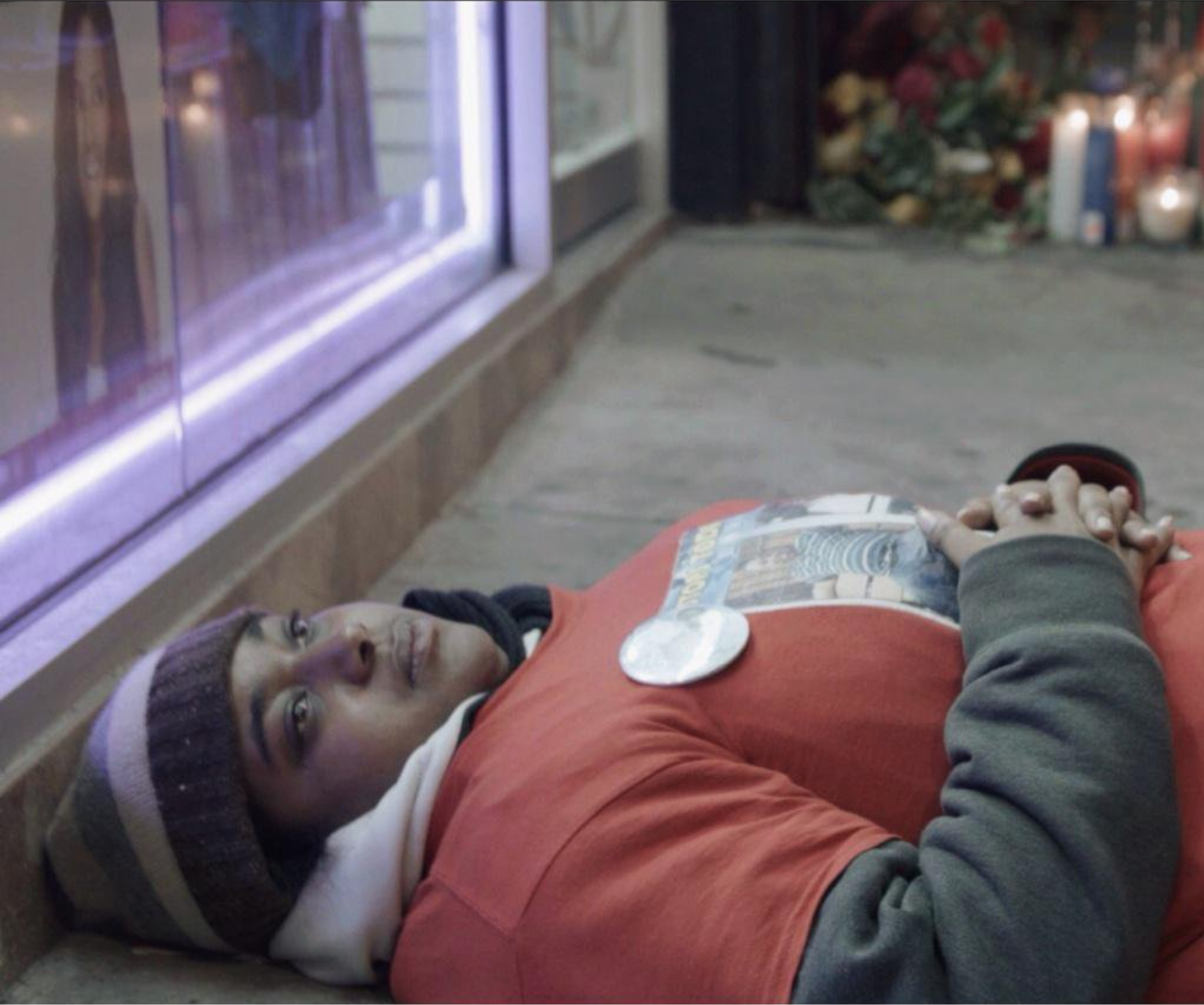
I had come to Staten Island after seeing a picture of Erica lying on the sidewalk in the place where her father died. She tweeted that she had been all alone that night and asked #BlackLivesMatter protesters to come to Staten Island, where she was protesting every Tuesday and Thursday.

Erica Garner lying in the place where her father was killed
Photo via Erica Garner’s Twitter


I took the ferry to Staten Island the following week. We were a small group that night: 20, maybe 30 people. It was nothing like the big protests I was used to. Staten Island is the least populated borough in New York City. It felt desolate. Like it was just us and the police on the streets that night. As we marched, I was keenly aware that the cops shouting “Get off the street” and “Stay on the sidewalk” probably knew the man who killed Eric Garner.


We marched from the courthouse to the site of his death and back again. The march was subdued. It felt like a space to reflect on the life of Eric Garner –– a person with a family just like all of us –– and the impact of his death on his family, some of whom marched with us. We lay silently in the street at the site of Eric’s death for eleven minutes –– one minute for each time Eric Garner said, “I can’t breathe” while pleading for the police officer to release him. We marched back to the courthouse and sang on the steps.

After that, we boarded the ferry back to Manhattan. On the ferry, Erica talked about her dad who loved Christmas and her daughter Alyssa, who was five years old. The ferry was pretty empty, and it felt safe. Most of us were in our twenties or late teens. We talked about justice and freedom, but we also laughed and sang. Erica had sad eyes that reminded me of my mom’s. She had a slow smile that lit up her face. She sang and we sang along. She freestyled and we listened.

When we got back to Battery Park, Erica and I stood outside the subway terminal, figuring out which trains would take us home. We both lived in Brooklyn, and we bonded over the fact that she lived in Williamsburg, which was my first New York neighborhood. She was one year younger than I am.

At the time, activists on Twitter debated whether Erica Garner should have a public platform because in her early media appearances, she said she wasn’t sure if racism contributed to the death of her father (because Black police officers also perpetuate police brutality).

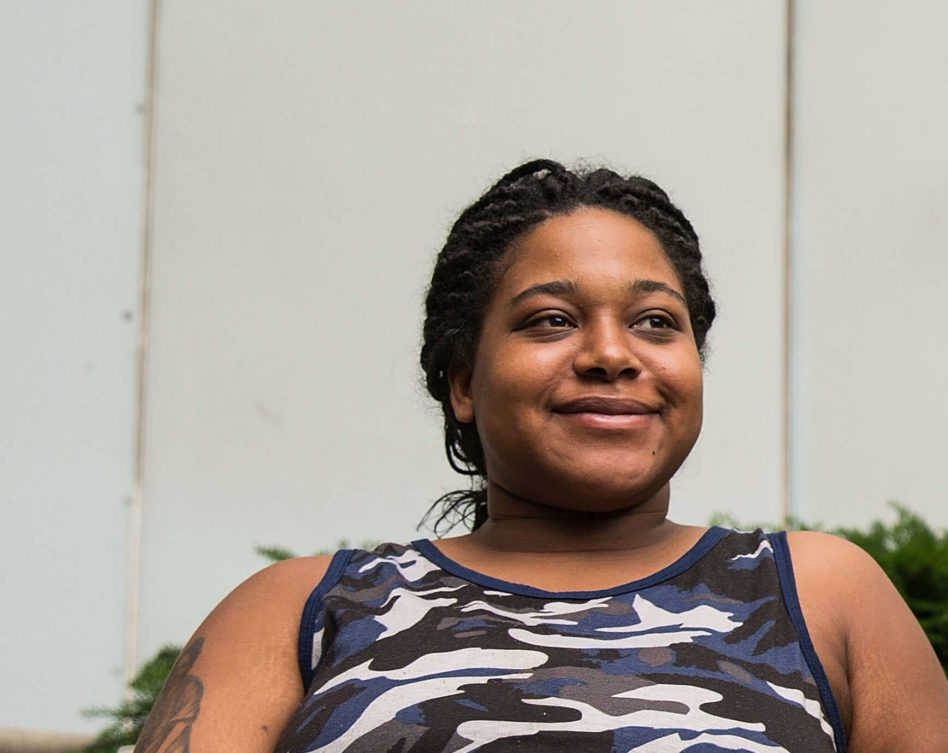
Erica Garner smiling

I thought it was unjust to expect the young daughter of a police brutality victim to have a critical race analysis on par with scholars who have spent years studying racism. But she grew to be a powerful voice, challenging systemic inequality and fighting for change on every level.

She understood that, as a result of the tragedy she endured, she had a powerful platform and decided to use it. Her biggest concern from day one was being an activist with integrity. Instead of partnering with big-name organizations, she organized marches on Staten Island by herself, on Twitter. She worked with the volunteers who showed up and marched along with her.

And she was relentless in her search for justice. She revisited her father’s murder over and over again because she wanted to make sure that no other daughter had to suffer like she did.

When we remember Erica Garner, we should think of an incorruptible activist dedicated to racial justice.

Erica Garner died months after giving birth to Eric Garner, Jr.

When we talk about Erica Garner, we should talk about systemic racism and how it results in high rates of maternal mortality for Black women.

When we honor Erica Garner, we should carry on her fight for justice by demanding that Mayor Bill de Blasio

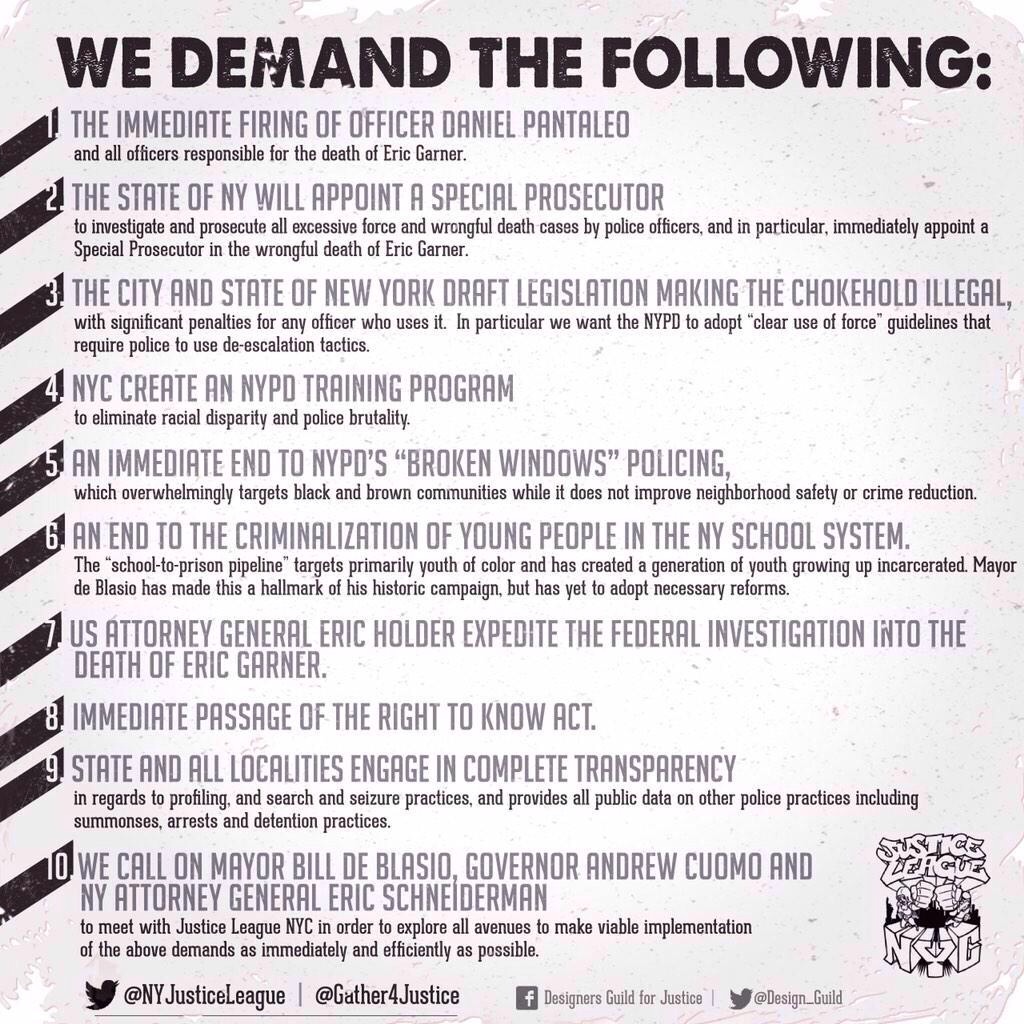
  • release the disciplinary records of NYPD Officer Daniel Pantaleo, the man who killed Eric Garner and continues to work as a police officer
  • fire Daniel Pantaleo
  • make the chokehold illegal so that if other officers kill citizens like Pantaleo killed Eric Garner, they face consequences for their deadly actions

We know that is what she would have done.

But when you think of Erica Garner, I hope you’ll also think of a young woman on a ferry laughing and singing with her friends, and mourn the life she should have had.

Rest in Power, Erica Garner

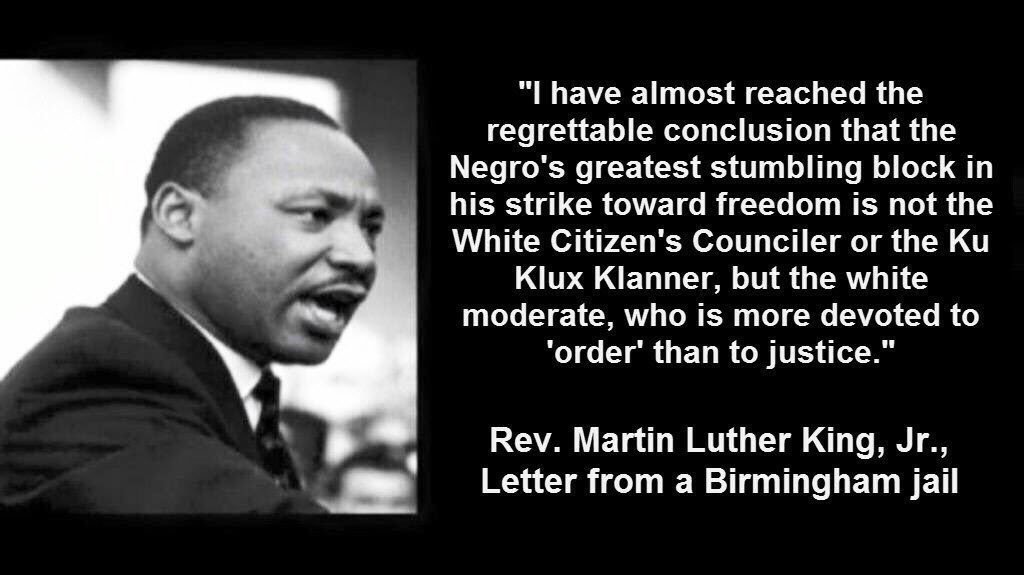
Martin Luther King, Jr. was not a nice guy

Volunteering at soup kitchens and painting schools is great, but that’s not how Martin Luther King, Jr. changed the world.

csrb0wfwcaephbs1

The United States declared Dr. Martin Luther King, Jr.’s birthday a federal holiday in 1983. Since then, it has come to be celebrated as a “Day of Service,” which usually translates to volunteering in one’s community doing nice things like painting murals, picking up trash, or donating blood.

These are in themselves good things to do, but to associate MLK with volunteering is to misrepresent his life and his legacy.

Dr. King was not a volunteer. He was a revolutionary.

He did not just “work to make things better in his own community.” He wasn’t a kindly Santa Claus figure who wearily sighed, “Can’t we all just get along?”

He did not just “have a dream.” He acted on his convictions, risking––and ultimately, losing––his life to challenge the status quo of injustice. He led marches and strikes and went to jail for breaking unfair laws.

And we have every reason to believe that, had he been allowed to live, he would have continued protesting racism, war, and economic exploitation.

It’s obviously impossible to expect a country to have a nationally-designated “Day of Revolution,” but what if instead of volunteering, we had a national “Day of Reckoning” on Dr. King’s birthday? What if we read, listened, and reflected on his words and whether we have achieved the future he imagined? (What does it mean, for instance, that some states celebrate segregationist leaders on the same day as Martin Luther King, Jr.?) What if we expected the country to live up to what this leader demanded? And we were expected to take action to fix the ways in which it doesn’t?

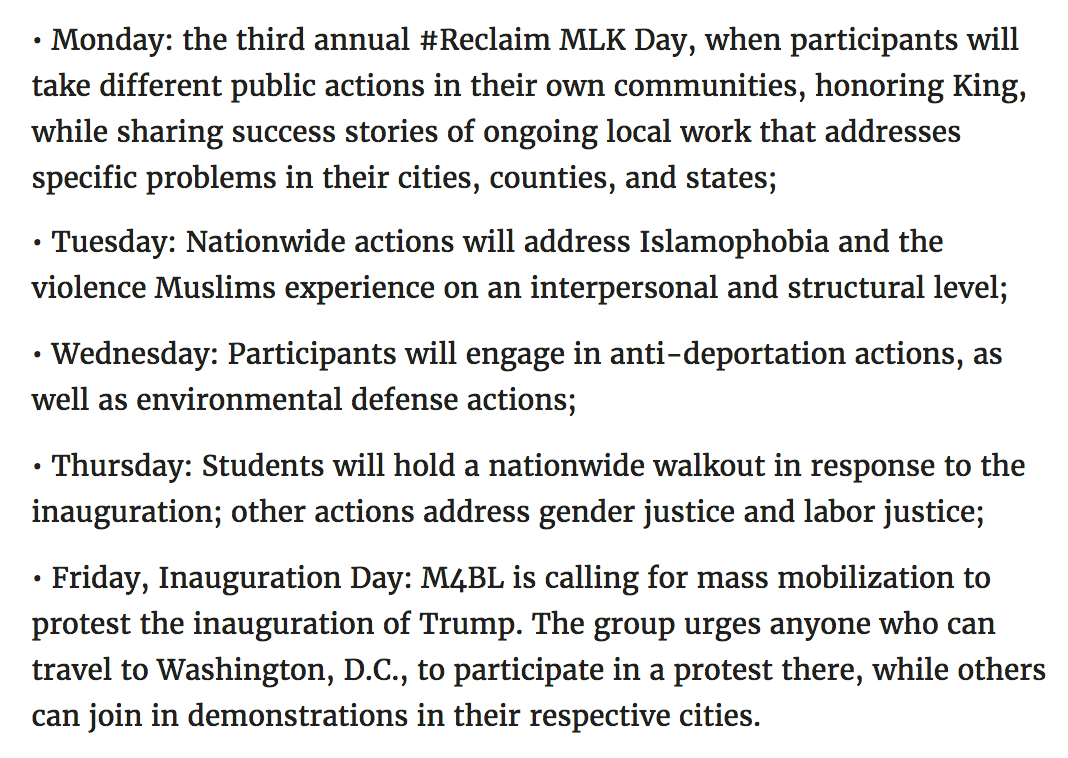
Some people are doing just that. Three years ago, Black activists called for Americans to #ReclaimMLK––sparking articles, conversations, and protests that connect Dr. King’s vision to the present day.

This year #ReclaimMLK is a week-long call to action, with each day focusing on a different theme.

Screen Shot 2017-01-16 at 3.06.44 PM.png

These efforts are led by the Movement for Black Lives, a coalition of more than 50 racial justice and civil and human rights organizations. However we can, wherever we are, I hope we can heed their call to “embrace all parts of King’s legacy.”

Learn more and find planned actions here.

*About the title of this post: recently, I have been reflecting on how challenging injustice is not “nice” or “polite” behavior. Activism requires confronting injustice and making “good trouble” and challenging “the way things are.” Dr. King was willing to stand up for his beliefs. He angered and inconvenienced both people in power and people who agreed with him but believed we should “wait for things to get better in due time.” That is what I mean when I say he was not a nice guy. In the face of injustice, I don’t believe any of us should be “nice.”

Martin Luther King, Jr. was not a nice guy

12.13.14

Yesterday afternoon I joined fifty to sixty thousand people in New York City to affirm that Black lives matter at the Millions March NYC. Later I joined fifty-leven girls to commemorate the one-year anniversary of Beyoncé by Beyoncé, the visual album (okay, so it was more like a dozen friends, not fifty-leven girls).

The march was incredibly important, but I don’t think I can do it justice here, except to say that I am inspired by the wimyn of color who are leading the peaceful protests and creative acts of civil disobedience. At the marches I vacillate between grieving for all the lost lives (here and in Mexico, my other home, which still lives under the reign of La Inseguridad) and being hopeful for the systemic change necessary to end structural racism and oppression. It is exhausting, and I know I am only able to hope because I’m not alone, and because the many people leading this movement are motivated by love.

It felt strange to protest and party on the same day, but I guess it’s like Emma Goldman said, “A revolution without dancing is a revolution not worth having.” Especially if you’re dancing to the first pop song to sample a speech on feminism as its second verse. That’s revolutionary in its own right, don’t you think? I think Emma G. would be down. Luckily my friends agreed and came over for a little party. Some of us dressed up like different characters from the videos, and we projected the whole visual album on a wall. We also ate snacks featured in the album (including the platinum edition songs):  sliders, kale, watermelon, Skittles, Blow Pops, cake by the pound… That part kind of felt like Día de Muertos. The whole night reminded me (for like the millionth time) how lucky I am to have friends who go along with my ridiculous ideas and don’t seem to mind that my guiding philosophy seems to be “A party without a theme is a party not worth planning.” (Sorry, Emma.)   ¯\_(ツ)_/¯

If you think this sounds way fun (and it was), you should totally throw your own Beyoncé party and show me the pictures, please and thank you. I hope Beyoncé by Beyoncé can be our generation’s Dark Side of the Moon or whatever.

XO,
kristy

snaxxx

costumes

12.13.14

Update on Unlimited Voices

On Tuesday night, with the help of a friend, I was able to deliver the 20 cards we’d raised money for through crowdrise.com/unlimitedvoices!

The page is still up if you’d like to contribute. Each seven-day unlimited card costs $31, and I’m hoping to distribute 20 more by tomorrow night so that the activists can use them to get to ‪#‎MillionsMarchNYC on Saturday‬. You can learn more about this project here.

Incidentally, yesterday there was a story on WNYC about how the less money you have, the more expensive it is to use public transit in New York. Unlimited Voices is a small and temporary solution, but the cards are already making a difference during a historic week of action. Thanks to everyone who has donated, signal-boosted, and been (too) kind to me over the past three days.

Here are some pictures from the night we distributed the MetroCards.

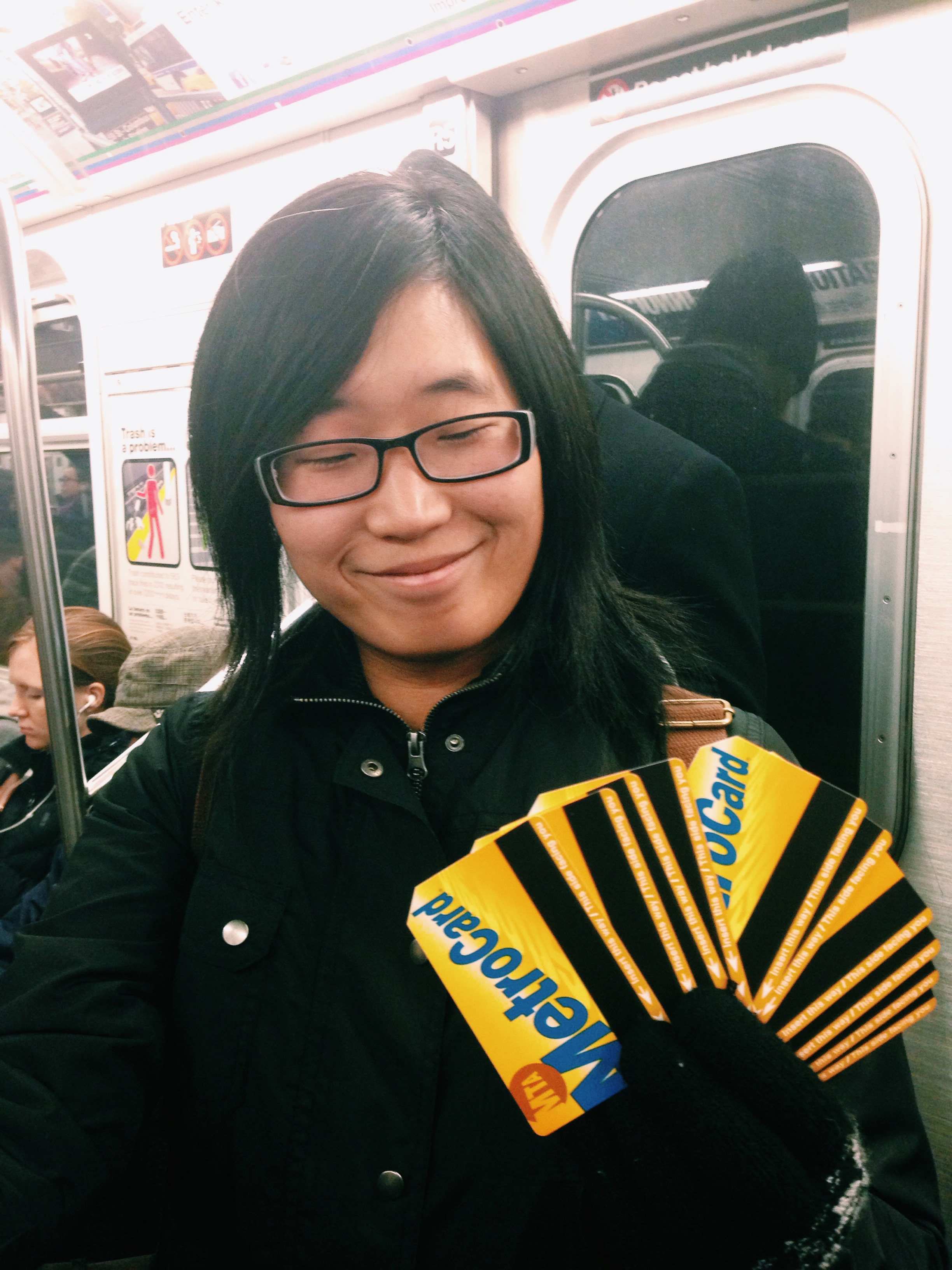
My friend Hyunhee, who also donated, volunteered to help me deliver the MetroCards.

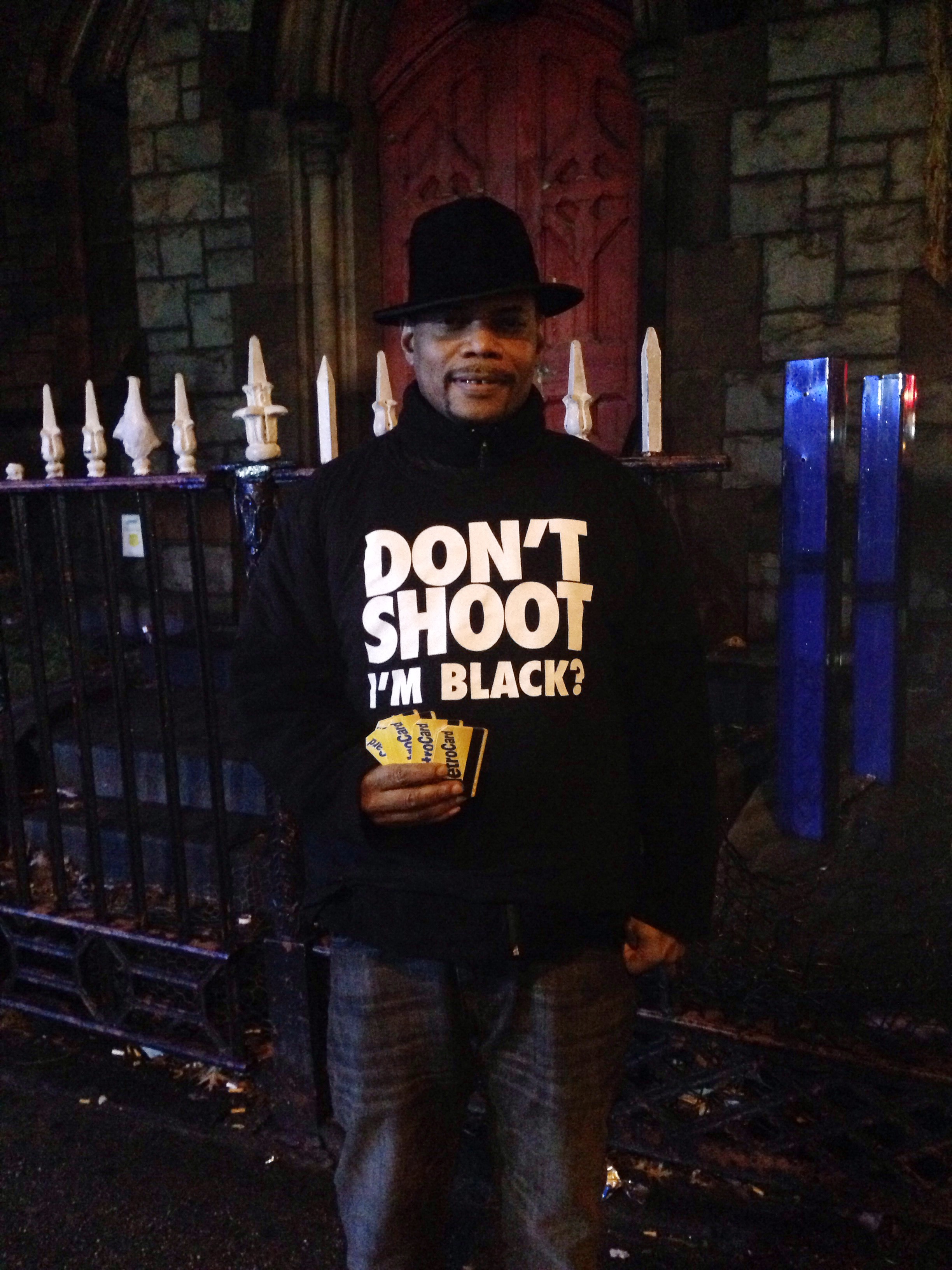
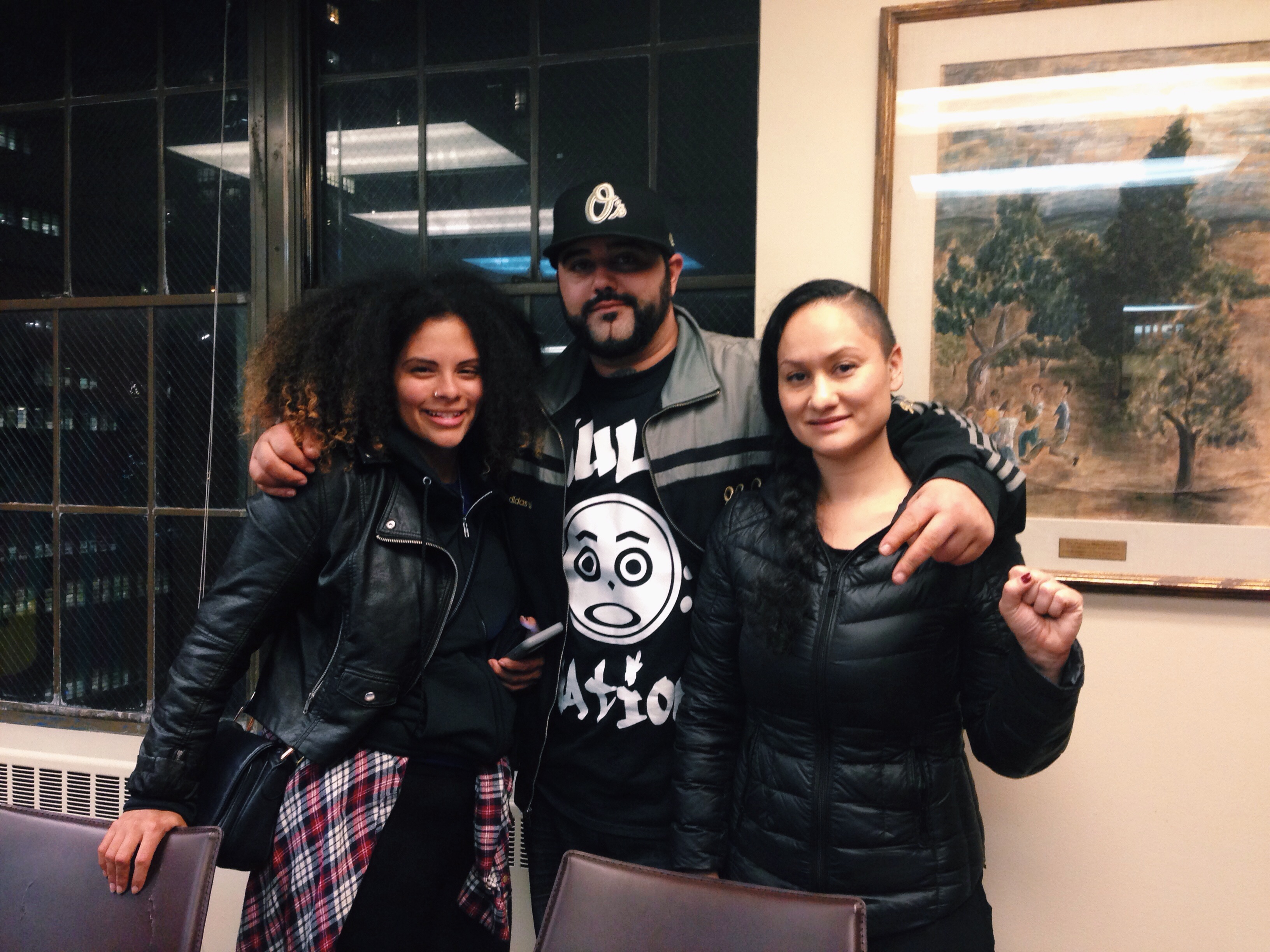
This is Thierry, possibly the most committed activist I’ve ever met. The night we marched together, he and his team NAAPS had protested in Staten Island, Brooklyn, and Manhattan all in a single day! Now they have 10 MetroCards to go all over and keep their incredible momentum going. They’ve been out every day and we are all invited to march with them in Manhattan on Saturday for #MillionsMarchNYC. Let me know if you would like to march with us at smoothliminal@gmail.com so I can send you directions to our meeting place. They are also planning a benefit to raise money for Eric Garner’s family. You can see them in action here.

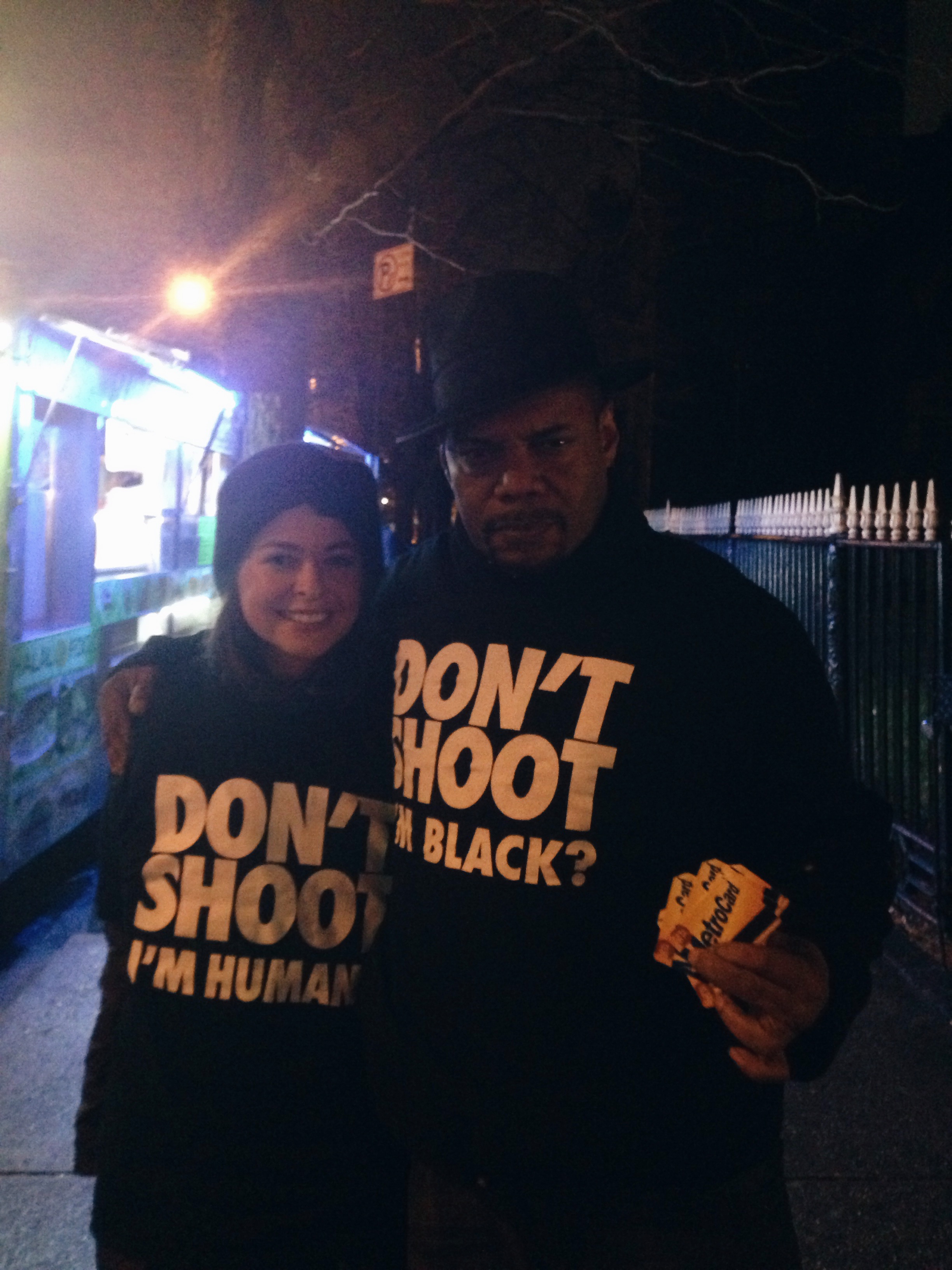
NAAPS gave me a t-shirt to thank all of us. Thierry explained that the question mark at the end of the statement is meant to provoke thought about how this can really be happening.

Here are members of the New York Justice League. They have been on the ground 24/7 leading thoughtful actions including the die-ins at the Apple Store and the #royalshutdown at Atlantic Center Mall to demonstrate that we are not OK with business as usual. I’m really grateful to New York Justice League for their leadership and know that they will make sure the cards get to dedicated grassroots activists.

On top of their organizing work—which has also helped Brooklyn Nets basketball players protest on the court while we rallied outside—New York Justice League has articulated our demands to New York City and the N.Y.P.D. You can sign the petition at gatheringforjustice.org.

Thanks again to everyone who has contributed. I’ll update you as soon as we reach our second goal and distribute the second batch of cards.

Update on Unlimited Voices

Unlimited Voices

It’s no secret that I love public transportation. On my 19th birthday, my best friends threw me a party on the number 19 bus in Portland, and I moved to New York because it has the best mass transit system in the United States. In fact, as far as I know, it is the only city in the world where the trains run all day and night. My other favorite thing about New York is all the opportunities to organize for social change.

However, I didn’t realize just how essential mass transit is to social justice efforts until this weekend.

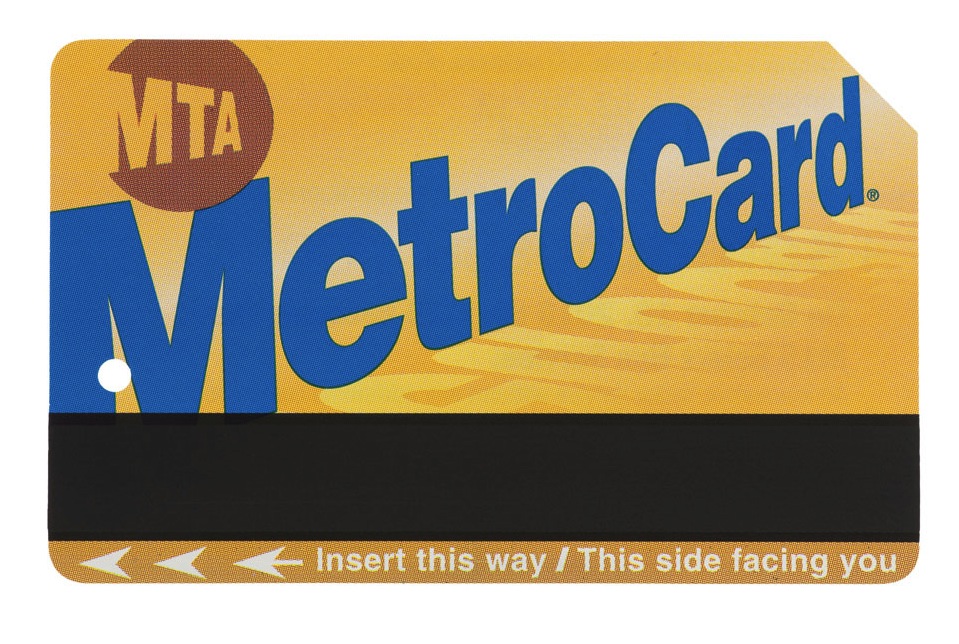
After attending the #BlackLivesMatter protests in New York City, I noticed that some of the hardest-working protesters––all people of color––were having a hard time getting money together for the train. That prompted me to think about how unlimited MetroCards are New York City’s golden ticket. With an unlimited weekly MetroCard, you can pay $31 to go anywhere in the city for seven days without having to think about money. Without one, you have to pay $2.50 per trip. How much harder would it be to speak out against injustice if it meant going without dinner or walking home late at night in the cold?

The golden ticket
The golden ticket

Last night, I launched a small fundraiser to get low-income protesters unlimited MetroCards, so that they don’t have to choose between raising their voices and getting home safely or going to work the next day. It is called Unlimited Voices and you can check it out here.

A few people have asked me, “Why unlimited cards?,” pointing out that we could get a lot more cards to a lot more people if we gave cards with smaller amounts or just swiped people in at major subway stations. The reason I think it’s important that they be unlimited is that there are actions happening all over the city every day, and anyone who wants to be at one—whichever one—should be able to go. I also know that amazing grassroots organizers are already mobilizing and manifesting in incredible ways. They don’t need my suggestions, and in fact, I need their leadership.

In less than a week, I have learned more about organizing and peaceful protest from the activists I’ve met on the streets than I have in my whole life.

Thank you so much to everyone who has donated. I am really hopeful about the impact our efforts will have and hope that together we make sure that those most affected by structural racism and this city’s vast wealth disparity have the ability to speak out without being limited by the high cost of mass transit in New York City.

In solidarity,
kristy

Unlimited Voices

Letter to my White friends

Yesterday the latest failure of the U.S. justice system erupted: the policeman who murdered Eric Garner using an illegal chokehold will not be indicted by New York State. That means he might never go to trial. Police shouldn’t be killing anyone, regardless of whether or not you committed a crime. That is not their job, but it is especially disturbing when the victim is an unarmed civilian who isn’t hurting anyone. This is the second time in just a couple of weeks that a White cop has literally gotten away with murder after killing an innocent Black person in the United States. And just two days ago, another police officer killed an unarmed Black man in Arizona. These are not isolated incidents. If you haven’t already, I implore you to read this short article, listing 25 ways innocent Black Americans have been killed linked to the incidents they mention. It was written by Ijeoma Oluo, a mother who wonders how she can explain this to her sons.

Eric Garner was killed pleading for his life in the street in broad daylight on video, and the cop who murdered him with his bare hands is not innocent until proven guilty. He’s just exempt from the whole thing.

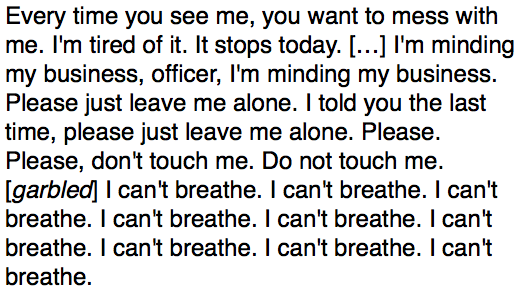
These were Eric Garner’s dying words.

eric garners last words

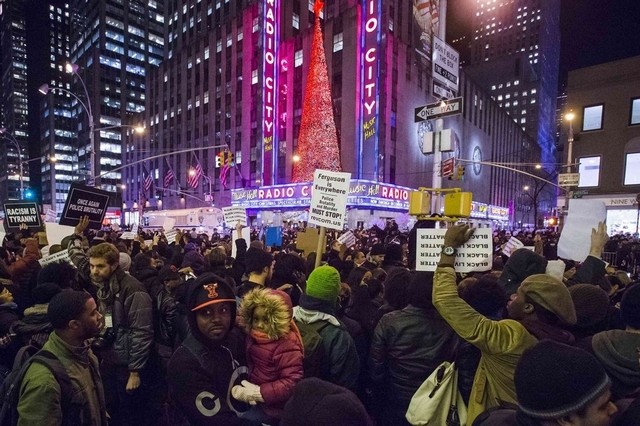
The news broke a few hours before the Rockefeller Christmas Tree Lighting, a famous national tradition taking place just miles from where Eric Garner died. Activists called for the tree lighting to be canceled with the hashtag #NoJusticeNoTree on social media. We also asked celebrities to refuse to perform or use their time on stage to stand up for Black lives and against police brutality.

A friend and I went to protest the tree lighting. We got as close to the tree as we possibly could and tried to start some chants, but we seemed to be the only protesters there. When we yelled “Black lives matter/More than a tree,” we were told, “Now is not the time and place.”

“This is a Christmas celebration.”

“There are children here.”

But when is the right time and place? I love Christmas, but so did Eric Garner. He used to dress up as Santa Claus for his grandchildren. What about the families who won’t get to have a merry Christmas just because one of their family members dared to stand on the sidewalk? What about the Black American children who are themselves murdered by police? When will we stand up for them?

People of color around us looked at the ground sadly and said, “We understand, but protesting here won’t bring him back.”

And they’re right. No protest will ever bring back Eric Garner or Michael Brown or Tamir Rice or Aiyana Stanley-Jones or any of the other countless victims. Human lives are precious because once they’re gone, they’re gone forever.

I don’t know what the right time to protest is—but I know the wrong time to stay silent. We can’t let more innocent Black people die. We can’t live in a country that lets White cops go free after killing someone, without facing so much as a day in court. That is the system that we are living under today, and if we don’t do something, it is the system that will continue. The tally of deaths will rise and rise while we wait for the “right time” to demand justice.

In the end, the Rockefeller tree was lit.

We left before it happened. It was isolating to be the only ones in distress while everyone around us sang Christmas carols. Then, we found all the protesters who didn’t make it past the barricades into Rockefeller Plaza.

radiocitymusichall

We marched with hundreds of people taking over streets and chanting, “Black lives matter! Black lives matter!”

“No justice, no peace, no racist police!”

Repeating Eric Garner’s last words. “I can’t breathe. I can’t breathe.”

And Michael Brown’s. “Hands up, don’t shoot.”

We can’t let these words fade from our memories.

My friend and I found Tasha and walked across Broadway while all the cars stopped at a green light because there were too many of us. We were no longer alone. Traffic came to a complete halt as we took over the Westside Highway. And aside from the great mass of people who enveloped us, there were drivers honking in support, bus drivers raising their arms in solidarity, restaurant delivery people yelling as they zoomed past, even taxi drivers rolling down their windows to give us high fives.

It was a powerful reminder.

Every time you protest, you are representing all those who can’t.

White people are extremely safe on U.S. streets. We benefit the most from this unjust system that forces people with dark skin to fear for their lives while we have the “luxury” of being free. If we understand that everyone should have the right to exist, it is our responsibility to speak out.

The friend with whom I protested last night is biracial but often perceived as African American. After the protest she pointed out several times during the night when she was treated differently from me despite the fact that we were standing side-by-side saying and doing the exact same things. That is White privilege.

To my White, able-bodied friends: get out there and march. Stand in solidarity with the people of color who don’t have your privilege. Follow Black leaders and be a number in the streets. Even if you are completely jaded and believe that the protests won’t do anything to change the system, get to the streets. Do it to show support for the people who lost their loved ones simply because their skin was darker than ours. Do it because you love listening to rap songs about inequality. But how can you sing along in good conscience if you don’t speak out against it? Do it because you have the luxury of staying home and never being bothered by the police. Show the world the most basic fundamental truth: Black lives matter. The system is not doing it, so it is up to us.

Letter to my White friends