My immigration story starts with children’s TV commercials from the ‘90s.
I was a little girl in Chihuahua, Chihuahua, when my mom got cable television for our house. To me, it was pure magic. I would watch Cartoon Network as often and as long as I could. The cartoons were dubbed in Spanish, but all the commercials were in English. And I was hooked.
Before I could speak any English at all, I knew how to say, “Live and learn and then get Luvs,” and I dreamed of going to Long John Silver’s. My favorite commercials were the infomercials for kids’ toys—the ones with bright blue screens and 1-800 numbers at the end. I thought about pretending to be a grown-up so I could order something, but I didn’t know how to make international calls.
As a middle-class kid in Northern Mexico, the United States was where I went shopping. My mom and I would go to El Paso and spend a few days buying the clothes and toys that were ten times as expensive in Chihuahua. The whole country seemed like an amusement park.
In the summer of 1996 my mom asked me if I’d like to live in the States. I jumped at the chance.
I couldn’t wait to live in those perfect commercials, to see movies—like The Hunchback of Notre Dame—as soon as they came out instead of waiting months for movies to come to Mexico, and to eat fast food all day every day. My life was going to change. I was going to be a short drive away from a Toys R Us!
Of course, I quickly learned that life in the States is not all fun and games. Sadly, one of the first things I learned when I moved to the States was to describe myself as “from Mexico” rather than “Mexican” because I heard “Mexican” used as an insult so often. My identity went from being something celebrated to being a bad word.
In Mexico, I’d heard about pochos, people of Mexican ancestry who couldn’t speak Spanish (or spoke it incorrectly). When my mom and I moved to Texas, we met many people who fit that description. The common perception of them in Mexico was that they were ashamed to be Mexican (malinchistas al máximo) and that’s why they didn’t speak Spanish. But soon we learned that Spanish used to be banned in Texas schools. One of my mom’s friends told us about how she would be hit with a ruler if her teachers heard her speaking Spanish. After seeing their daughter come home with red knuckles day after day, her parents encouraged her not to speak Spanish anywhere, not even at home, so she could avoid punishment.
Some of the Mexican-Americans we met might have been ashamed of their roots, but that shame was systematically taught.
I learned that shame, too. Overhearing racist jokes—so many racist jokes—seeing the way people looked at me differently when I spoke Spanish, and being told I was “not really from Mexico” when I defied people’s stereotypes are just a few of the ways my surroundings taught me that being Mexican was categorically A Bad Thing.
Luckily, I had an antidote for this poison. I would learn shame from a culture that positioned itself as the best and deemed my home inferior, but then I got to go home. And I saw how wrong that view was.
My home isn’t a place where chickens run around the yard and people ride donkeys (although now that I’m a grown-up environmentalist, that sounds rad). My home is Chihuahua, Chihuahua, and it’s where I got to go the theater, take painting classes, and learn modern dance from a Cuban teacher (who was visiting Mexico from Cuba for a summer). Chihuahua is the place where my little cousins took Japanese classes just for fun, and I was surrounded by people who prided themselves on speaking at least two languages. The world seemed bigger there.
I worry about the diaspora kids who don’t get to have this, the Mexican families physically torn apart by that arbitrary line called the border/la frontera.
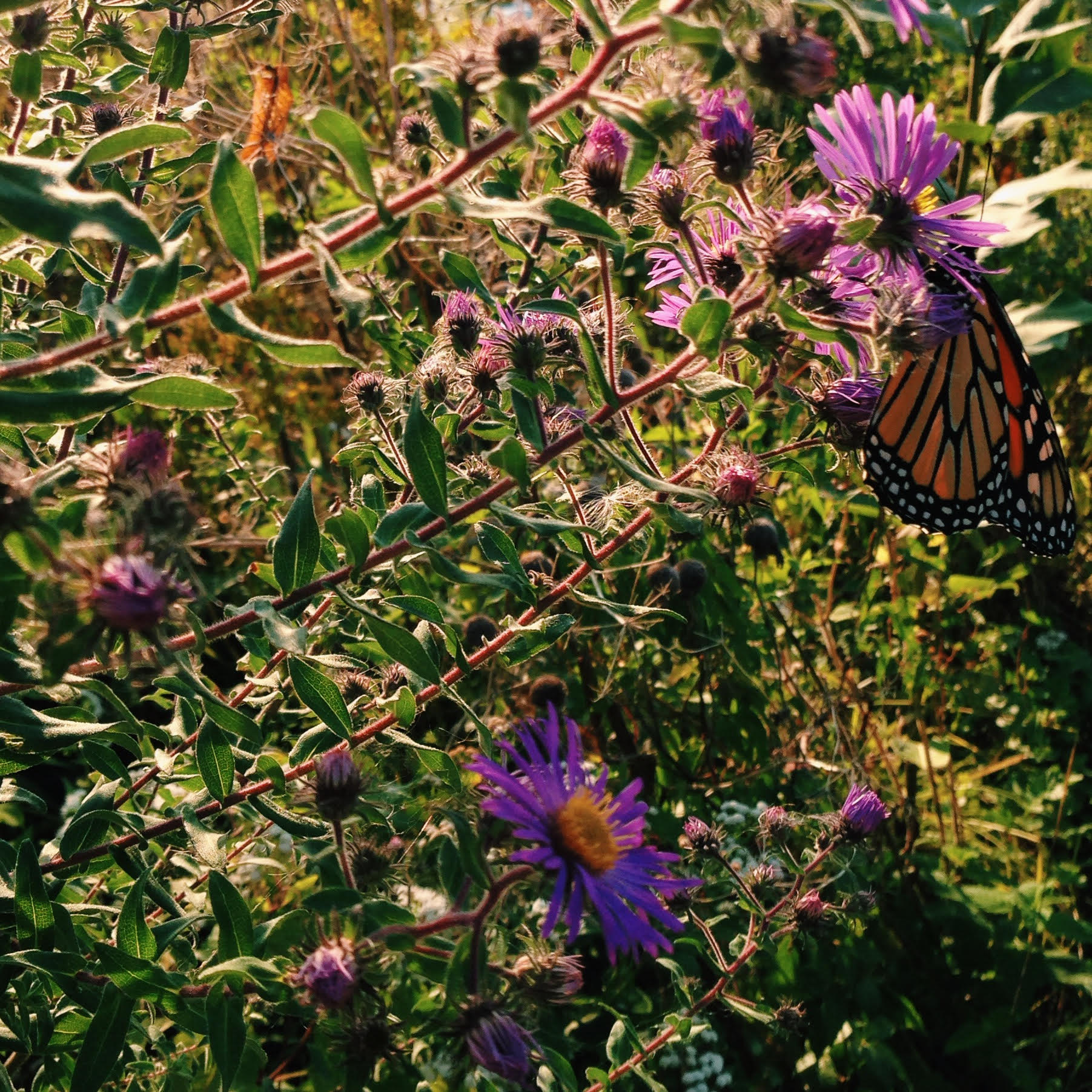
On one of my first days in Madison, I sat in a park watching monarch butterflies and thought about their migration from Madison, Wisconsin to Morelia, Michoacán and back again. Can you imagine how wrong and unnatural it would be to build a wall to keep butterflies out of a country? Is it any less so to do this to human beings?
There are many reasons why I believe having national borders that people cannot cross freely is wrong, but the most personal is that I don’t know who I would be if I hadn’t been able to go back to Mexico to relearn how to love myself.
 smoothliminal