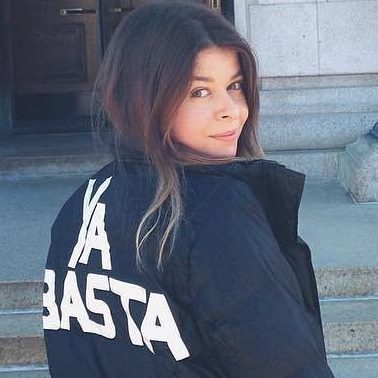
Photo from an Immigrant Rights Protest in Madison, WI, 2017 (the back of my jacket says “Ya Basta,” which means “Enough!”)
Recently I listened to a news story about immigration on This American Life. It examined the vast resources that are being sent to help Ukrainian asylum-seekers who are being welcomed into the United States with open arms. Meanwhile, just a short distance away, people seeking asylum from Mexico, Haiti, and countries in Central America wait for years in squalid, dangerous conditions. They struggle even to have their asylum claims heard and live under the threat of gun violence and kidnapping, with no support from the U.S. or Mexican governments.
I’ve lived my life on both sides of the U.S.–Mexico border, and I study immigration, so this contrast was not new to me. My whole life I’ve seen how immigrants are treated differently based on the color of their skin and their country of origin.
But this news story was a necessary reminder of why I do the work I do. It reified my commitment to change the systems that value some lives more than others. Most importantly, it reminded me to take actions that help people who are trapped in these systems now, even as I work for structural changes that will make things better in the future.
That’s why I joined the Immigrant Solidarity Committee. We’re a small group of volunteers focused on supporting people who are often ignored by other immigrant-serving organizations, like LGBTQ+, Central American, and Caribbean migrants.
We’re committed to helping individuals from these groups get through the asylum process with dignity and safety.
This year, our fundraiser is focused on raising money to pay for rent and legal fees for the guests we support as they transition from ICE detention to fuller and freer lives in the United States. We cannot do this work without your support, and all of the money raised will go directly to help migrants.
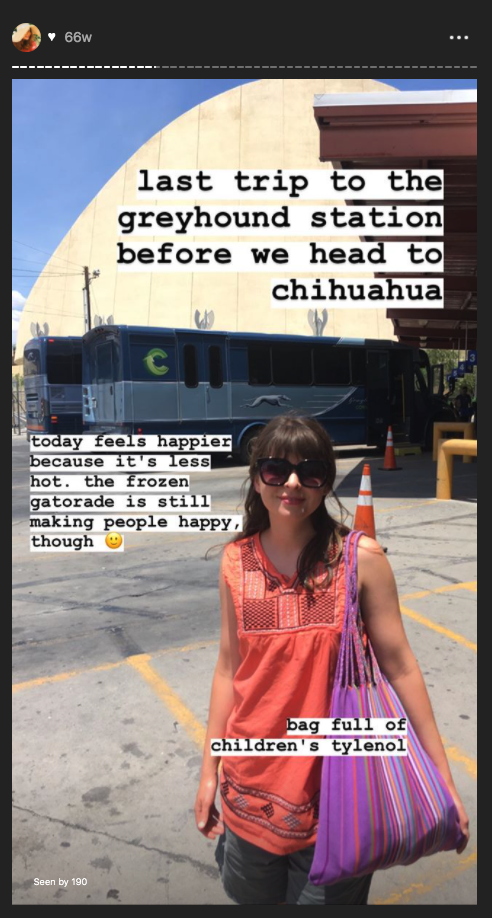
The memories come in fragments. Standing at a bus station parking lot in El Paso, the sun directly overhead. My head is throbbing from the heat. I am looking for refugees. They are easy to spot because their shoes have no laces, and they carry no luggage. All they have is themselves and a piece of paper from the U.S. government telling them what day they should show up to court. These are the lucky ones in 2019. They are allowed to stay in the country until their hearings.
I remember a mom holding a 3 year-old in her arms. I remember approaching them and offering them all we had to give: menstrual hygiene supplies, frozen Gatorades, clementines, and bananas. I remember the child clinging tightly to her mom, like she was holding on for dear life. I remember reaching my hand out to give them the bananas and how the child extended her own hand and said, “Mamá, Mamá” as she pointed at the bananas. I remember looking at her little face and knowing that it had been a very long time since she had eaten a piece of fruit.
I remember rushing to stock up on Children’s Tylenol after hearing children cough like lifetime smokers and shiver with chills from fever. This was before COVID-19, but kids were getting the flu at immigrant detention centers.
I meant to share these stories when we got back from the border. I wanted to collect backpacks to send to the border. I wanted to keep helping, but in order to do that, I would have had to talk about what we’d seen, and I couldn’t find the words.
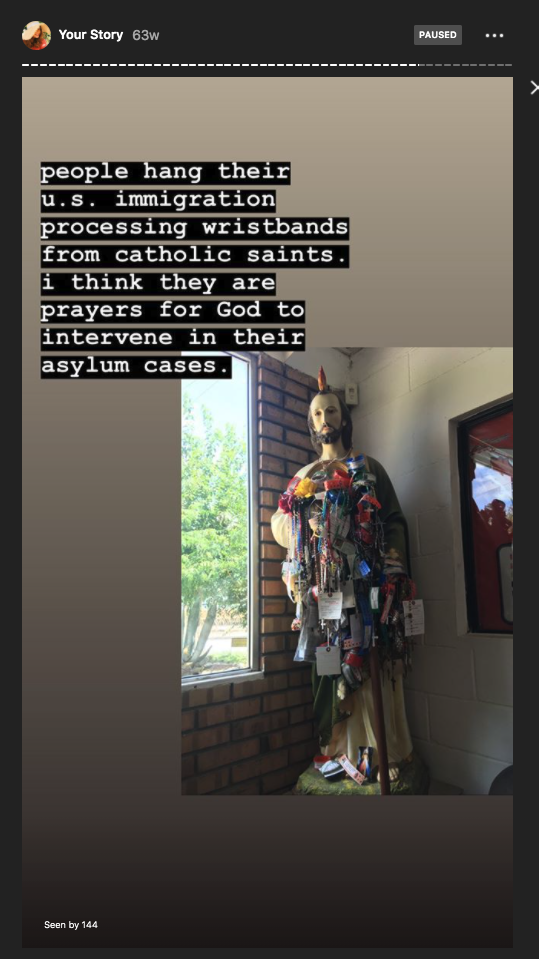
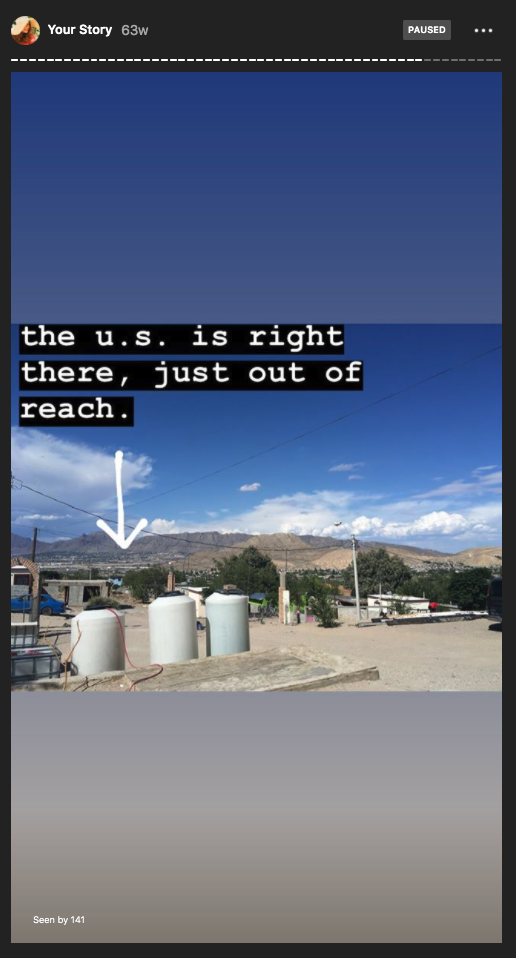
See all the pictures I posted from this trip in this Instagram story.
We went to shelters on both sides: in the U.S. and in Mexico.
I remember the father in a Juárez shelter telling me he was trying to get to Arkansas because his wife had been allowed to remain in the U.S. after applying for asylum, but he and their 7 year-old son had not. His wife was pregnant when she crossed, but she went into early labor when she got to Arkansas, and she and the newborn had been hospitalized since then.
I remember an old woman, her hair in silver braids, telling me “I didn’t want to leave my country, but they were going to kill me. If I go back, they’ll kill me.” She didn’t know anyone in Mexico, she explained, but she had family in the U.S. “It’s my only option. I want to go home, but I can’t.”
I remember the little boy who, after hearing Devin speak English to me, walked over to us and looked at his feet while he started to sing
Pollito, chicken Gallina, hen
and how he looked up and smiled when we sang back
Lapiz, pencil Y pluma, pen
I remember the three of us finishing the song
Ventana, window Puerta, door Techo, ceiling Y piso, floor
The toilets in the Juárez shelter were broken that day. (They were broken most days, a volunteer explained, because the shelter had exceeded its capacity many times over. People slept in hallways, in spaces that were supposed to be classrooms for kids. And the toilets clogged and overflowed. Too many people. Too much shit.)
The smell lingered in the air.
As we sang with that little boy, I remembered my own grandmother singing this song with me, and I thought about how kids are always kids, no matter where they are.
A statue of a saint stood on a table to our right, covered with wristbands from CoreCivic, a private prison corporation that runs immigration detention centers in the U.S. People cut off the wristbands when they were released and offered them to God with their prayers for asylum, for a return to the U.S. under less terrible circumstances. I looked at the saint and felt the prayers, and my stomach churned. To the asylum-seekers, these wristbands symbolized incarceration, starvation, and being denied showers for up to a month. But to investors (maybe even to me or to you or to anyone with a 401k or at an institution with an endowment that invests in such things), these wristbands symbolized profits.
I remember the church-run shelter we visited in Juárez and the group of girls who told me they loved to play school. I asked them who liked to be the teacher, and they pointed at a tall girl with curly hair who smiled shyly. The shelter was in a very rough neighborhood with unpaved dusty roads, nestled right against the border. I could see El Paso behind her, and I knew that if I could just get her across the border, she could have a teacher like my mom and a school with a library where she could read any book she wanted.
I wanted so badly to help her and her parents cross that line.
I remember the shame I felt at the shelters when people asked us over and over, “¿Son abogados?” and we had to shake our heads no and explain that we weren’t lawyers.
We were just Americans, there on behalf of other Americans because we didn’t agree with what our government was doing and we wanted to help. I tried to explain that, in cities across the U.S., people were protesting against the cruelty these migrants had experienced. I said, “No están solos” (“You’re not alone”). I said, “I’m not a lawyer, but I want to do what I can to help.” I felt very small, and I thought they probably didn’t feel any less alone.
I remember the nuns in El Paso telling us about the volunteers. “The volunteers here are struggling with depression. Our shelters are empty. They want to help.” The shelters in El Paso had plenty of space, beds with clean sheets, showers, bathrooms. But the migrants were being sent to Juárez instead, where the shelters were overcrowded and falling apart. The world felt upside-down.
On our last night in Juárez, we waited at the bridge to re-enter the U.S., and I fought back tears as we stood in line. When we got back to my aunt and uncle’s house in El Paso, I cried so hard I almost threw up.
I knew I had only seen a fraction. I thought about how there were makeshift shelters and tent encampments all along the border. I tried to comprehend how many more people were stuck there and thought about how many of them had family members waiting for them here in the U.S., ready to take them in if only they could cross.
I remembered Melania Trump wearing a jacket that said “I DON’T REALLY CARE, DO U?” in response to reports of children being caged like animals. I pictured Donald Trump smiling with glee at hearing about the suffering that his policies were inflicting. I knew that they were working exactly as intended.
The work we did and the supplies we took were meaningful. I know they made a difference. But it was a very, very tiny difference. To ameliorate a problem that was manufactured and could be eradicated.
This cruelty is being done in our names and being paid for with our tax dollars. And it could very easily stop.
I knew this and knew that if I wanted to help it made more sense to work to vote Trump out than it did to fundraise to try and help the people suffering under problems he created. So that is what I have done, and it’s why I’m begging you to vote for Biden and Harris if you haven’t already.
Please hear this: I have spent my whole life crossing the U.S.–Mexico border. I have never seen anything like what I saw the summer of 2019. All things considered, we saw very little of the pain that people are experiencing at the border, and we’ll never know what it’s like to live through this cruelty ourselves, but the suffering I witnessed will haunt me forever. I don’t think I could bear to see how much worse things could get if Trump gets four more years. I just keep thinking “This cruelty is being done in our names and being paid for with our tax dollars. And it could very easily stop. It is our responsibility to stop it.”
I am begging you to vote for Biden and Harris because I don’t want to find out.
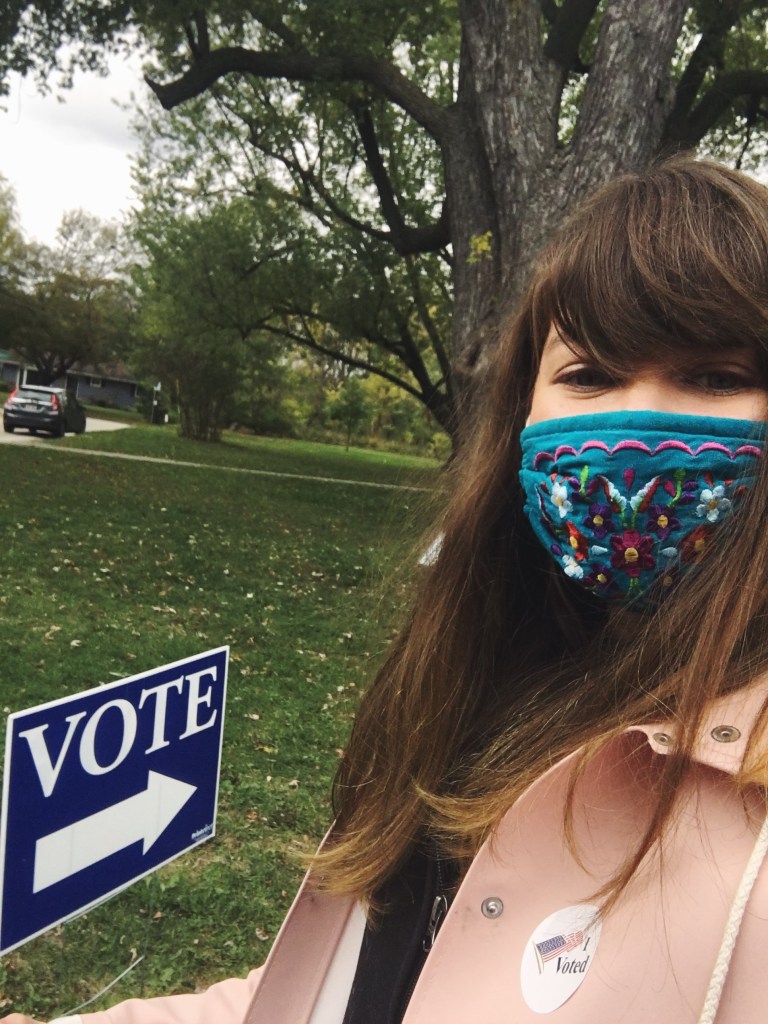
A selfie I took today after dropping off my ballot
This election, I’ve been hearing a lot about how we have to pick the “lesser of two evils,” why “voting is like taking the bus,” or how “at least Biden isn’t Trump,” and I agree with these sentiments wholeheartedly, but there are honestly so many reasons why I think that Biden and Harris are the best choice in this election. Here are just a few that I jotted down earlier this week:
Reversing some of the most inhumane immigration policies––including child separation from their families (remember the horrific pictures of kids in cages?)
Reinstating DACA and making it easier for DREAMers to get financial aid (Some of the most dedicated, brilliant students I’ve taught are DREAMers, and they’re working to become doctors, teachers, and counselors. Not giving them the opportunity to contribute to our society is a loss for all of us!)
Finally providing a path to citizenship for 11 million undocumented Americans (if this sounds radical to you, remember that Reagan did it in 1986, so this isn’t really partisan)
Investing in clean energy and holding corporate polluters accountable (because we can’t reverse climate change with small individual actions, and I should know. I take a lot of small individual actions!)
Reforming the criminal justice system, including investing in social workers, disability advocates, and mental health experts to de-escalate situations that police officers never should have been expected to handle; and eliminating private prisons and cash bail (because if locking people up is a business, then doesn’t that create incentive$$$ to do so?)
A comprehensive COVID-19 plan that prioritizes health AND economic concerns––they’re not separate issues––including free, rapid testing so that people don’t unwittingly infect the people in their communities; ensuring fair access to treatments (this pandemic won’t ever end if only the wealthy can get tested and treated); scaling up unemployment insurance; and halting evictions (I live down the street from a park that now has a homeless encampment because so many people have lost their jobs and can’t make rent. They’re my neighbors, and honestly, it could be Devin and me if we lost our jobs. We live paycheck to paycheck.)
Paid parental leave (because I love a lot of moms who had to go back to work pretty much right after their babies were born, and because maybe someday we’ll have kids, too.)
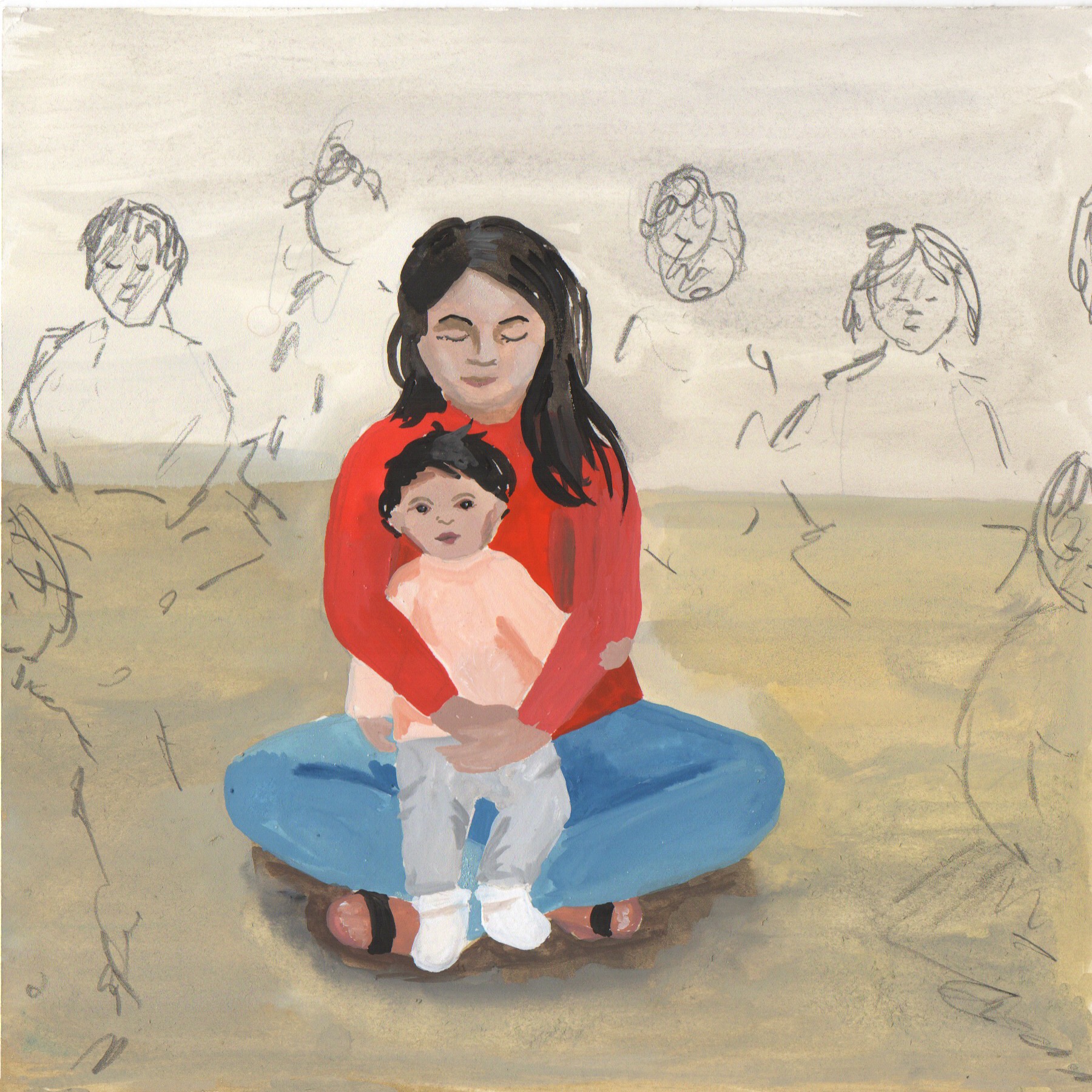
Illustrating Immigration began as a project to tell stories about people who moved from one country to another and what they noticed when they got there. From the beginning, we have included difficult migration stories because we recognize that not everyone migrates under the same conditions, and millions of people face closed or restrictive borders that limit their ability to move. Over the past year, as we have heard and witnessed stories of suffering on the U.S.–Mexico border, we have felt moved to help bring an end to these human rights abuses. Few journalists, politicians, or civilians have been allowed to see the conditions at U.S. immigration detention centers. In an effort to raise awareness, we’ll be sharing illustrations of court statements from people who have been held by U.S. immigration authorities and experts who have evaluated them. Our goal is to raise awareness so that these abuses end and no person is ever hurt like this again. To paraphrase Nora Ephron, years from now, we may say many things about this period of U.S. history, but we will never be able to say we didn’t know what was happening. These statementswere collected by legal professionals representing children in court. The documents were filed in June 2019 and were made public, with personal details redacted, in July 2019. We accessed them via the National Center for Youth Law.
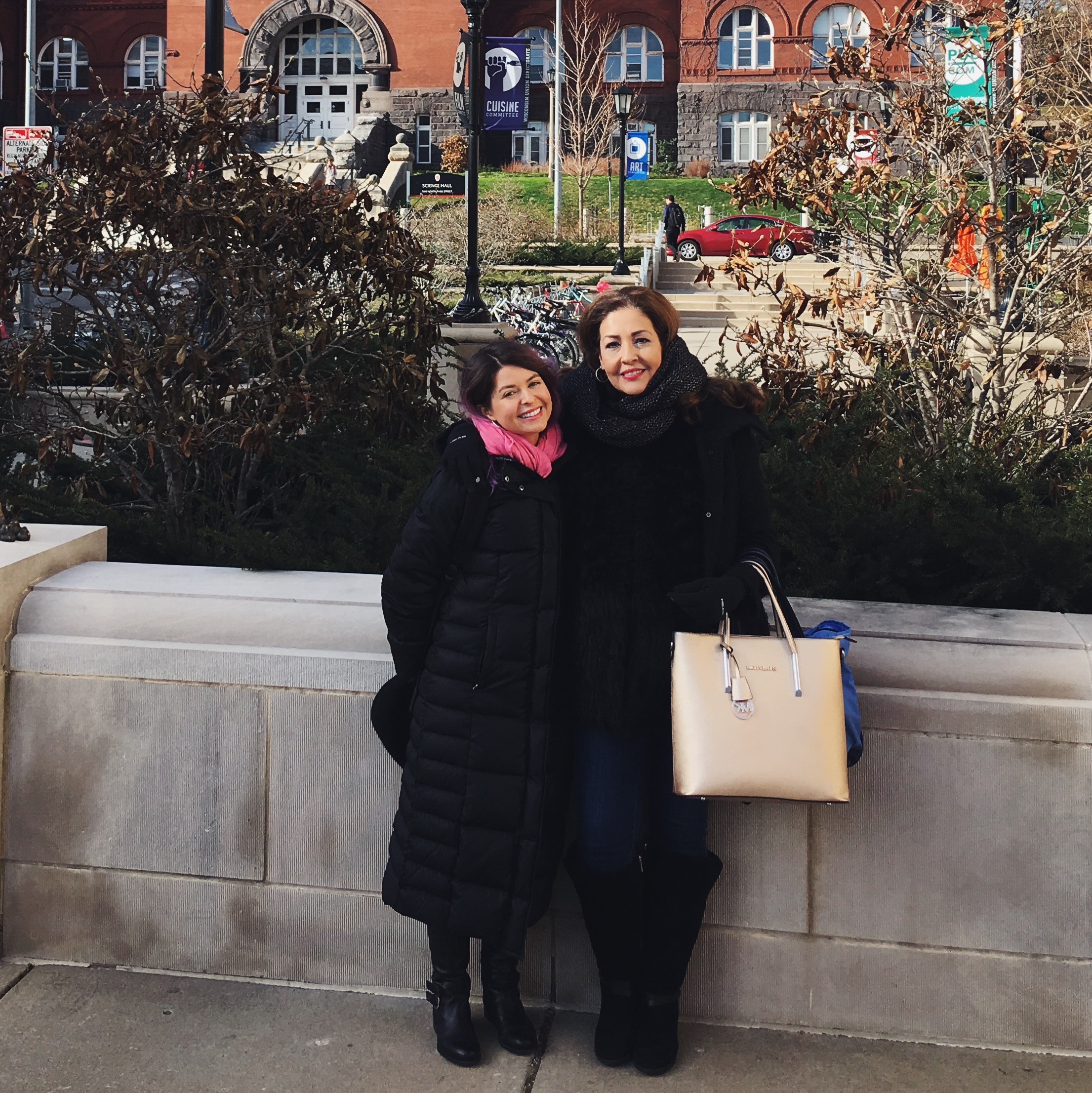
In college, I told my mom I was in a group for women of color, and she looked at me unsure. “Are you a woman of color?” she asked. It’s the same look she gave me last month when we talked about race and migration. “I don’t really think of you as an immigrant,” she admitted. “But we moved here together,” I reminded her. “I know,” she said, and we laughed, remembering the things we went through. I’d get in trouble in school for following my teacher’s directions literally because that’s the only way I understood English. Drivers would stare at us on our walks to the grocery store––making it very clear that we were the only people who walked places in the Texas suburbs. A few months later, we were tricked into buying a car that would break down every 20 miles. After pouring water into the radiator or changing the oil, my mom would say “It’s God-powered, remember?” and I would nod, assured that our precarious rides were really miraculous adventures. My mom and I have gone through so much together, and yet I know exactly what she means when she wonders if I am a woman of color or a Mexican immigrant like her. Despite our similarities, in the United States, we have always been treated differently. I am perceived as White and American. She is perceived as brown and un-American. This difference in perception has enormous consequences –– consequences we’ll likely never know in full.
But, even though I have a lot of White privilege, I am often reminded of the fact that I am not White. In high school, I slept over at the house of a friend who told me her brother had been robbed while delivering a pizza in the “Hispanic part of town.” The next morning, I went home replaying her words in my head. I decided that she didn’t mean anything bad by it. I reasoned that she didn’t think that hearing “Hispanic” equated with “criminal” or “dangerous” would be hurtful to me because she didn’t think of me as Latina. I mean, we both liked feminism and indie music and writing instant messages in lower-case letters. We were in a lot of the same classes. As far as I was concerned, we were practically identical. A few months later, I was accepted to the liberal arts college she’d told me about, and I got a good financial aid package, too. She was a grade below me, and I couldn’t wait to tell her. “I got in! I got in! Now you just have to apply, and then we’ll go to college together!” In my mind, our future was set. Our lives would be a spinoff of a teen drama on the WB.
Her eyes narrowed, “I probably won’t be able to go,” she said, before telling me that she didn’t have my advantages. What could she mean by that? Was she saying that being Mexican and having a single mom were advantages, implying that I didn’t deserve to get in? I mumbled something about “need-based financial aid” and kept encouraging her to apply. I cried when I got home.
In high school, I rarely talked about race or my immigration story. I knew the kinds of things White people said when they thought people of color weren’t around, and it didn’t feel safe. (I wrote a little bit about this for Enormous Eye, under the section titled 1:43 pm, my mom’s car.) College felt safer. My roommate was from Miami, and she told me that even though her parents were from Venezuela, her mom loved Mexico and Mexican culture. Sometimes we’d stay up late, singing our favorite Alejandro Fernández songs, and I didn’t feel self-conscious speaking Spanish on the phone with my mom. One day, I was telling a story about my hometown in Mexico. A White friend of mine laughed and said, “I like you because you’re Mexican, but you don’t, like, make a big deal out of it.” Her tone was light, but it felt like a warning.
People often say things like this to me. Their words are subtle reminders that I can belong to their club, as long as I know my place.
* The title for this post is borrowed from the blog Conditionally Accepted, “a space for scholars on the margins of academia.”
Applying for DACA is costly. Many of the young people who have DACA are unable to pay the application fees––around $500––on such short notice. This page is a directory of lawyers and organizations offering to process DACA renewal applications at no cost. It is meant to be a resource for for individuals eligible to reapply. It will be updated nightly from now until October 1. If you are able to give money to help cover DACA application costs, click to donate to United We Dream’s Renewal Fund. If you know of other resources, lawyers, or organizations that should be on this list, please email their contact information to smoothliminal@gmail.com
Anja Riebensahm and I are continuing our project Illustrating Immigration. This time Anja will be illustrating stories from immigrants of all ages! If you have moved from one country to another, fill out our survey, and/or send it to someone else who has.
I’ve written about this before, but when I moved to the States, the first thing I learned was that being Mexican and speaking Spanish was not cool (unless you were a talking dog that said “Yo quiero Taco Bell.” That dog was everywhere, and everyone seemed to think it was hilarious).
I’d grown up hearing, “El que sabe dos idiomas, vale por dos,” watching Follow Muzzy to improve my English over the summer, and attending a private school that prided itself on teaching every subject in Spanish and English. Everyone in my family spoke at least two languages, and the grown-ups taught us that being able to communicate with lots of different people was one of the coolest things you could do.
In Texas, the opposite seemed to be true. The public school I went to was starting an English-Spanish bilingual program, but there were no books or materials. My mom was actually the lone bilingual teacher in charge of implementing this program. Her job was to teach all the kids from kindergarten to sixth grade, and faced with an empty classroom, she did the only thing she could think of. She got on a plane and flew to Chihuahua to buy books.
As I got used to living in Texas, it became harder to feel proud of my culture or to speak Spanish in front of other people. Once, at the grocery store, I noticed a White woman giving us a dirty look while I asked my mom a question in Spanish. My cheeks felt hot, and I stopped talking. On the walk home, I asked my mom if we could speak Spanish at home and English in public. She said no. I asked if we could try to speak Spanish softly, instead of yelling. Suddenly, we seemed intolerably loud, and I wanted to do anything I could to make ourselves acceptable to the people around us. I wasn’t the only one. At school, students told my mom they didn’t like their “ugly brown skin.” “Why would you want to have lighter skin?,” my mom would say. “Our skin is kissed by the sun, our skin is the color of cinnamon. ¡Están hermosos!” She taught us to sing “Ojos Negros, Piel Canela” and march around the classroom to songs by Cri-Cri. Soon my classmates (most of whom had not learned to read in any language despite the fact that they were in 2nd grade) were reading and writing in Spanish. Their parents could read what they wrote! And their families looked really happy when they came to parent-teacher night to see my mom. Against my wishes, I was soon transferred to an English-only classroom because the school said bilingual education was only for kids who didn’t speak English. In my monolingual classroom, I met Latinx children who didn’t speak any Spanish at all. Many of them had parents who spoke limited English, and they seemed to rely on the older children in the family to interpret between the parents and the little ones. In the past two decades, I’ve met countless families like this, and I’ve thought about how to prevent intra-familial language barriers.
The two things I believe we have to do if we want Latinx kids to grow up speaking Spanish in the United States are the things my mom has always done for her students and for me:
1. Teach them about their culture. Too often, schools––even schools that serve a majority Latinx population––neglect to teach kids about Latin American and Chican@ cultures, so we have to make up that difference ourselves. I once babysat for a family that only played Spanish-language music, movies, and television in their house. The little girls in that family understood Mexican culture despite never having been to Mexico. They laughed at their tía’s jokes and played “A la vibora, vibora de la mar” with their cousins.
2. Teach them to read and write in Spanish. Even when I wasn’t in a bilingual class, my mom kept buying me books in Spanish; my cousin Caren shared the novels she was assigned in school; and I felt really cool when I got older and could read books like Love in the Time of Cholera in their original form. (My aunt Martha Cecilia still buys me a book in Spanish every time she is in a bookstore because she’s that thoughtful.) Through my books, I learned words that made me gasp “There’s a word for that?!” and were impossible to translate. Thanks to my books, when Texas got to be too much, I had a way to escape to places where I wasn’t weird, and my culture wasn’t considered inferior. Now that I’m older, I often meet people who say they want their kids to grow up speaking Spanish. I take that super seriously because I know the difference it has made in my life.
I am not exaggerating when I say that being fluent in Spanish made the difference between having a close relationship with my grandmother and growing apart, between being proud and ashamed of who I am and where I’m from, between being myself and being someone altogether different. That’s why I will always speak to your babies in Spanish if you want me to, and I will always get them books so that they can learn for themselves. That’s why when my cousin Vanessa told me she was starting Sol Book Box, I was all in. It might seem strange for a childless person to be so excited about a book subscription service for Spanish-speaking children, but I signed up as soon as I could because it is hard to find books in Spanish at U.S. bookstores, and every time I give a book en español to a Latinx baby, I am praying that they get to grow up in a better world than I did.
When people asked me if I would take my spouse’s name after getting married, I would give an emphatic “NEVER!”
But actually, I’d already changed it.
In Mexico, I had two last names––my dad’s and my mom’s, same as everybody else––but on my U.S. documents I only had my dad’s, so when I moved to Texas, I lost my mom’s name.
I grew up thinking that that was the way it was. In Mexico, I had my full name. In the United States, not quite.
Last year when I shared my immigration story publicly, I decided I wanted to use my full name. It felt important to link myself to the people who raised me and love me and give me strength every single day and to the country that has been my home as long as I can remember. I decided I wanted to reclaim my full name in the United States and made that my resolution for 2017.
Then, the election happened.
Now there are many things that feel much more urgent than dealing with the bureaucracy of changing my name, so I’m not doing it yet. However, I have started using my full name everywhere I can.
So this is just a note to say, if you see an extra word hanging off the end of my name, don’t be confused. It’s just my name, and all of it is mine.
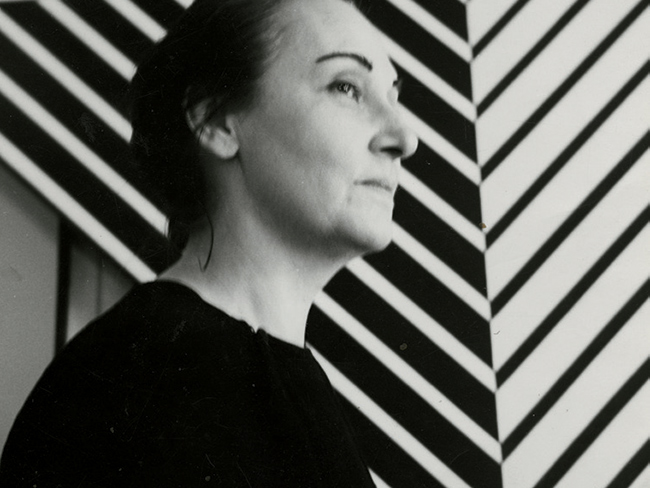
Last spring I did my first translation for a major U.S. museum. I translated an essay by Gerardo Mosquera for the Whitney Musem’s exhibition, Carmen Herrera: Lines of Sight. Incidentally, this is Herrera’s first solo exhibition by a major museum, so I felt even more passionate about getting it right. To prepare, I read everything I could about Carmen Herrera, abstract expressionism, and minimalism in Spanish and English. My initial aim was to familiarize myself with terminology, but even after I got a good sense of the lexicon and determined translations for concepts that were new to me, I kept reading. I was fascinated by the 101-year-old Cuban, American, immigrant artist who received very little recognition before her hundredth birthday but kept painting anyway. I love her. I love everything she symbolizes. Here are some of the coolest things I learned.
Her interviews are incredibly fun to read because she seems to have a witty retort to everything, including art criticism: “‘People see very sexy things — dirty minds! — but to me sex is sex, and triangles are triangles’” (quoted by Deborah Sontag).
Her success began a few years after her husband died, and people around her asked if maybe her husband––who had been a staunch supporter of her work––was helping her from heaven. In a 2009 interview, she refuted that interpretation: “‘Yeah, right, Jesse on a cloud. I worked really hard. Maybe it was me.’”
photo via the Whitney Museum of American Art
Her favorite artist is herself. The Whitney retrospective closes this Monday, but I hope it is the first of many. That may well be the case because, after it closes in New York, the show is headed to Ohio.
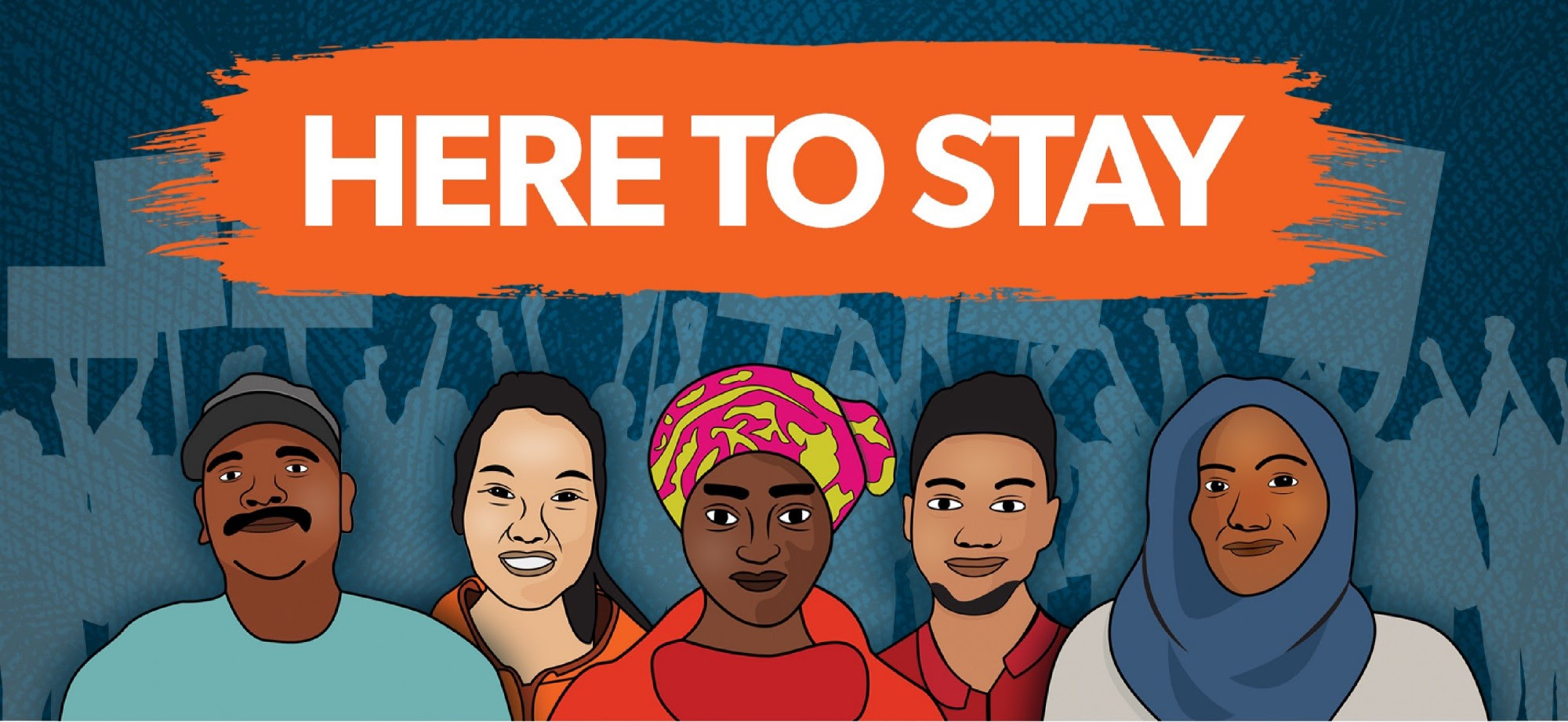
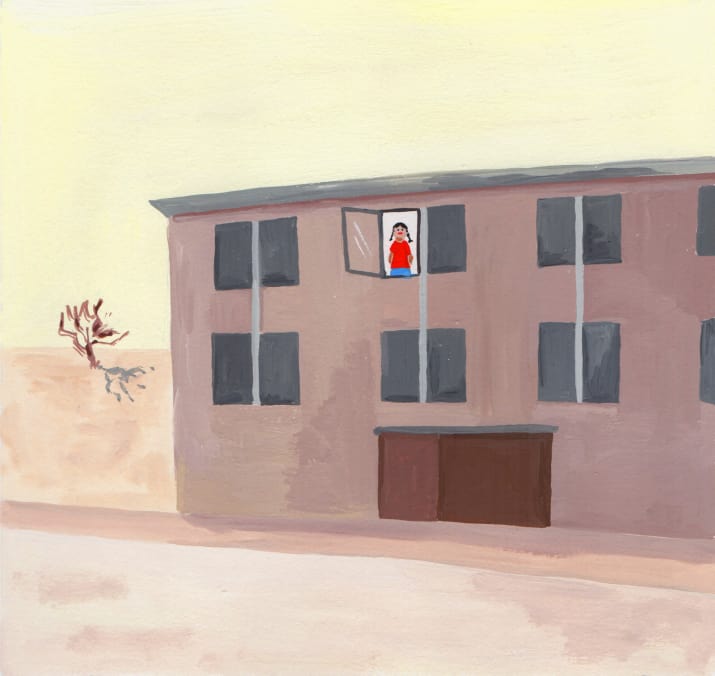 Anja Riebensahm and I are continuing our project Illustrating Immigration. This time Anja will be illustrating stories from immigrants of all ages! If you have moved from one country to another, fill out our survey, and/or send it to someone else who has.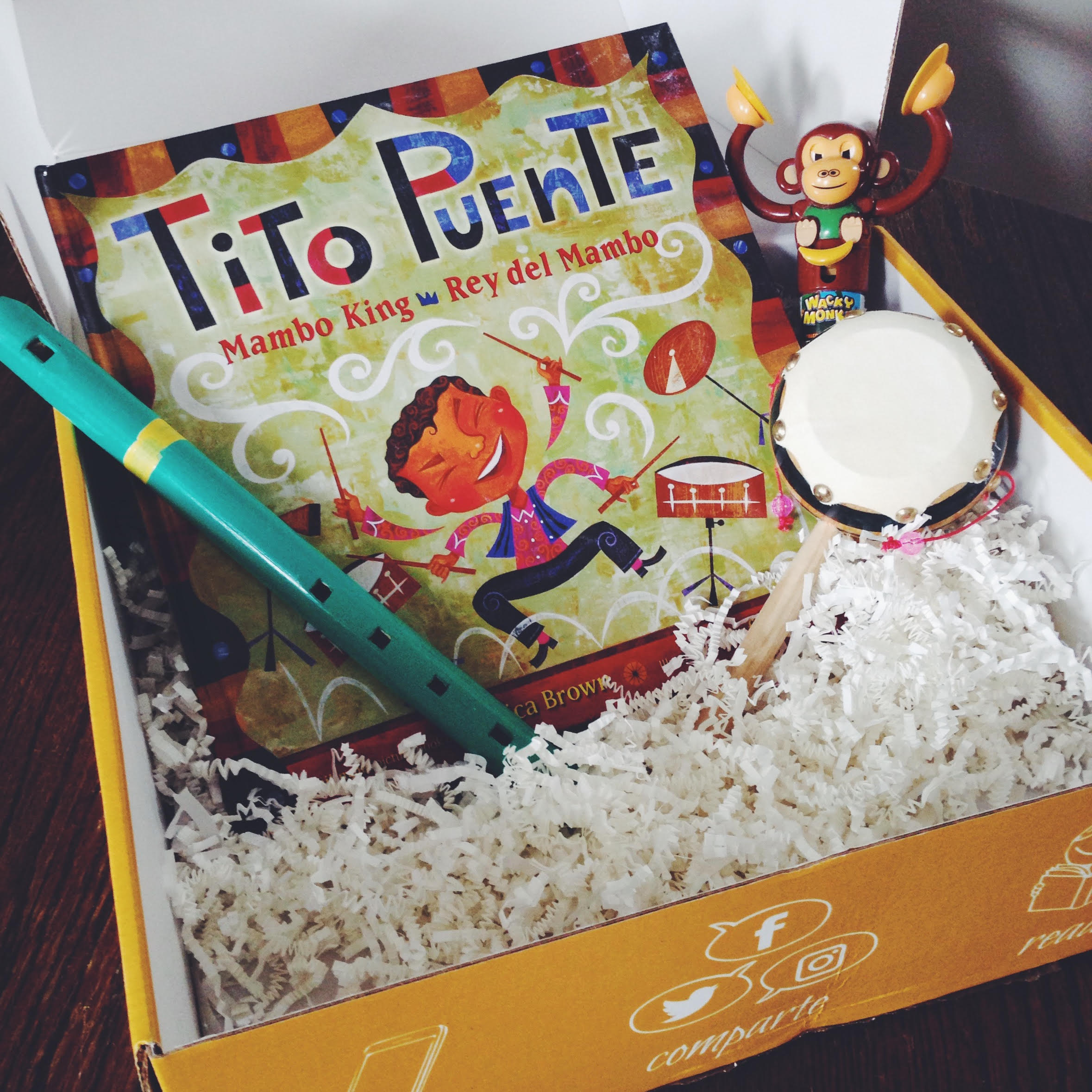






 smoothliminal