19 July 2016
Sometimes my identity feels like a party trick.
“Oh, you’re from Mek-see-koe!,” a wide-eyed voice exclaims.
I nod eagerly.
And I feel like a poodle on its hind legs.
But sometimes, my identity, which is so often unseen for reasons beyond my control, feels like a superpower.
The power to subvert expectations.
It happened yesterday at a Patel Brothers grocery store in Schaumburg, Illinois where I was helping my friend Ariel fulfill mango orders for the Indian diaspora of Central Wisconsin. (Ariel’s partner Shashank is from India, so they are very connected with Indian families that live near them, and when one of them is near an Indian grocery store, they bring mangos back for the group. I want this system but for Mexican snacks, please and thank you.)
There I am, inspecting boxes of mangos and realizing there aren’t nearly enough when I overhear two employees speaking Spanish. I turn and ask if there are any mangos in the back, and one of them, who seems to be the Chief Mango Stocker––clearly an essential job in a store that specializes in produce from the subcontinent––seems happily surprised to hear me speak Spanish.
“Where are you from?,” he asks.
I tell him I’m from Chihuahua and his look of surprise transforms into a grin that fills his whole face.
He leaves and returns, hidden behind cases and cases of mangos on wheels. And as he gradually reappears, transferring the cartons of mangos from the rolling contraption to our two waiting carts, he starts telling me his story.
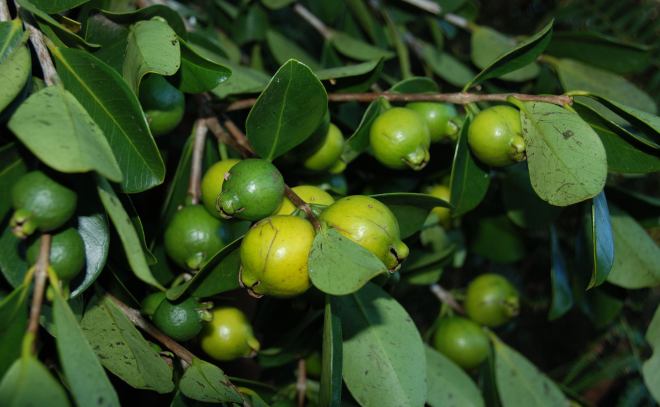
“See those guavas?,” he points to a display, “I’m from Aguascalientes. My family grows guavas.”
On his phone, he shows me pictures from his family’s orchard. A close-up of guavas on the tree. The house he built with money he earned stocking the guavas he used to grow. Guavas he left behind because he couldn’t make enough money to live. A house he doesn’t get to visit.
“I had a son,” he continues. “He was two. He fell in the pool. I couldn’t even go to the funeral…”
There is a pause, and I think we are both asking ourselves the same questions.
What if he’d never had to leave Aguascalientes? What if the border were just a line on a map that everyone could cross? What if he could have brought his baby here? What if he could have saved his son?
He attempts a look of resignation. “Así es la vida. Difícil…”
I nod.
What I really want to do is yell, “No! Your life shouldn’t be this hard! Nobody’s life should be this hard!”
By then, our carts are full of mangos; customers approach him to ask for help; Ariel and I say goodbye.
Of course, I don’t know that he shared all of this with me because I’m from Mexico. Maybe he is always this vulnerable with strangers. Maybe he tells everyone his story. Maybe this is how he grieves.
But I have this experience often. I say I’m from Mexico or I talk back in Spanish, and I see the other person loosen. It is the shift from “You are different” to “We’re the same,” from distant to close, from gringa to paisana. It is the collapse of a small border.
Driving away from the grocery store, I think about a talk I saw Mia Mingus give in which she talked about the importance of articulating not only what we’re fighting against, but what we’re fighting for and making real plans. She wrote about it on her blog:
“[W]e are good at resisting. We are good at fighting for the world we don’t want. We are good at analysis and analyzing things up and down (and sometimes into oblivion). We are skilled at naming what we don’t want. I think we are less skilled at naming what we do want; our visions for liberation. And not just vague things like, ‘ending white supremacy and heterosexism,’ but how are all the children going to get fed? Who will clean the toilets? Who will take out the trash? Who will cook the food?”
OK, I think, what do I want?
I imagine having to articulate my plans in front of Congress, but all I can picture is me, standing at a podium, looking at the legislators and sharing my new friend’s story. I conclude with my call to action: “If his family grows guavas in Aguascalientes, don’t you think it’s wrong that the only way he can make a living is by stocking guavas in Illinois? I mean, how does that even make sense? If they grow the actual guavas, and the guavas are what’s being sold, why can’t they make a profit?”
Good questions, Kristy, but no plan.
I try again.
I picture myself hitting the podium to emphasize my point that we must repeal NAFTA––which decimated Mexico’s agricultural sector––and punish U.S. companies that conduct unethical business abroad, like Wal-Mart, for example. I picture myself demanding that the U.S. government open the borders because human rights shouldn’t be determined by an accident of birth––especially in a time when photos, words, ideas, and corporations transcend borders every day.
I don’t actually think I’m qualified enough to speak in front of Congress about immigration reform. It’s just… I think the people who hear immigration stories most often are other immigrants. And most of the people who determine border laws are not immigrants.
In my daily life, I hear lots of stories like this. When politicians walk into a grocery store, they just get guavas.
And so the borders stand.
If I could be anything, I would like to be a bridge.
 smoothliminal