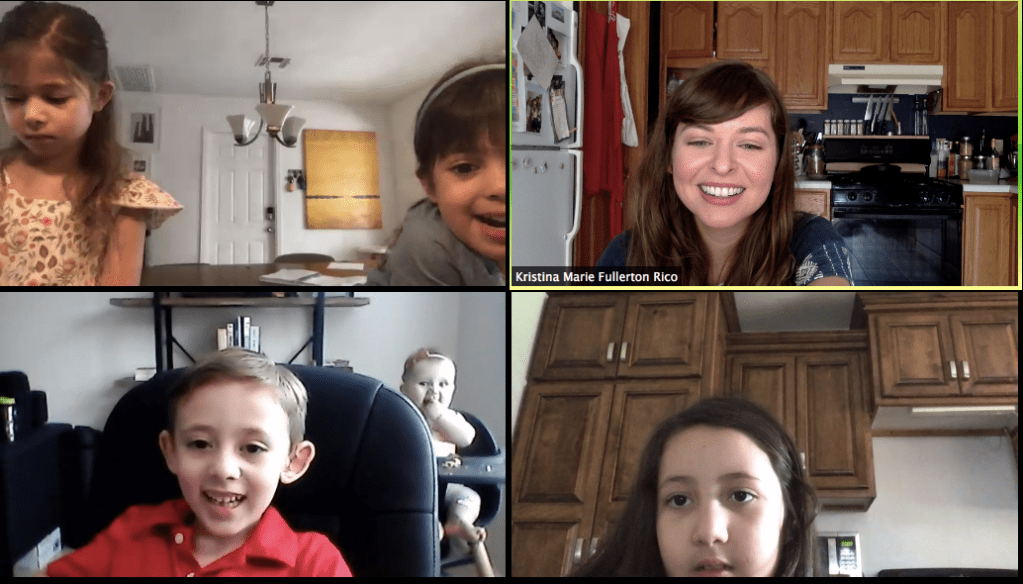
Teaching and learning Spanish from home: spotlight on Bilinguify!

How did you learn to speak another language? I like to ask this question when I meet new people because the answers are fascinating. People who grew up in multilingual countries or regions often can’t remember how they learned a “second” language (“What do you mean? I just grew up speaking both!”). But those of us who learned a second language in places that are predominantly monolingual often talk about our language classes in a tone usually reserved for root canals (e.g. “Ugggh, I hated my Spanish classes. The only word I learned was biblioteca“).

Growing up in Mexico and then the U.S., I feel like I experienced a lot of different teaching styles from fun––like singing “Pollito, chicken/gallina, hen”––to torturous. (I’m looking at you, ESL teacher who made the Spanish speakers repeat the word “pajamas” over and over in an attempt to get rid of our accents. It was awful! Even though I speak very fluent English now, I still hesitate before saying that word!)

The more I learn about language acquisition, the more I’m convinced that learning a new language is all about how we are taught and why we are learning.

Which is great to think about, but how do you actually put it into practice? Especially when you’re the person responsible for teaching kids? At home? In the middle of a pandemic???

It’s enough to make even the most committed bilingual parents and caregivers say, “Forget it! ¡Olvídalo! I can’t! ¡No puedo!,” but then, if you’re like me, you think about how grateful you are to be able to think and speak and love in two languages and how much you want to pass that on to the children in your life.

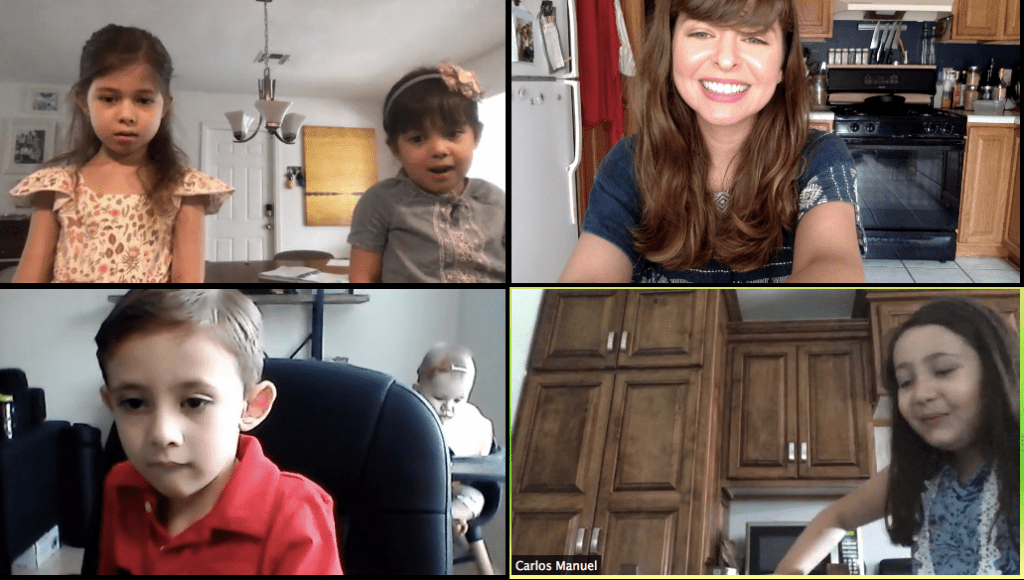
That’s where Bilinguify! comes in. Bilinguify is a 21-day class and community space for people who want to help kids learn Spanish in a fun, joyful way. I took the class this summer and learned strategies that have helped me connect with mis sobrinit@s even when we are far apart because of the pandemic.

I think Bilinguify! works because it’s not about being perfect or using traditional tools like worksheets and vocabulary lessons. Instead, this class helps us realize that we aren’t just teaching our kids Spanish because we want them to know how to use accents and punctuation or even because we know it will help them have an easier time getting a job later in their lives. Both of those things are cool, but I suspect that if you’re reading this, you probably have a deeper motivation.

Maybe you’re a Latinx parent who wants to make sure your kids can talk to their hilarious abuelita and laugh at her jokes. Maybe you grew up embarrassed to speak Spanish, and you want your kids to love themselves and your culture from the beginning instead of having to unlearn shame. Maybe you want your kids to feel empowered because they can not only understand Spanish but also say exactly what they mean to say whenever they want to say it. Maybe you don’t even speak Spanish yourself, but you’ve been troubled by news stories about increasing hate crimes and you want to make sure your children are learning to reject racism in all its forms.

Whatever your reason, knowing why Spanish is important to you makes everything easier. After guiding you through an exercise to clarify your mission, Bilinguify! offers you tons of strategies to incorporate Spanish-learning opportunities into your everyday life and to find community so that you’re not putting all pressure on yourself to be the perfect teacher.

Because, after all, as anyone who’s grown up bilingual can tell you, the best way to learn a new language isn’t in a standard class where you repeat new words over and over. It’s singing, playing, talking, and dreaming in that language until it becomes a part of you.
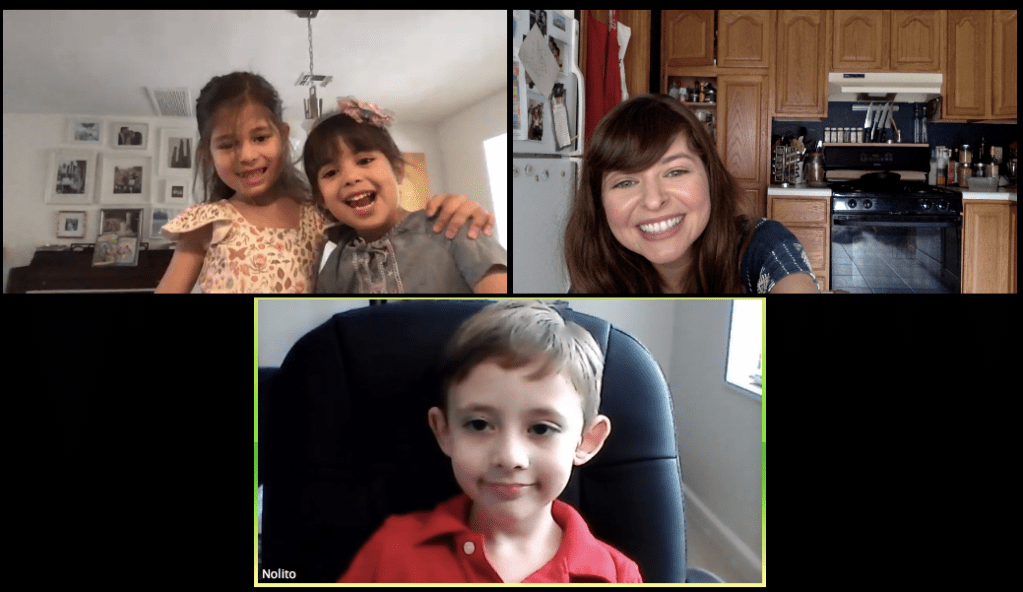
I’ve been using these tips and tricks to connect with my sobrin@s over Zoom calls and FaceTimes, so I can tell you that they really do work!

In honor of Latinx Heritage Month, Bilinguify! is on sale for $97. AND if you use the code DIEZ at checkout, you’ll get an additional 10% off. Even though you’ll be able to access Bilinguify! resources on your own time, this program is all about community, so it only runs for three weeks, and you must be registered by this Saturday September 26th at 10 pm PST. The program will start on Monday, September 28, 2020 when you’ll be able to access short videos, resources and prompts, members-only discussion forums with other community members, and Zoom calls to learn more and talk about how it’s going.

Note: Bilinguify! was created by my cousin, Vanessa Nielsen Molina, who also runs my favorite book subscription service, Sol Book Box (I wrote more about that here), but even though I know about Bilinguify! and Sol Book Box because I know Vanessa, I’ve been a full-price paying customer for years because I believe these services are worth it.

This time, for the first time, I’m an affiliate, so if you sign up for Bilinguify! using this link, I’ll get a small compensation, at no cost to you.
Teaching and learning Spanish from home: spotlight on Bilinguify!

Las Guayabas

goya_blancs

19 July 2016

Sometimes my identity feels like a party trick.

“Oh, you’re from Mek-see-koe!,” a wide-eyed voice exclaims.

I nod eagerly.

And I feel like a poodle on its hind legs.

But sometimes, my identity, which is so often unseen for reasons beyond my control, feels like a superpower.

The power to subvert expectations.

It happened yesterday at a Patel Brothers grocery store in Schaumburg, Illinois where I was helping my friend Ariel fulfill mango orders for the Indian diaspora of Central Wisconsin. (Ariel’s partner Shashank is from India, so they are very connected with Indian families that live near them, and when one of them is near an Indian grocery store, they bring mangos back for the group. I want this system but for Mexican snacks, please and thank you.)

There I am, inspecting boxes of mangos and realizing there aren’t nearly enough when I overhear two employees speaking Spanish. I turn and ask if there are any mangos in the back, and one of them, who seems to be the Chief Mango Stocker––clearly an essential job in a store that specializes in produce from the subcontinent––seems happily surprised to hear me speak Spanish.

“Where are you from?,” he asks.

I tell him I’m from Chihuahua and his look of surprise transforms into a grin that fills his whole face.

He leaves and returns, hidden behind cases and cases of mangos on wheels. And as he gradually reappears, transferring the cartons of mangos from the rolling contraption to our two waiting carts, he starts telling me his story.

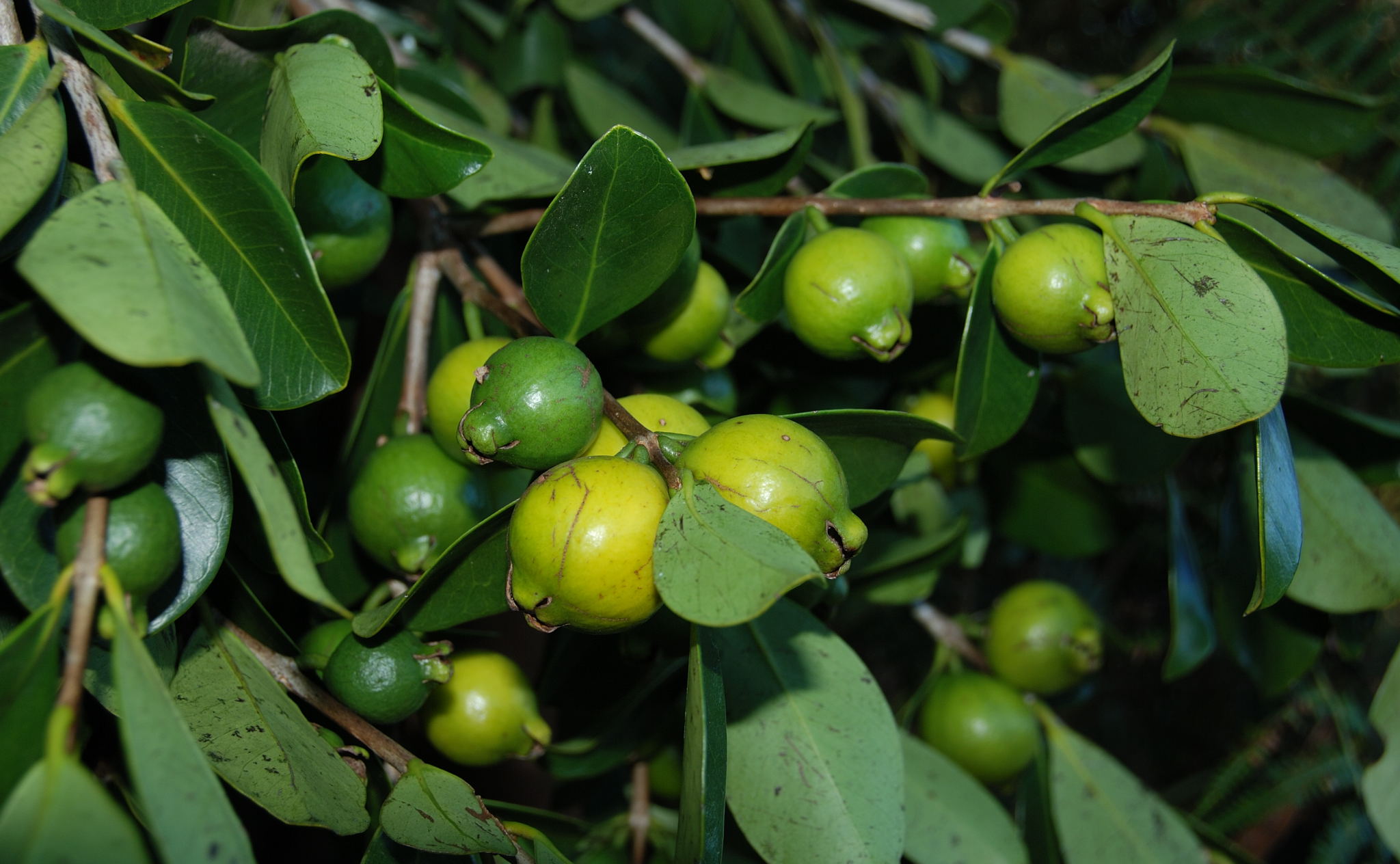
“See those guavas?,” he points to a display, “I’m from Aguascalientes. My family grows guavas.”

On his phone, he shows me pictures from his family’s orchard. A close-up of guavas on the tree. The house he built with money he earned stocking the guavas he used to grow. Guavas he left behind because he couldn’t make enough money to live. A house he doesn’t get to visit.

“I had a son,” he continues.  “He was two. He fell in the pool. I couldn’t even go to the funeral…”

There is a pause, and I think we are both asking ourselves the same questions.

What if he’d never had to leave Aguascalientes? What if the border were just a line on a map that everyone could cross? What if he could have brought his baby here? What if he could have saved his son?

He attempts a look of resignation. “Así es la vida. Difícil…”

I nod.

What I really want to do is yell, “No! Your life shouldn’t be this hard! Nobody’s life should be this hard!”

By then, our carts are full of mangos; customers approach him to ask for help; Ariel and I say goodbye.

Of course, I don’t know that he shared all of this with me because I’m from Mexico. Maybe he is always this vulnerable with strangers. Maybe he tells everyone his story. Maybe this is how he grieves.

But I have this experience often. I say I’m from Mexico or I talk back in Spanish, and I see the other person loosen. It is the shift from “You are different” to “We’re the same,” from distant to close, from gringa to paisana. It is the collapse of a small border.

Driving away from the grocery store, I think about a talk I saw Mia Mingus give in which she talked about the importance of articulating not only what we’re fighting against, but what we’re fighting for and making real plans. She wrote about it on her blog:

“[W]e are good at resisting. We are good at fighting for the world we don’t want. We are good at analysis and analyzing things up and down (and sometimes into oblivion). We are skilled at naming what we don’t want. I think we are less skilled at naming what we do want; our visions for liberation. And not just vague things like, ‘ending white supremacy and heterosexism,’ but how are all the children going to get fed? Who will clean the toilets? Who will take out the trash? Who will cook the food?”

OK, I think, what do I want?

I imagine having to articulate my plans in front of Congress, but all I can picture is me, standing at a podium, looking at the legislators and sharing my new friend’s story. I conclude with my call to action: “If his family grows guavas in Aguascalientes, don’t you think it’s wrong that the only way he can make a living is by stocking guavas in Illinois? I mean, how does that even make sense? If they grow the actual guavas, and the guavas are what’s being sold, why can’t they make a profit?”

Good questions, Kristy, but no plan.

I try again.

I picture myself hitting the podium to emphasize my point that we must repeal NAFTA––which decimated Mexico’s agricultural sector––and punish U.S. companies that conduct unethical business abroad, like Wal-Mart, for example. I picture myself demanding that the U.S. government open the borders because human rights shouldn’t be determined by an accident of birth––especially in a time when photos, words, ideas, and corporations transcend borders every day.

I don’t actually think I’m qualified enough to speak in front of Congress about immigration reform. It’s just… I think the people who hear immigration stories most often are other immigrants. And most of the people who determine border laws are not immigrants.

In my daily life, I hear lots of stories like this. When politicians walk into a grocery store, they just get guavas.

And so the borders stand.

If I could be anything, I would like to be a bridge.


Las Guayabas

On language in childhood

Sometimes I baby-sit two little boys who don’t know I speak English. The first time I watched them, the older one chose a book for me to read to him. “It’s in English,” he cautioned.

“That’s okay. I’ll just read it in Spanish.”

I translate the words as we go along, and so far he hasn’t asked how I am able to read a book in English, in Spanish.


On language in childhood