Can we have relationships across political divides without pretending politics don’t matter?

If you want to make my stomach churn, all you have to say to me is, “Can we agree not to talk about politics?” or “Let’s just agree to disagree!”

Don’t get me wrong. I get why people say this. Nobody wants to have a screaming match at the dinner table, especially if you’re seeing people you love but don’t often get to see, like family members who live thousands of miles away or childhood friends who rarely visit your hometown at the same time you do. And it can feel pointless to talk about something when you don’t think there’s any hope that the person you’re talking to will change their mind. They might have no interest in changing their mind at all.

However, politics isn’t just about opinions. It’s about power. The power to determine who has enough food to eat, clean water to drink, clean air to breathe, a home to live in, access to healthcare and schools and libraries, a job with dignity and the ability to retire when working becomes difficult. Increasingly, I think politics is a choice between realizing that we are all interconnected and that you can’t guarantee safety and dignity for some at the expense of others, or pretending that safety and dignity can be bought. Of course I disagree with the latter view. Evidence of its incongruence is all around us. Think of the wildfires ravaging parts of Los Angeles, including ultra-wealthy neighborhoods, or the floods that have threatened even the fanciest New York City zip codes.

Truly, we are all in it together.

For that reason, I think talking with each other is worthwhile. I believe it’s possible –– and really, really necessary –– to have conversations about politics that are not just pointless arguments or relationship-enders.

What has helped me have better conversations with people with differing political views is to listen (it can be really hard, but I try to listen to other people like I hope they might listen to me) and to ask questions about their opinions and how they came to those conclusions. I also ask questions based on what I’ve observed, and most importantly, when I share my views, I do it in a way that is personal. I use lots of “I” statements about what I’ve experienced or share the stories of people I love. Watching movies and TV shows together can also be helpful because media can help us see other perspectives and develop empathy.

Whenever possible, I try to talk in person, but it can also work to talk on the phone. Texting is OK sometimes, but posting on social media almost never works for me.

There’s really good advice about how to have these kinds of conversations from Celeste Headlee, who wrote a book and did a TED Talk about this very topic.

Here’s a podcast that talks about this in the context of the 2024 election: https://deepcast.fm/episode/friendship-across-the-political-divide

And here’s a blog post that describes and links to her TED Talk: https://ideas.ted.com/how-to-talk-about-politics-constructively/
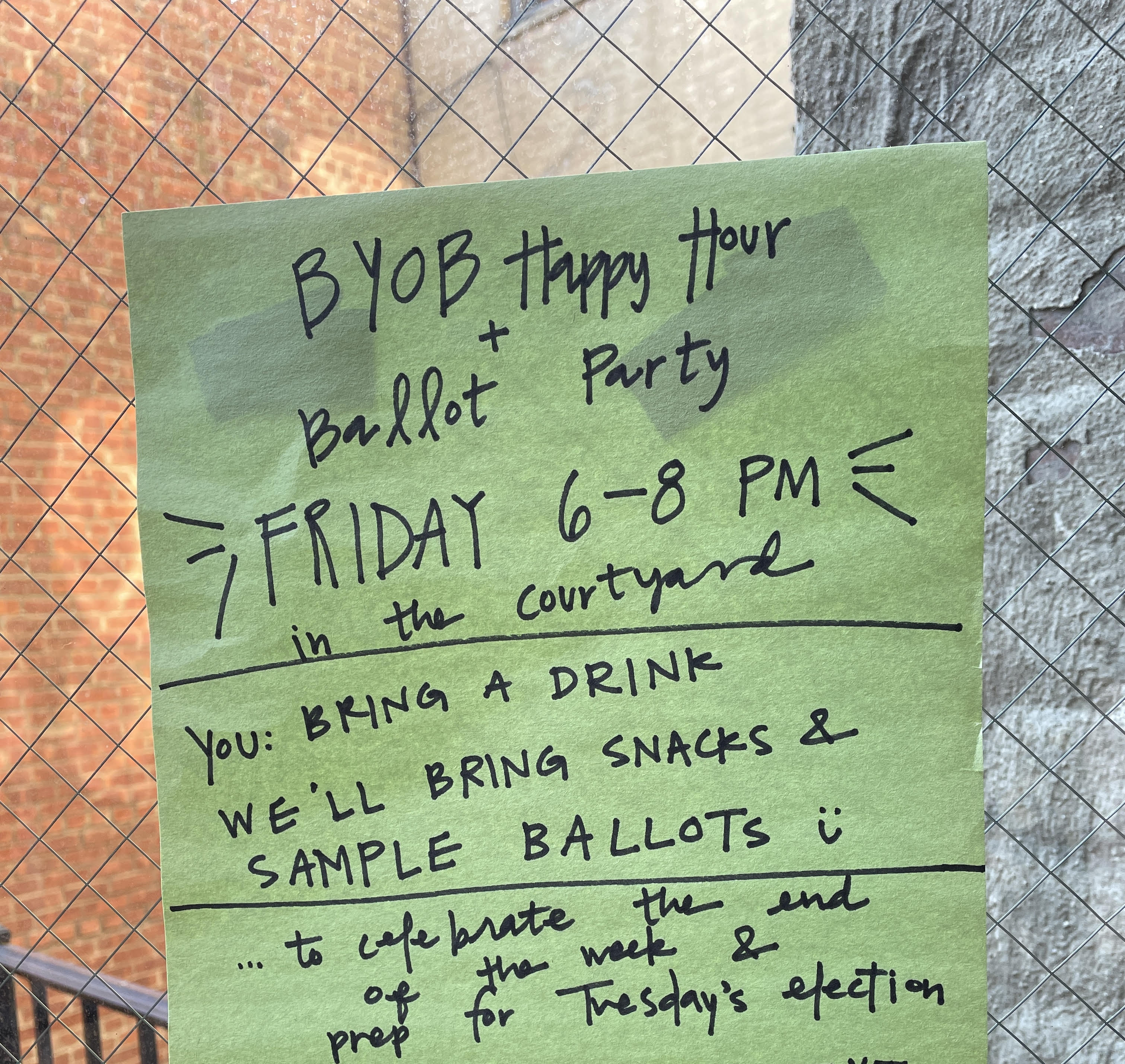
light green construction paper that reads "Ballot Party Friday 6–8 PM in the courtyard to celebrate the end of the week and prep for Tuesday's election"
One way I try to foster political dialogue is to host ballot parties with my neighbors. Here’s a homemade sign I made to advertise a ballot party in our apartment building’s courtyard a few years ago.

I don’t always get it right, but I hope that over time, I get better at having conversations like these. Our lives and our future are too important not to try.
Can we have relationships across political divides without pretending politics don’t matter?

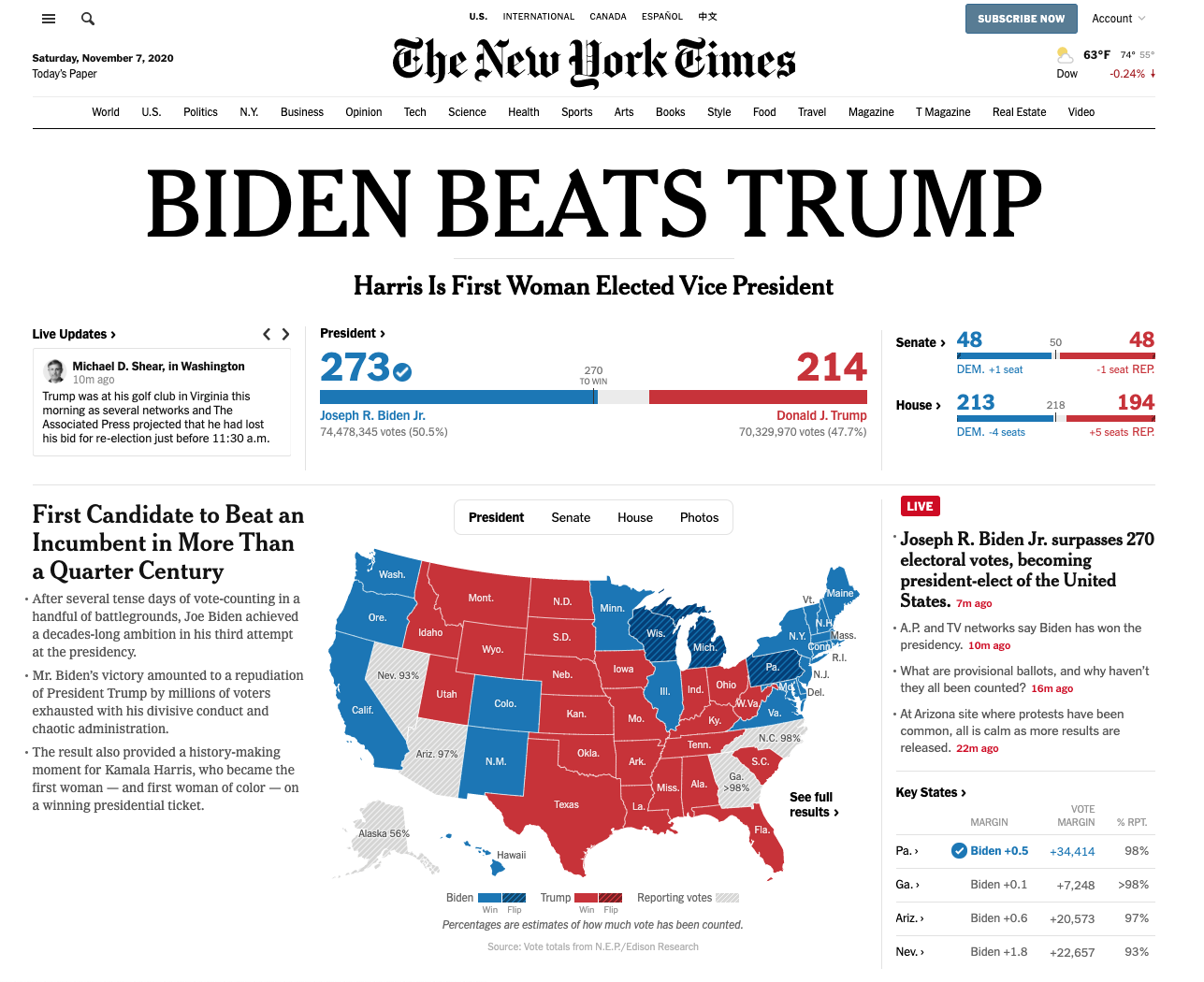
We won this election together

Front page of NYT.com, 7 November 2020

If you started out knocking on doors in Iowa and ended up helping people in your pajamas from the living room… 

If you put a Biden/Harris sign in your front yard even though you were afraid your neighbors would destroy it… 

If it hurt to vote for Biden because you were hoping to elect a more progressive candidate, but you voted in solidarity with the people who are most vulnerable under the Trump regime… 

If you got over your phone anxiety to call voters in a faraway land called Wisconsin…

If you learned to use Zoom, OpenVPB, or ThruTalk to phonebank…

If you volunteered to get out the vote even though our current system won’t even let you vote yourself…

If you started a Facebook community to empower people to organize within their communities, using their skills and their own platforms… 

If you moved to Wisconsin to help organize a ragtag band of volunteers (including a couple who was kind of fanatical about composting) and kept organizing even when the pandemic made everything so, so, so much harder…

If you trusted me to translate election information and help lead phonebanks in Spanish… 

If you dedicated your time to organizing Latinx voters (who are largely overlooked and increasingly targets of disinformation and suppression campaigns)…

 If you learned to say “register to vote,” “absentee ballot,” and “early voting” en español…

If you phoned a friend, texted an ex, or otherwise reached out to voters in swing states… 

If you shared your most personal stories to remind people about what was at stake in this election…

If you found the courage to talk politics with your co-workers, your grandma, or your aunt… 

If you spent your time talking to people who have every reason to distrust the electoral system and convinced them to vote and keep fighting for justice… 

If you called me, texted me, talked to me, listened to me, brought me Mexican candy, sent me care packages, and otherwise kept me going when I felt like I couldn’t…

If you volunteered to be a poll worker or an election observer (or supported other people so they could volunteer)…

If you led countless Zoom calls with confused volunteers and comforted us when we worried this election would be impossible to win… 

If you remembered all the times Trump called us animals, criminals, and rapists and refused to let him get away with it again…

If you voted and organized with hope even when it was hard to feel hopeful…

This message is for you. I love and admire you. I am infinitely grateful for your work. If I asked you to volunteer, I will almost certainly ask you to volunteer again to keep fighting for justice and human rights…

But today I feel more hopeful about those fights than I have in a long, long time. And it’s all thanks to you!

We won this election together.

We won this election together.

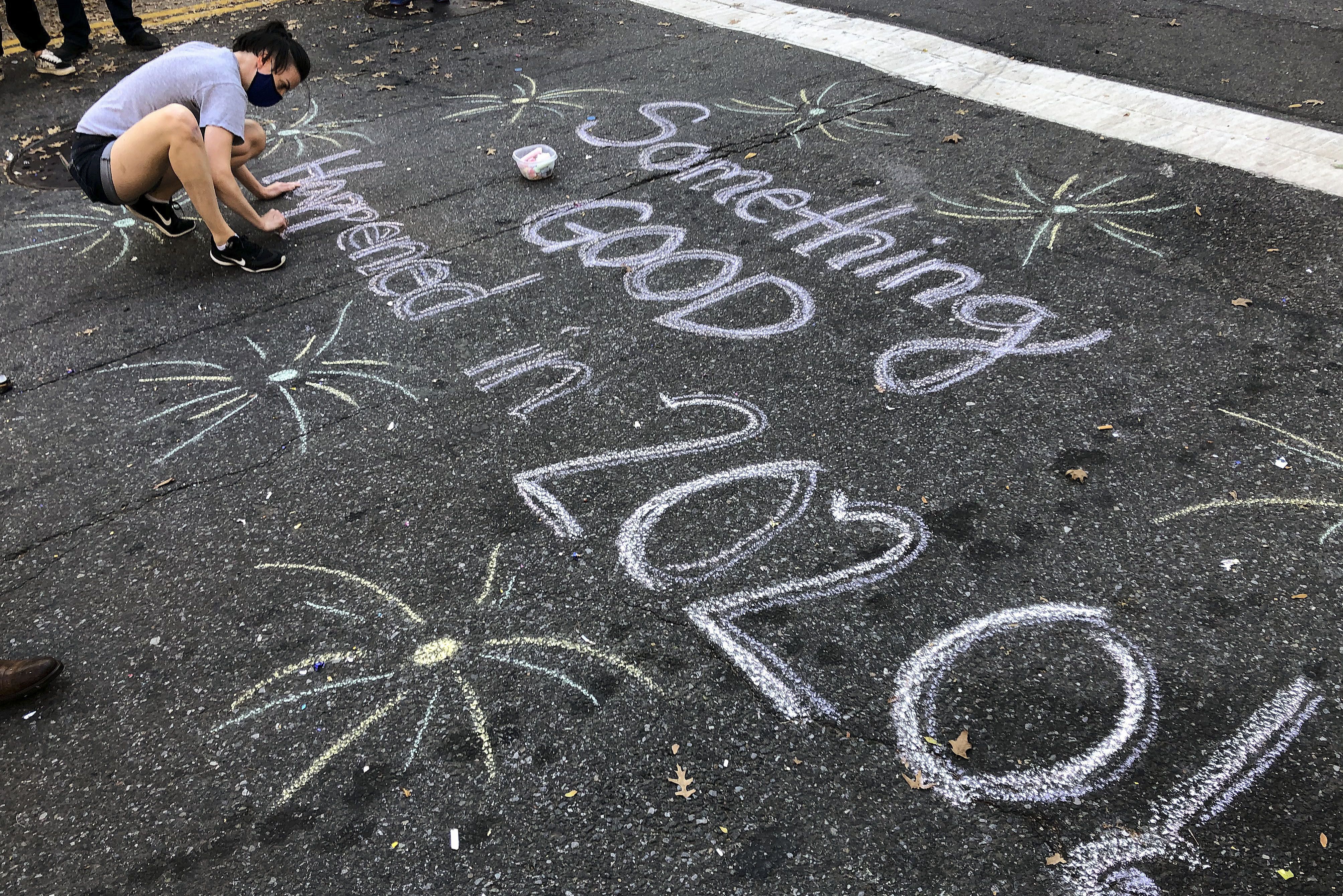
Jolin Polasek draws a sign in chalk on a street in Harlem after former vice president and Democratic presidential candidate Joe Biden was announced as the winner over Pres. Donald Trump to become the 46th president of the United States, Saturday, Nov. 7, 2020, in New York. (AP Photo/Mark Lennihan). Caption text and photo c/o Yahoo News.
We won this election together

How To Throw A Ballot Party

ballotparty

A ballot party is a fun, easy way to spend time with friends and become a more informed voter.

The concept is really simple. All you have to do to host your own is print out sample ballots and invite your friends over for dinner. As you eat, everyone researches a different line on the ballot on their phone or computer (good sources of information include the local news, voter guides from trusted organizations, and candidate questionnaires like those from the League of Women Voters). Then, you talk about what you learned and everyone fills in their sample ballots. Everyone takes home their own ballot––and no one has to share their choices––but we all get help learning about the issues and our voting options. It’s especially great for becoming informed about all the down-ballot races and referenda without feeling overwhelmed, and it gets us to vote where our votes count most (did you know that, at the local level, races can be decided by just a few votes? Or even a coin toss in the event of a tie?)

Devin and I have been hosting ballot parties before every election for the past couple of years, and honestly, I look forward to them the way I look forward to a holiday. This year we’re planning on making a soup and a big salad, but if you are less inclined to cook, I think it would also be fun to get together with friends and order pizza. The best part is that a few days after the party, I head to the polls with my little sample ballot in hand, confident that I know what I’m voting on and what choices I want to make.

What do you think? Is this totally nerdy? Would you ever host your own ballot party? I’m happy to help you plan one if you’re interested!

How To Throw A Ballot Party

A birthday favor

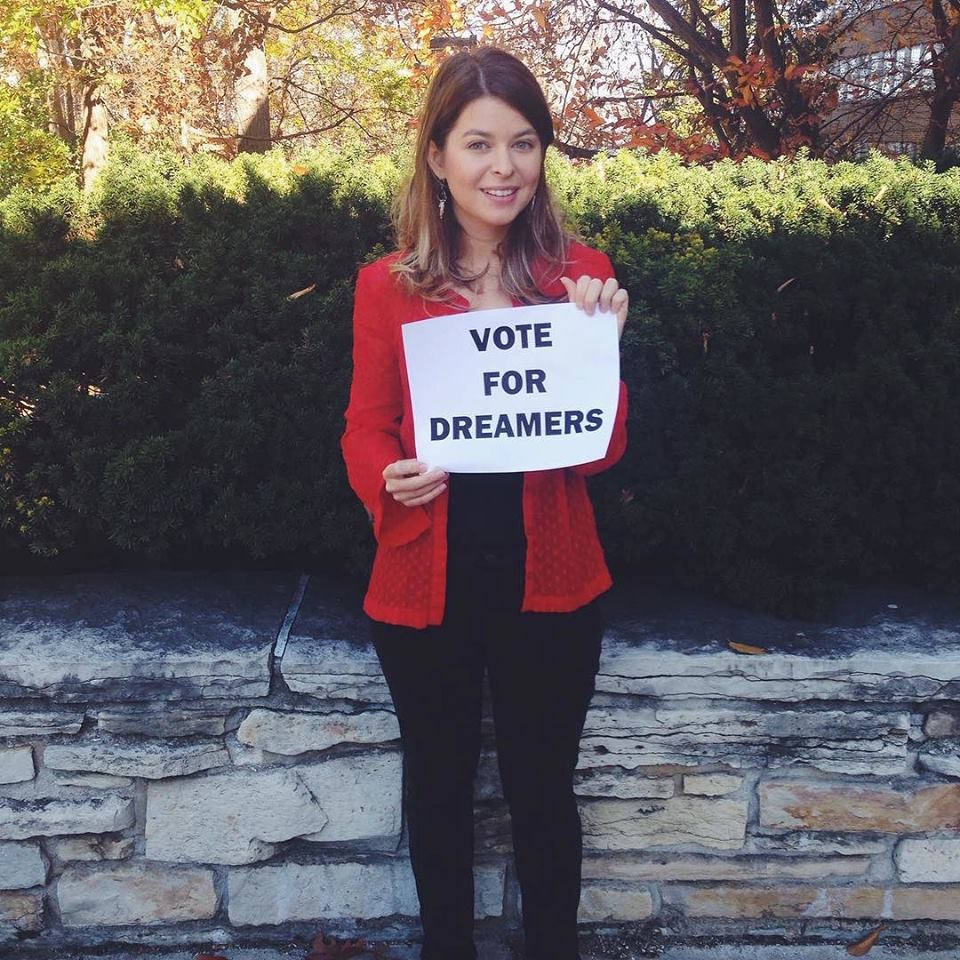
vote for dreamers
Photo from Election Day, Nov. 2016

Today is my birthday, and I’d like to ask you a favor. If you’re a U.S. voter, could you call your legislators and ask them to pass a #CleanDreamActNow?

All you have to do is click here and fill in your information. Then, your phone will ring and you’ll be connected to Congress! (The website also has a call script, so you don’t have to worry about what to say.) The whole process takes less than five minutes, and it could make a huge difference.

Even though approximately 80% of Americans* support a path to citizenship for DREAMers, Congress has refused to act. DACA permits are expiring every day, and things are going to get much worse after March 5th –– unless we make our representatives do their job and represent us.

Here’s some information on DACA in case you’re confused or unfamiliar (  ) and here’s a story about why DACA matters.

Thank you, friends. I love you.


*83% according to Fox News 

A birthday favor

Free Passes

This week I read Dahlia Grossman-Heinze take down rape culture in two posts (one about Woody Allen, the other about Harvey Weinstein), and it got me thinking.

Do you ever wonder what our lives would be like if predatory, abusive men didn’t get a free pass?

I was only 3 years old when Woody Allen’s sexual abuse made headlines. I was 8 when he married his stepdaughter. All of this was common knowledge, and he got to keep making movies and winning awards. In high school, I thought he was brilliant and hilarious. I wanted to grow up to be Annie Hall. Nobody told me that he didn’t deserve my admiration, even though plenty of people knew.

Same with Bill Cosby, who got to host Kids Say the Darndest Things, even though his history of sexual assault was an open secret in Hollywood.
.

And same with R. Kelly, who got to release everyone’s favorite party anthem “Ignition (Remix)” in 2002 even though he illegally married a 15-year-old in 1994 and has been accused of raping teenage girls countless times, beginning in 1996.

Even Bill Clinton. I know it’s controversial to mention him in our bipartisan political context, but even the most dyed-in-the-wool Democrats have to admit that he was, at best, a creepy boss who took advantage of unfair power dynamics––both in having sex with subordinates and later discrediting them in the media, long enough for their lives to be ruined even if the truth came out eventually.

There are so many men I grew up admiring only to learn later that they had a history of disrespecting or outright abusing people like me. I think about how their crimes were known and their reputations were untarnished. Then, I think about how they are still out there, succeeding, largely undiminished by their “scandals.” I wonder how many other, younger men are still getting free passes. And I wonder how long it will take for us to stop giving them out.

Free Passes

I spent Election Night at a Republican Watch Party

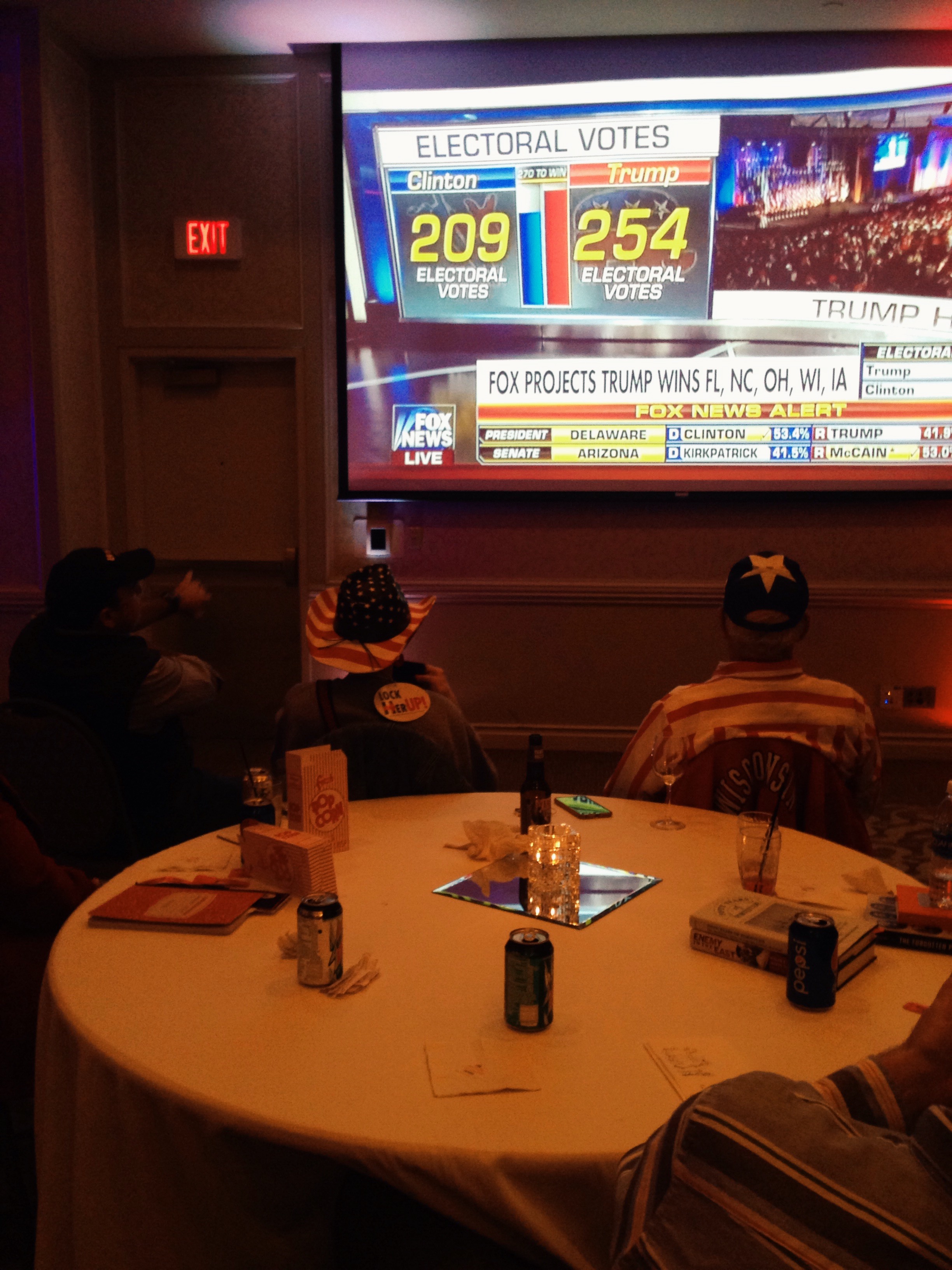
republican party party.jpeg

Last night I watched the election results with the Republican Party of Wisconsin.

Devin and I ended up there almost by chance. It was one of the few public parties within walking distance of our house, and I was curious about what it would be like, since so much of the news has focused on the fight about Trump within the Republican Party.

Soon after we arrived, Fox News declared that Trump had won Wisconsin––the first time a Republican presidential candidate has won the state since 1984. The people in the ballroom chanted, “TRUMP! TRUMP! TRUMP!” I started to panic. Minutes later I lost sight of Devin, and I felt like I couldn’t breathe.

But then I met a very polite older woman from Dodgeville, whose life revolves around praying and hospice care because after taking care of her mother and husband as they died, she realized she had a calling. Talking to her felt so normal that I almost forgot where I was. She gave Devin and me advice about helping people we love if they ever develop dementia and talked about joining the Republican Party after visiting the Capitol to pray with the priest from her church during the historic Wisconsin protests. It was hard for me to imagine this kindly gray-haired woman voting for Trump, but watching the election results, she seemed genuinely happy.

“Have you ever seen A League of Their Own?,” she asked.

We shook our heads.

“Oh, when you go home you have to look up the scene where Tom Hanks says, ‘We’re gonna win! We’re gonna win!’ I had it playing in my mind all last week, and I didn’t know if it was about Trump or the Cubs,” she puts her hand over her heart, “Who would have thought it would be both!”

It didn’t seem ironic to her that the movie she referenced to celebrate Donald Trump’s victory over Hillary Clinton was about the triumph of a women’s team.

She gave us her card in case we ever want to talk about caregiving. On the front it has a dove holding an olive branch, the Christian symbol of peace.

The party was in a hotel ballroom, and at midnight they kicked us out. At the beginning of the night, there were approximately 70 people, and about 25 of us ended up watching the elections results in the hotel bar surrounded by hotel guests. The few I talked to explained that they were in town for various professional conferences.

A man who looked very young sat down next to me and asked where all these people had come from. I explained that we’d come from a election watch party upstairs. “For Trump?,” he asked, gesturing to one of the few apparent men of color wearing a “TRUMP” button on his suit jacket. I nodded.

He explained that he had been at a party in the bar on the 12th floor, where everyone was busy placing bets.

I asked him who he’d bet on, and he told me he doesn’t bet, and if he had, it wouldn’t have been for Trump.

“I mean, I voted for him, but I really didn’t think he’d win.”

He explained that he was in town for an electrical engineering training and had not figured out how to cast his ballot before coming to Madison.

“I woke up at 4:45 and drove back to Milwaukee to vote. A lot of people said, ‘Why are you even voting? Hillary’s definitely going to win,’ and I thought that, too, even though I did think there were a lot of people like me. I think there’s some truth to what she was saying––I don’t remember her name,” he looks toward the screen.

“Megyn Keylly?”

“Yeah, what she was saying about the ‘shy Trump voters.’ I think I’m kind of like that. Everyone around me said Trump would never win. Nobody was going to vote for Trump. And I was like, ‘I don’t know…there are a lot of reasonably––reasonable––people who are voting for Trump but not saying it publicly.’ That’s how I was.”

He told me that this was his first election, even though he could have voted in the last presidential election. “I had just finished high school. I didn’t really know anything. I don’t know… to me it’s a privilege––people say it’s a duty, and everyone has to vote, but I think it’s a privilege. If you’re uninformed, you shouldn’t vote.”

In the background a man dressed in sequined Uncle Sam suit yelled, “Let’s change the channel to MSNBC––don’t you wanna see Rachel Maddow cry?”

Most of the gathered Republicans shook their heads. Some gestured, “Oh, be quiet.”

“I can’t wait to see Hillary convulsing when she gives her concession speech!,” yelled the sparkly Uncle Sam.

A few people laughed. One White woman said, “My friend just texted me, ‘I’ve never wanted to see Hillary speak until tonight!’”   

The young man I was talking to furrowed his brow, “People like that give us a bad name.”

At 1:30 a.m. the bar abruptly turned off the television to announce that it was closed.

Again, Uncle Sam tried to get everyone’s attention. This time he tried to start a “Lock her up! Lock her up!” chant. About 10 people joined in, but it didn’t last more than a few seconds. My impression was that they were more excited to see Trump win than to see Clinton lose. The group clapped for a second before leaving the hotel.

On the sidewalk we ran into the older woman from Dodgeville again. Her friend, another older White woman, said, “It’s a great night.”

The woman from Dodgeville nodded solemnly, “It’s a great night.”

Devin and I said good night and started our walk home.

The people I met were not the caricatures of bigotry and misogyny I feared I would meet. But they still voted for someone who is.

I spent Election Night at a Republican Watch Party

Las Guayabas

goya_blancs

19 July 2016

Sometimes my identity feels like a party trick.

“Oh, you’re from Mek-see-koe!,” a wide-eyed voice exclaims.

I nod eagerly.

And I feel like a poodle on its hind legs.

But sometimes, my identity, which is so often unseen for reasons beyond my control, feels like a superpower.

The power to subvert expectations.

It happened yesterday at a Patel Brothers grocery store in Schaumburg, Illinois where I was helping my friend Ariel fulfill mango orders for the Indian diaspora of Central Wisconsin. (Ariel’s partner Shashank is from India, so they are very connected with Indian families that live near them, and when one of them is near an Indian grocery store, they bring mangos back for the group. I want this system but for Mexican snacks, please and thank you.)

There I am, inspecting boxes of mangos and realizing there aren’t nearly enough when I overhear two employees speaking Spanish. I turn and ask if there are any mangos in the back, and one of them, who seems to be the Chief Mango Stocker––clearly an essential job in a store that specializes in produce from the subcontinent––seems happily surprised to hear me speak Spanish.

“Where are you from?,” he asks.

I tell him I’m from Chihuahua and his look of surprise transforms into a grin that fills his whole face.

He leaves and returns, hidden behind cases and cases of mangos on wheels. And as he gradually reappears, transferring the cartons of mangos from the rolling contraption to our two waiting carts, he starts telling me his story.

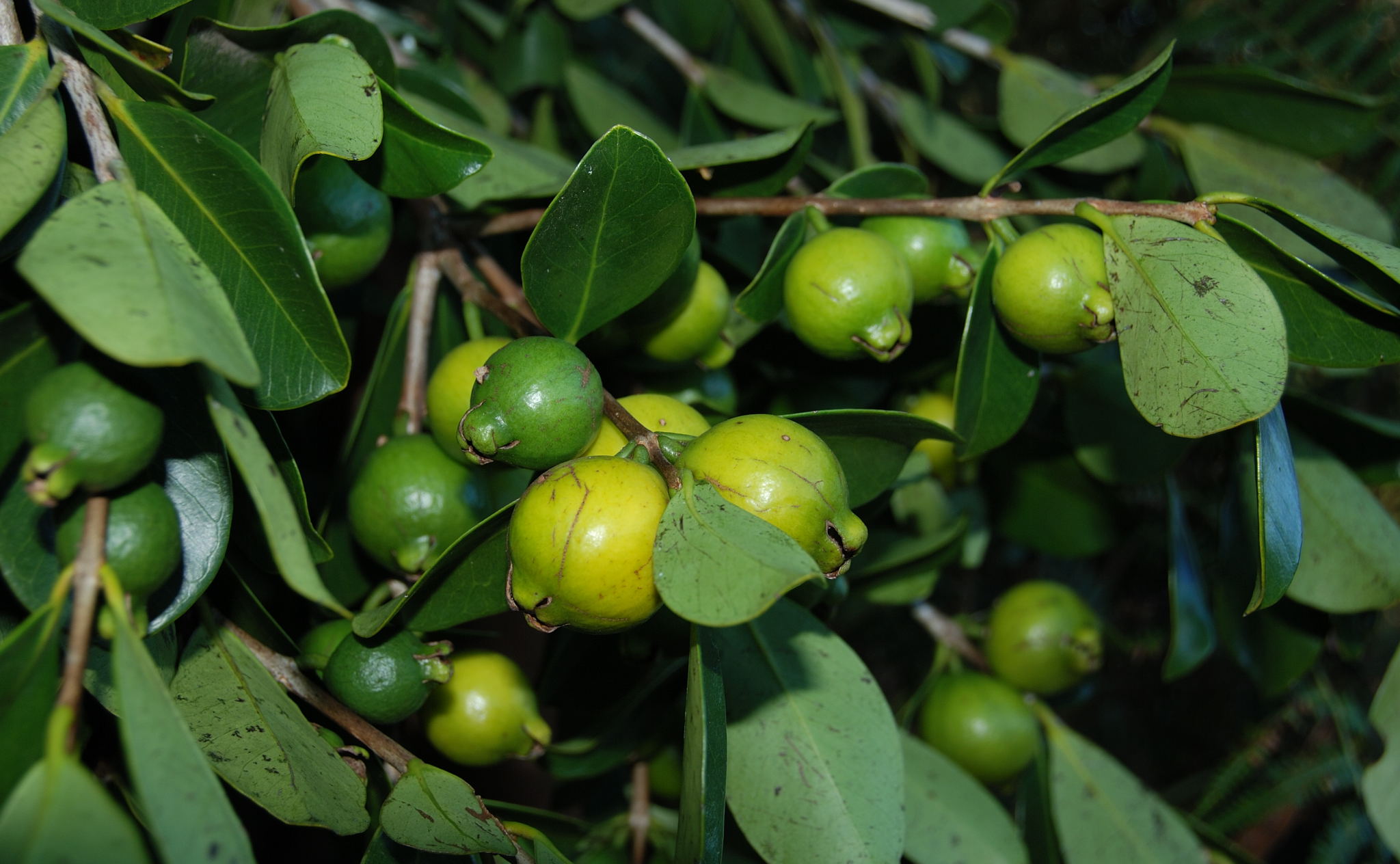
“See those guavas?,” he points to a display, “I’m from Aguascalientes. My family grows guavas.”

On his phone, he shows me pictures from his family’s orchard. A close-up of guavas on the tree. The house he built with money he earned stocking the guavas he used to grow. Guavas he left behind because he couldn’t make enough money to live. A house he doesn’t get to visit.

“I had a son,” he continues.  “He was two. He fell in the pool. I couldn’t even go to the funeral…”

There is a pause, and I think we are both asking ourselves the same questions.

What if he’d never had to leave Aguascalientes? What if the border were just a line on a map that everyone could cross? What if he could have brought his baby here? What if he could have saved his son?

He attempts a look of resignation. “Así es la vida. Difícil…”

I nod.

What I really want to do is yell, “No! Your life shouldn’t be this hard! Nobody’s life should be this hard!”

By then, our carts are full of mangos; customers approach him to ask for help; Ariel and I say goodbye.

Of course, I don’t know that he shared all of this with me because I’m from Mexico. Maybe he is always this vulnerable with strangers. Maybe he tells everyone his story. Maybe this is how he grieves.

But I have this experience often. I say I’m from Mexico or I talk back in Spanish, and I see the other person loosen. It is the shift from “You are different” to “We’re the same,” from distant to close, from gringa to paisana. It is the collapse of a small border.

Driving away from the grocery store, I think about a talk I saw Mia Mingus give in which she talked about the importance of articulating not only what we’re fighting against, but what we’re fighting for and making real plans. She wrote about it on her blog:

“[W]e are good at resisting. We are good at fighting for the world we don’t want. We are good at analysis and analyzing things up and down (and sometimes into oblivion). We are skilled at naming what we don’t want. I think we are less skilled at naming what we do want; our visions for liberation. And not just vague things like, ‘ending white supremacy and heterosexism,’ but how are all the children going to get fed? Who will clean the toilets? Who will take out the trash? Who will cook the food?”

OK, I think, what do I want?

I imagine having to articulate my plans in front of Congress, but all I can picture is me, standing at a podium, looking at the legislators and sharing my new friend’s story. I conclude with my call to action: “If his family grows guavas in Aguascalientes, don’t you think it’s wrong that the only way he can make a living is by stocking guavas in Illinois? I mean, how does that even make sense? If they grow the actual guavas, and the guavas are what’s being sold, why can’t they make a profit?”

Good questions, Kristy, but no plan.

I try again.

I picture myself hitting the podium to emphasize my point that we must repeal NAFTA––which decimated Mexico’s agricultural sector––and punish U.S. companies that conduct unethical business abroad, like Wal-Mart, for example. I picture myself demanding that the U.S. government open the borders because human rights shouldn’t be determined by an accident of birth––especially in a time when photos, words, ideas, and corporations transcend borders every day.

I don’t actually think I’m qualified enough to speak in front of Congress about immigration reform. It’s just… I think the people who hear immigration stories most often are other immigrants. And most of the people who determine border laws are not immigrants.

In my daily life, I hear lots of stories like this. When politicians walk into a grocery store, they just get guavas.

And so the borders stand.

If I could be anything, I would like to be a bridge.


Las Guayabas

Borders

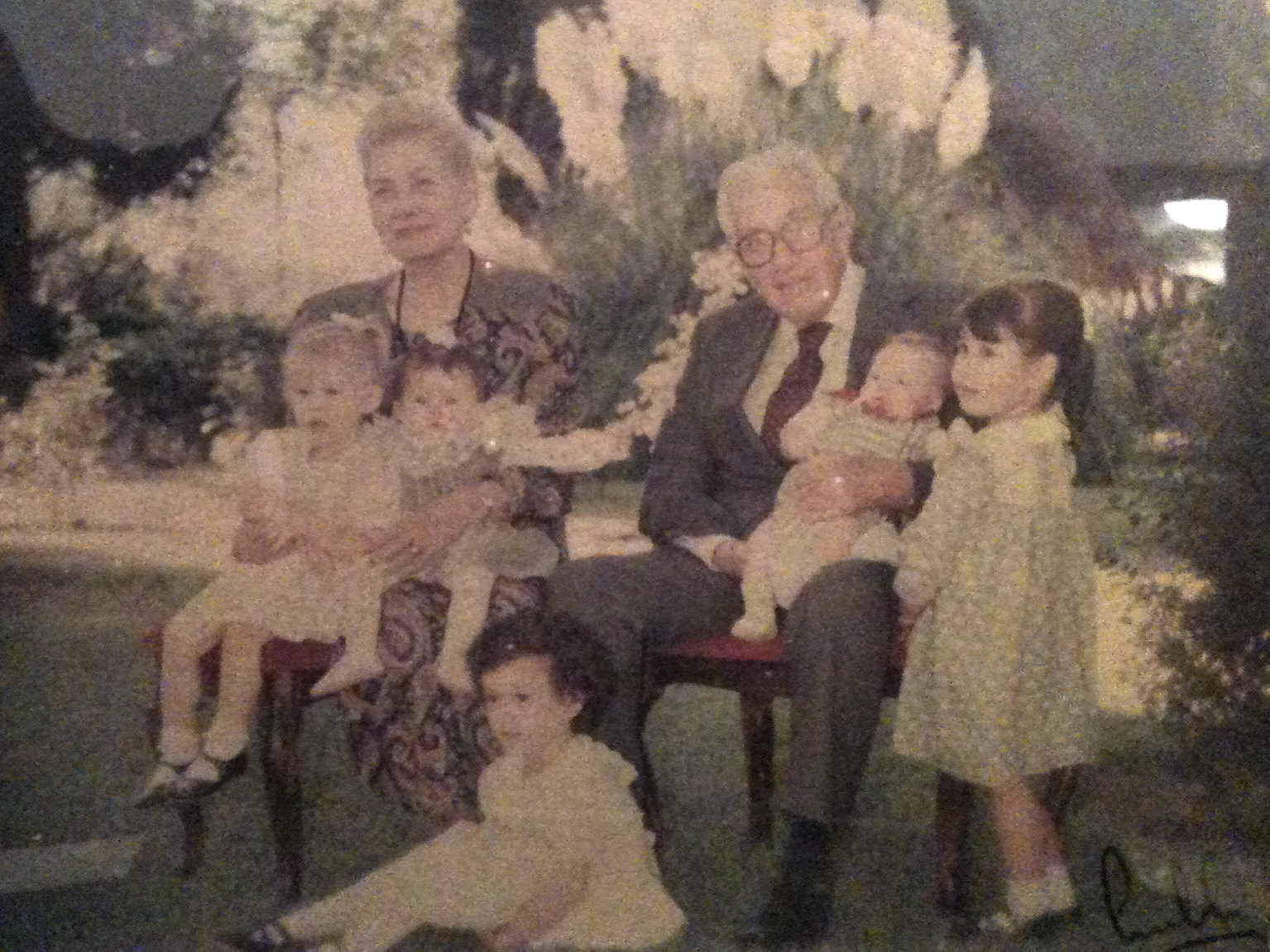
Baby cousins with our grandparents, circa 1990.

Though I’ve lived my whole life on both sides of the U.S.–Mexico border, I didn’t understand what a border was until I was eleven years old. That summer three of my cousins were allowed to come back from Chihuahua to Texas with my mom and me. I have ten cousins, four of whom are very close in age to me. I call them my first-batch cousins because we were all born one after the other. Then the parents waited a while and then came the second batch. Some of my second-batch cousins don’t like these designations, but it just makes it easier for me to communicate which cousins I’m talking about—because I talk about my cousins all the time. I can’t help it, they’re just that great!

Anyway, the summer before sixth grade almost all my first-batch cousins were allowed to come visit me for two weeks. Caren couldn’t come because she didn’t have her visa renewed in time, and you need a visa to come to the United States from Mexico. I was so excited! I was going to get to show my cousins my life in Texas. We’d just moved into an apartment complex with two pools and a playground and we would ice skate and go to Six Flags and go to the mall! It was the first time any of my cousins visited me instead of the other way around. But Caren couldn’t come. She didn’t have this little piece of paper. There was no way to get it in time. She couldn’t come.

Continue reading “Borders”

Borders