MARTIN LUTHER KING, JR. WAS NOT A NICE GUY*

Volunteering at soup kitchens and painting schools is great, but that’s not how Martin Luther King, Jr. changed the world.
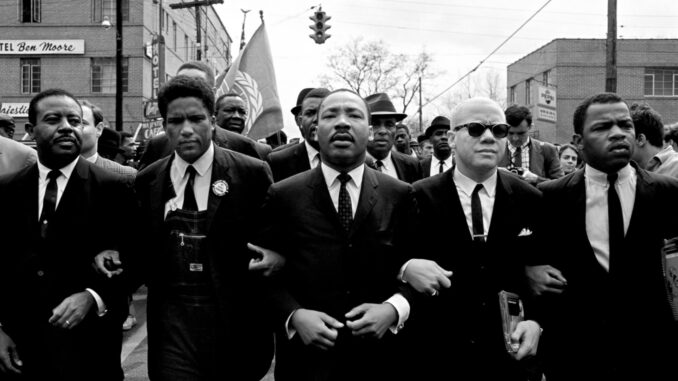
Martin Luther King, Jr. leading a march to demand voting rights in 1965. This year, Dr. King’s family is asking us to take action to protect voting rights now. (John Lewis is also pictured on the far right of this photo. The proposed law that would protect voting rights is named after him.) (Photo by Steve Schapiro/Corbis via Getty Images)

The United States declared Dr. Martin Luther King, Jr.’s birthday a federal holiday in 1983. Since then, it has come to be celebrated as a “Day of Service,” which usually translates to volunteering in one’s community doing nice things like painting murals, picking up trash, or donating blood.

These are in themselves good things to do, but to associate MLK with volunteering is to misrepresent his life and his legacy.

Dr. King was not a volunteer. He wasn’t a kindly Santa Claus figure who wearily sighed, “Can’t we all just get along?”

He was a revolutionary who demanded structural change.

He did not just “have a dream.” He acted on his convictions, risking––and ultimately, losing––his life to challenge the status quo of injustice. He led marches and strikes and went to jail for breaking unfair laws.

And we have every reason to believe that, had he been allowed to live, he would have continued protesting racism, war, and economic exploitation.

So, what does it mean to “celebrate” MLK Day? What if, instead of volunteering, we read, listened, and reflected on his words and whether we have achieved the future he imagined? (For instance, how is it possible that some states celebrate segregationist leaders on the same day as Martin Luther King, Jr.?) What if we expected the country to live up to what Dr. King dreamed and demanded? And what if we took action to fix the ways in which it doesn’t?

Over the past five years, I’ve seen this interpretation of the holiday gain traction. This year, members of Dr. King’s family are calling on us to use MLK Day as a Day of Action for Voting Rights.

  • We can do this by calling our senators and demanding that they eliminate the filibuster and pass the John R. Lewis Freedom to Vote Act. Dial 1-888-408-2349 to be connected with your senator.

    (How is the filibuster related to voting rights? Learn more here and here. What’s in the Freedom To Vote Act? Learn more here.)
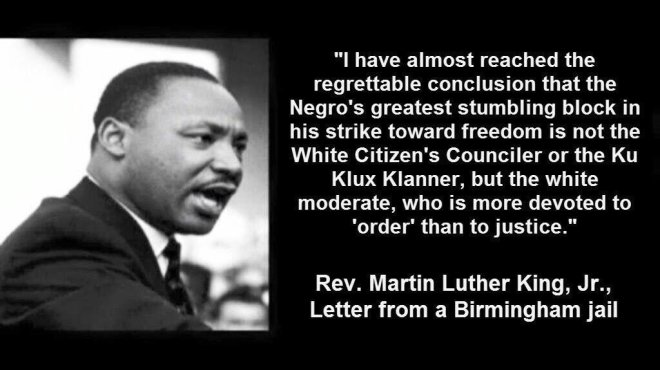
csrb0wfwcaephbs1

*About the title of this post: I thought of this after reflecting on how challenging injustice is not “nice” or “polite” behavior. Activism requires confronting injustice and making “good trouble” to challenge “the way things are.” Dr. King was willing to stand up for his beliefs. He angered and inconvenienced both people in power and incrementalists who agreed with him but believed we should “wait for things to get better in due time.” That is what I mean when I say he was not a nice guy. In the face of injustice, I don’t believe any of us should be “nice.”

Note: I adapted this post from a blog post I wrote on MLK Day in 2017.

MARTIN LUTHER KING, JR. WAS NOT A NICE GUY*

Ofrendas

A few weeks ago, Devin and I made an ofrenda for our grandmothers. Even though I’m Mexican, my family has never been big on Día de Muertos. In fact, one of Abbita’s favorite sayings was “En vida, hermano, en vida,” which basically means “If you want to do something nice for someone, do it while they’re still alive.”

As I prepared the ofrenda for her, I could imagine her laughing and shaking her head at me, so I decided to add something she couldn’t refuse… In addition to her coffee and cookies with cajeta, I placed her favorite novel, Domina, which she liked because it is about a woman who overcomes the obstacles in her path to become one of the first (fictional) female surgeons. (Knowing her life story, it’s pretty obvious why that story would appeal to her). I also found the last book we read together, Las Yeguas Finas, so I put that one out, too. I know that if Abbita did come back to Earth for one night only, the first thing she would want is to sit down to read, and I could picture her eyes twinkling at the sight of these two books.

We also made an ofrenda for Devin’s Grandma Pat, with her favorite evening snack: cheese, crackers, and Irish whiskey. She learned to drink whiskey straight because her dad told her that it was better to know how much you were drinking than to risk drinking too many fruity cocktails, and she stuck by that rule her whole life. She also loved Charlie Brown, so we put out a book of Peanuts comics for her and an angel figurine that she gave us a couple of years ago.

One of the hardest things about the COVID-19 pandemic is that we weren’t able to gather with Devin’s family to commemorate Grandma Pat’s life. When this is over, I hope we’ll be able to go to her memorial service and share all the things we love about her with her kids, grandkids, and great-grandkids, but until then, it’s been nice to find small ways to commemorate her life, like making her an ofrenda or buying her favorite chocolate (Fannie May milk chocolate buttercreams) to share.

On the night we made the ofrendas, I thought about how I met Grandma Pat a few months after Abbita died, so they never got to know each other, but looking at their pictures in the candlelight, I could picture them talking and laughing together. It felt magical.


Ofrendas

Happy Valentine’s Day (hold the heteronormativity)

Did you know that in Mexico (and throughout Latin America) Valentine’s Day is known as the Day of Love and Friendship? (Colombia also celebrates el Día del Amor y la Amistad, but it’s in September, for some reason? Colombianos, explain yourselves. ; )

It’s always been one of my favorite holidays, for obvious reasons: I love pink. I love hearts. And I love friendship. I actually always forget that it’s known as a super romantic ~couple’s holiday~ and I don’t think I’ve ever celebrated in a couple-y way. I also always forget that the color red is associated with Valentine’s Day, so clearly I live in my own valentine bubble!

heart cake 2015

I do like to celebrate by throwing a big party with my friends and making my home as pink as possible. This year Devin and I made it a dance party, featuring some of our friends’ favorite songs (we asked everyone to include their favorite dance song when they RSVP-ed). It ended up being really fun, so I decided it would be fun to share the playlist plus a few photos of our Valentine’s Day treats!

2014
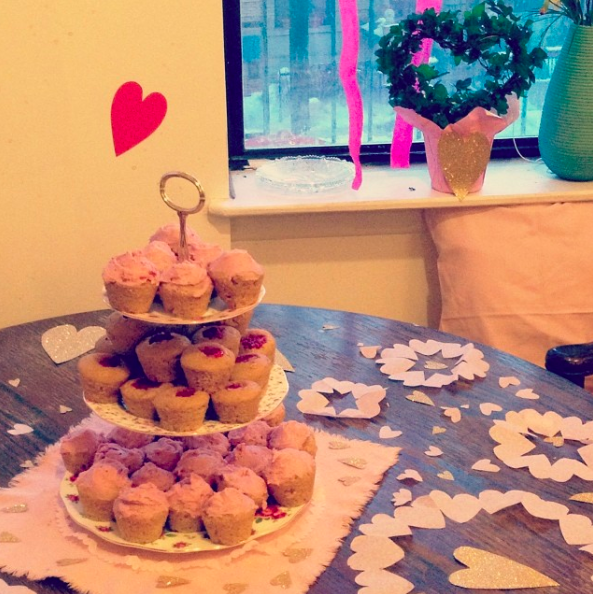
This is from our first Love & Friendship party in 2014. You can tell Devin and I were feeling extra environmental because we made cupcakes without liners, and we dyed the icing pink using water that we used to boil beets. (Don’t worry, we’ve since learned to use frozen berries, haha.) Related: my cousin Caren and I tried to dye the snow in front of our apartment pink using the rest of the beet water, but it ended up looking more “crime scene” than “cute.” (OK, this caption ended up being way more embarrassing than I thought it would be.)

2015
In 2015, Devin surprised me by baking a bunch of heart-shaped cakes, and everyone got to decorate their own!

2017
This year I made punch for the first time, complete with an ice ring, which is just a fancy word for a big piece of ice you make in a bundt pan. I know it kind of looks like someone dropped a cake into the punch (aaah!), but if you don’t think about it too much or stare too hard, it’s kind of pretty, no?

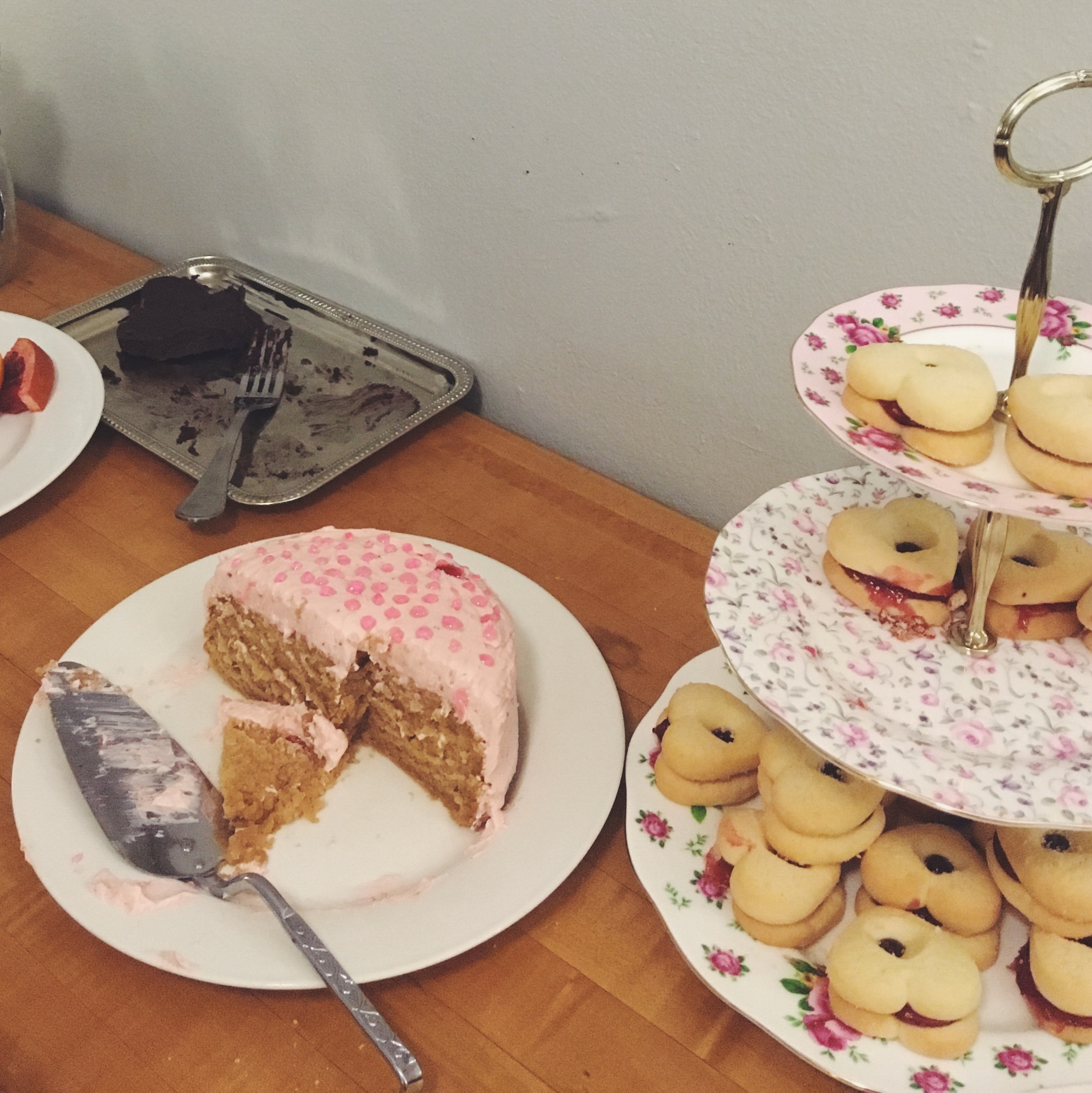
…and here are the treats at the end of the night because I forgot to photograph them earlier. (That three-tiered stand was a gift from our friend Nabeel, and it is my favorite thing in the world : )

P.S. A few other Valentine’s Day posts: 2012 + 2015 + 2016

Happy Valentine’s Day (hold the heteronormativity)

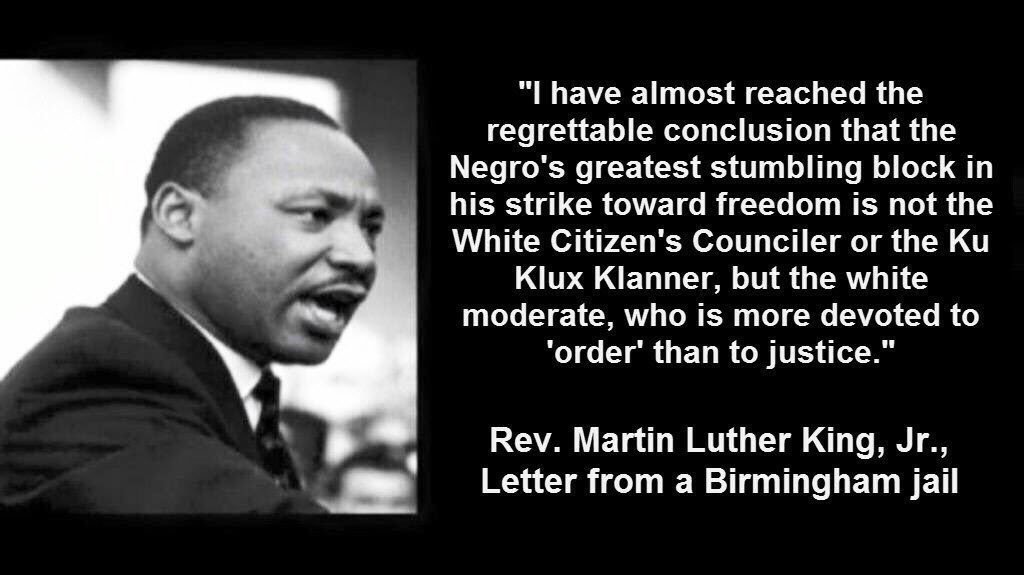
Martin Luther King, Jr. was not a nice guy

Volunteering at soup kitchens and painting schools is great, but that’s not how Martin Luther King, Jr. changed the world.

csrb0wfwcaephbs1

The United States declared Dr. Martin Luther King, Jr.’s birthday a federal holiday in 1983. Since then, it has come to be celebrated as a “Day of Service,” which usually translates to volunteering in one’s community doing nice things like painting murals, picking up trash, or donating blood.

These are in themselves good things to do, but to associate MLK with volunteering is to misrepresent his life and his legacy.

Dr. King was not a volunteer. He was a revolutionary.

He did not just “work to make things better in his own community.” He wasn’t a kindly Santa Claus figure who wearily sighed, “Can’t we all just get along?”

He did not just “have a dream.” He acted on his convictions, risking––and ultimately, losing––his life to challenge the status quo of injustice. He led marches and strikes and went to jail for breaking unfair laws.

And we have every reason to believe that, had he been allowed to live, he would have continued protesting racism, war, and economic exploitation.

It’s obviously impossible to expect a country to have a nationally-designated “Day of Revolution,” but what if instead of volunteering, we had a national “Day of Reckoning” on Dr. King’s birthday? What if we read, listened, and reflected on his words and whether we have achieved the future he imagined? (What does it mean, for instance, that some states celebrate segregationist leaders on the same day as Martin Luther King, Jr.?) What if we expected the country to live up to what this leader demanded? And we were expected to take action to fix the ways in which it doesn’t?

Some people are doing just that. Three years ago, Black activists called for Americans to #ReclaimMLK––sparking articles, conversations, and protests that connect Dr. King’s vision to the present day.

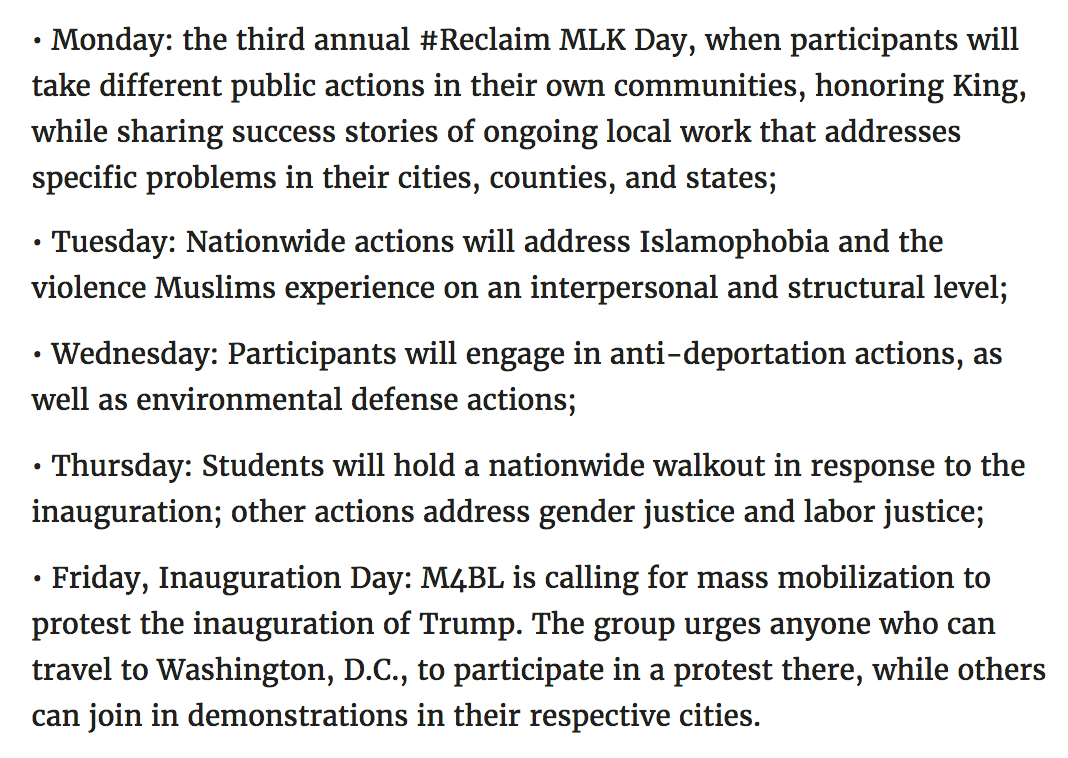
This year #ReclaimMLK is a week-long call to action, with each day focusing on a different theme.

Screen Shot 2017-01-16 at 3.06.44 PM.png

These efforts are led by the Movement for Black Lives, a coalition of more than 50 racial justice and civil and human rights organizations. However we can, wherever we are, I hope we can heed their call to “embrace all parts of King’s legacy.”

Learn more and find planned actions here.

*About the title of this post: recently, I have been reflecting on how challenging injustice is not “nice” or “polite” behavior. Activism requires confronting injustice and making “good trouble” and challenging “the way things are.” Dr. King was willing to stand up for his beliefs. He angered and inconvenienced both people in power and people who agreed with him but believed we should “wait for things to get better in due time.” That is what I mean when I say he was not a nice guy. In the face of injustice, I don’t believe any of us should be “nice.”

Martin Luther King, Jr. was not a nice guy

Mother’s Day, another rad holiday

People told me that they liked my post on Cinco de Mayo last week, so this week I present to you another edition of Rad Holidays We Don’t Know Anything About: Mother’s Day Edition!

It wasn’t until last year that I learned that Mother’s Day was conceived as an anti-war holiday. It wasn’t a day to celebrate moms (although that’s neat, too. Hiii, Mom!). It was a day for mothers to speak out against war.

“Mother’s Day for Peace,” that’s the full name of the holiday we celebrate every second Sunday in May. Julia Ward Howe introduced the idea in 1870 with her “Mother’s Day Proclamation.” Calling for international peace, Howe wrote, “We the women of one country are too tender to those of another country to allow our sons to be trained to injure theirs.”

In 1872, Howe called for Mother’s Day for Peace to become an annual holiday to be celebrated every June 2. It was celebrated as such until President Woodrow Wilson made it a national holiday in 1914. His “Mother’s Day Proclamation” mentioned nothing about peace and moved the holiday to May.

I know governments wage war, but I find it alarming that President Wilson didn’t even mention peace as a long-term goal. What does this say about this country’s values? And what can we do to change them?

Check out 8 Ways to Reclaim Mother’s Day. And Happy Mother’s Day to mi mamá and all the other moms who read this blog!

Mother’s Day, another rad holiday

Cinco de Mayo

Cinco de Mayo is about more than margaritas and som-BRAY-roes (you know sombrero is just the Spanish word for hat, right?). Holidays that reduce cultures to stereotypes and alcoholic drinks have never seemed that fun to me, but I am especially upset by the way Americans celebrate Cinco de Mayo because so few people know what the holiday commemorates.

On 5 May 1862, the Mexican army defeated the French army in battle. It was a David-and-Goliath victory because the French troops were better prepared and had superior equipment. At the time, the U.S. government feared that if France defeated Mexico, the French military would advance to the U.S. and help the Confederate army in the Civil War, so their defeat was cause for celebration in the States. The U.S. government was grateful to Mexico for stopping the French army and, in effect, protecting the U.S.

I heard someone lamenting that people celebrate Cinco de Mayo by going to trendy restaurants and bars that serve “Mexican-inspired” food but are owned by non-Mexicans. She encouraged her friends to patronize Mexican-owned businesses instead, but I think this holiday should be about much more. Currently much of the conversation around migration from the Global South to the United States centers on immigrants as undeserving people who come to take jobs, education, and benefits from U.S.-born people who ‘deserve’ it. Even conversations about amnesty and compassion focus on extending a helping hand to people in need instead of recognizing the myriad ways we are connected.

This year, on the fifth of May, in addition to eating tacos, I hope you will take a moment to reflect on interdependence, what it means to be good neighbors, and how you can put up a fence to keep people out, but you’ll never be able to erase our shared history.

I also recommend you watch the documentary Who is Dayani Cristal? as soon as you can.

Additional posts on transnationalism and immigration here and here.

Cinco de Mayo