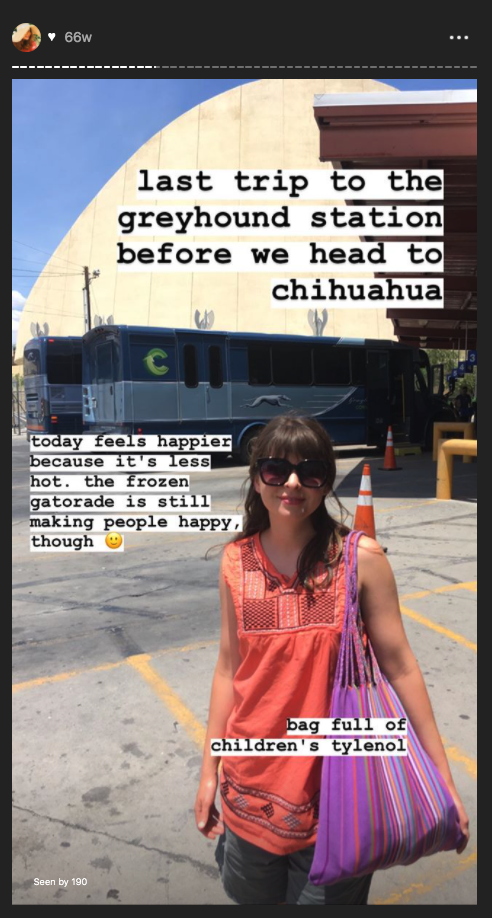
The memories come in fragments. Standing at a bus station parking lot in El Paso, the sun directly overhead. My head is throbbing from the heat. I am looking for refugees. They are easy to spot because their shoes have no laces, and they carry no luggage. All they have is themselves and a piece of paper from the U.S. government telling them what day they should show up to court. These are the lucky ones in 2019. They are allowed to stay in the country until their hearings.
I remember a mom holding a 3 year-old in her arms. I remember approaching them and offering them all we had to give: menstrual hygiene supplies, frozen Gatorades, clementines, and bananas. I remember the child clinging tightly to her mom, like she was holding on for dear life. I remember reaching my hand out to give them the bananas and how the child extended her own hand and said, “Mamá, Mamá” as she pointed at the bananas. I remember looking at her little face and knowing that it had been a very long time since she had eaten a piece of fruit.
I remember rushing to stock up on Children’s Tylenol after hearing children cough like lifetime smokers and shiver with chills from fever. This was before COVID-19, but kids were getting the flu at immigrant detention centers.
I meant to share these stories when we got back from the border. I wanted to collect backpacks to send to the border. I wanted to keep helping, but in order to do that, I would have had to talk about what we’d seen, and I couldn’t find the words.
See all the pictures I posted from this trip in this Instagram story.
We went to shelters on both sides: in the U.S. and in Mexico.
I remember the father in a Juárez shelter telling me he was trying to get to Arkansas because his wife had been allowed to remain in the U.S. after applying for asylum, but he and their 7 year-old son had not. His wife was pregnant when she crossed, but she went into early labor when she got to Arkansas, and she and the newborn had been hospitalized since then.
I remember an old woman, her hair in silver braids, telling me “I didn’t want to leave my country, but they were going to kill me. If I go back, they’ll kill me.” She didn’t know anyone in Mexico, she explained, but she had family in the U.S. “It’s my only option. I want to go home, but I can’t.”
I remember the little boy who, after hearing Devin speak English to me, walked over to us and looked at his feet while he started to sing
Pollito, chicken
Gallina, hen
and how he looked up and smiled when we sang back
Lapiz, pencil
Y pluma, pen
I remember the three of us finishing the song
Ventana, window
Puerta, door
Techo, ceiling
Y piso, floor
The toilets in the Juárez shelter were broken that day. (They were broken most days, a volunteer explained, because the shelter had exceeded its capacity many times over. People slept in hallways, in spaces that were supposed to be classrooms for kids. And the toilets clogged and overflowed. Too many people. Too much shit.)
The smell lingered in the air.
As we sang with that little boy, I remembered my own grandmother singing this song with me, and I thought about how kids are always kids, no matter where they are.
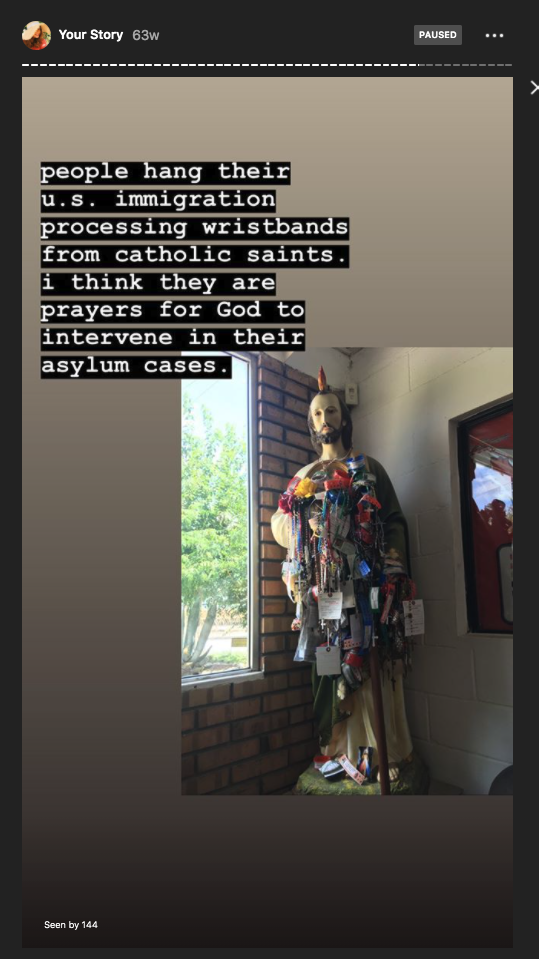
A statue of a saint stood on a table to our right, covered with wristbands from CoreCivic, a private prison corporation that runs immigration detention centers in the U.S. People cut off the wristbands when they were released and offered them to God with their prayers for asylum, for a return to the U.S. under less terrible circumstances. I looked at the saint and felt the prayers, and my stomach churned. To the asylum-seekers, these wristbands symbolized incarceration, starvation, and being denied showers for up to a month. But to investors (maybe even to me or to you or to anyone with a 401k or at an institution with an endowment that invests in such things), these wristbands symbolized profits.
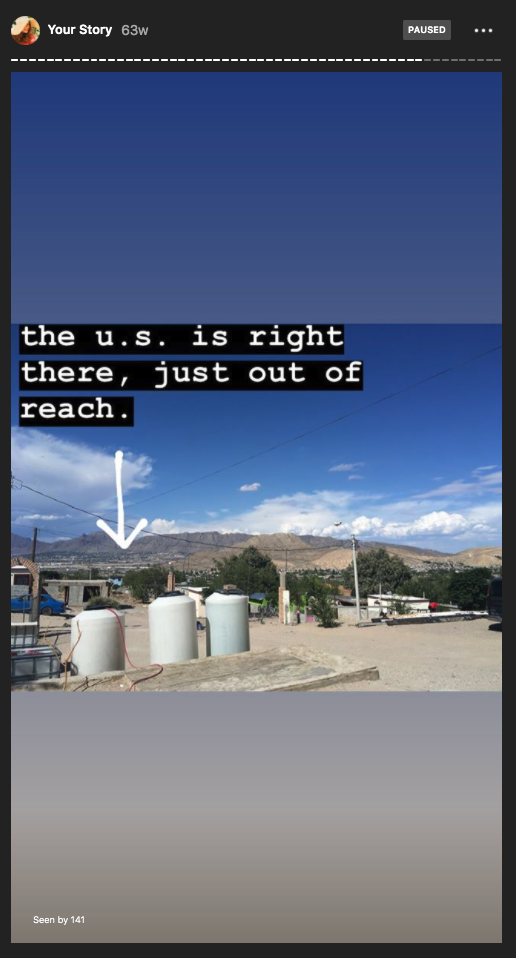
I remember the church-run shelter we visited in Juárez and the group of girls who told me they loved to play school. I asked them who liked to be the teacher, and they pointed at a tall girl with curly hair who smiled shyly. The shelter was in a very rough neighborhood with unpaved dusty roads, nestled right against the border. I could see El Paso behind her, and I knew that if I could just get her across the border, she could have a teacher like my mom and a school with a library where she could read any book she wanted.
I wanted so badly to help her and her parents cross that line.
I remember the shame I felt at the shelters when people asked us over and over, “¿Son abogados?” and we had to shake our heads no and explain that we weren’t lawyers.
We were just Americans, there on behalf of other Americans because we didn’t agree with what our government was doing and we wanted to help. I tried to explain that, in cities across the U.S., people were protesting against the cruelty these migrants had experienced. I said, “No están solos” (“You’re not alone”). I said, “I’m not a lawyer, but I want to do what I can to help.” I felt very small, and I thought they probably didn’t feel any less alone.
I remember the nuns in El Paso telling us about the volunteers. “The volunteers here are struggling with depression. Our shelters are empty. They want to help.” The shelters in El Paso had plenty of space, beds with clean sheets, showers, bathrooms. But the migrants were being sent to Juárez instead, where the shelters were overcrowded and falling apart. The world felt upside-down.
On our last night in Juárez, we waited at the bridge to re-enter the U.S., and I fought back tears as we stood in line. When we got back to my aunt and uncle’s house in El Paso, I cried so hard I almost threw up.
I knew I had only seen a fraction. I thought about how there were makeshift shelters and tent encampments all along the border. I tried to comprehend how many more people were stuck there and thought about how many of them had family members waiting for them here in the U.S., ready to take them in if only they could cross.
I remembered Melania Trump wearing a jacket that said “I DON’T REALLY CARE, DO U?” in response to reports of children being caged like animals. I pictured Donald Trump smiling with glee at hearing about the suffering that his policies were inflicting. I knew that they were working exactly as intended.
The work we did and the supplies we took were meaningful. I know they made a difference. But it was a very, very tiny difference. To ameliorate a problem that was manufactured and could be eradicated.
This cruelty is being done in our names and being paid for with our tax dollars. And it could very easily stop.
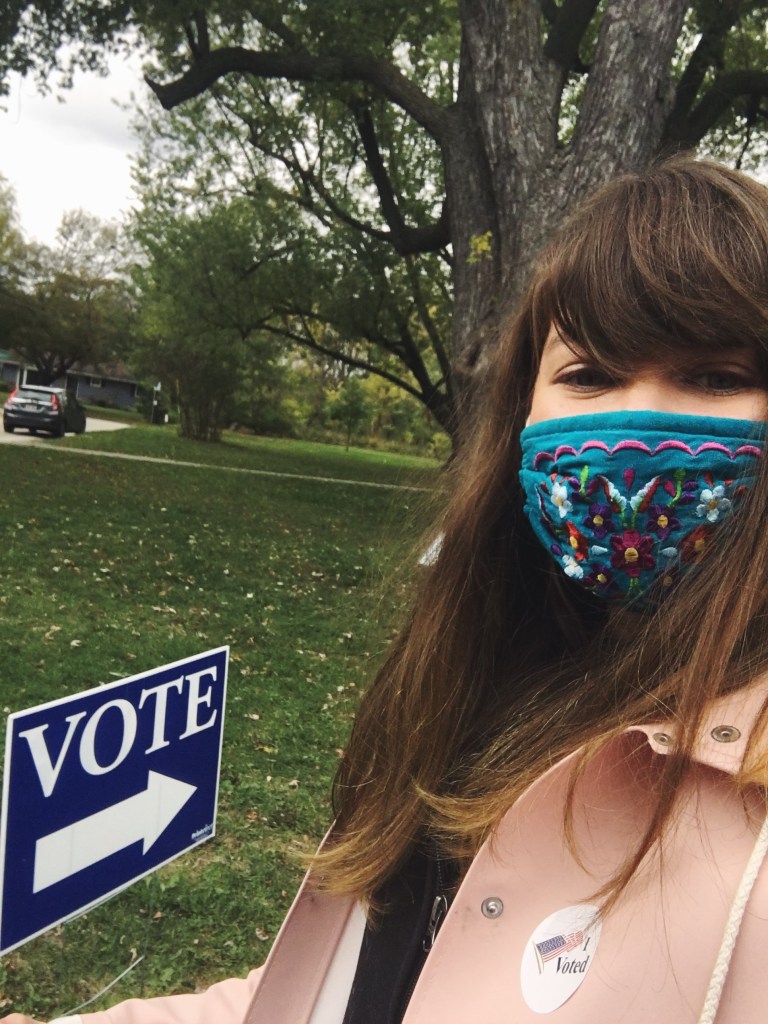
I knew this and knew that if I wanted to help it made more sense to work to vote Trump out than it did to fundraise to try and help the people suffering under problems he created. So that is what I have done, and it’s why I’m begging you to vote for Biden and Harris if you haven’t already.
Please hear this: I have spent my whole life crossing the U.S.–Mexico border. I have never seen anything like what I saw the summer of 2019. All things considered, we saw very little of the pain that people are experiencing at the border, and we’ll never know what it’s like to live through this cruelty ourselves, but the suffering I witnessed will haunt me forever. I don’t think I could bear to see how much worse things could get if Trump gets four more years. I just keep thinking “This cruelty is being done in our names and being paid for with our tax dollars. And it could very easily stop. It is our responsibility to stop it.”
I am begging you to vote for Biden and Harris because I don’t want to find out.

 smoothliminal